Most travelers who land in Pokhara head straight for Phewa Lake. The lakeside promenade, the rowing boats, the reflection of the Annapurna range — it is all undeniably beautiful. Yet there is another lake quietly waiting, just 15 kilometers east of Pokhara’s tourist bustle. Begnas Lake remains one of Nepal’s best-kept secrets, and that, ironically, is its greatest appeal.
Begnas is Nepal’s second-largest lake in the Pokhara Valley. Unlike the commercialized shores of Phewa, Begnas offers something increasingly rare in popular travel destinations: stillness. Here, the air smells of pine, the water reflects the Himalayan peaks without the noise of motorboats, and local fishermen still paddle wooden dugout canoes at dawn as they have for centuries.
For international travelers planning a Nepal trip, Begnas Lake is the kind of place that rewards the curious. Families seeking peaceful scenery, solo travelers craving authentic village life, and adventure seekers looking for hiking trails with no crowds — all find something deeply satisfying here. This comprehensive guide covers everything you need to know before visiting, from practical logistics to the quieter experiences that make Begnas truly unforgettable.
Begnas Lake sits at an elevation of approximately 827 meters above sea level, nestled in the Lekhnath Municipality, about 14 to 15 kilometers east of Pokhara city center. The lake stretches roughly 3.2 kilometers in length and 1.6 kilometers in width, covering around 327 hectares. Together with neighboring Rupa Lake, Begnas forms a wetland system of great ecological significance.
Reaching Begnas from Pokhara is straightforward and affordable. Several transport options work well depending on your budget and preference.
Most international visitors arrive in Kathmandu first before traveling to Pokhara. A Pokhara one-day tour or a multi-day Nepal tour package typically includes transportation between the two cities. Options from Kathmandu include:
Once in Pokhara, Begnas is an easy half-day or full-day excursion.
Phewa Lake needs no introduction. It is Nepal’s most visited lake and is iconic for good reason. However, a comparison between the two lakes reveals why discerning travelers choose to spend time at Begnas — often calling it the more authentic and peaceful of the two.
Phewa Lake covers about 5.23 square kilometers, nearly twice the size of Begnas. Yet Begnas feels more expansive in spirit, because the shoreline is almost entirely free of hotels, souvenir shops, and café rows. There are no noisy motorboats. The lakeshore is largely undeveloped, and the surrounding hills are blanketed in subtropical forest and terraced farmland.
Phewa receives the vast majority of Pokhara’s millions of annual visitors. Begnas, by contrast, sees a fraction of that footfall. On weekdays, you can walk the entire shoreline path and encounter only a handful of locals and the occasional fishing boat. This solitude is unusual in Nepal’s most popular destination.
Because Begnas has less tourist infrastructure around it, its water quality and biodiversity are better preserved. The lake supports thriving populations of freshwater fish, migratory birds, and aquatic vegetation. It is part of a Ramsar-listed wetland complex — an international designation recognizing its ecological value.
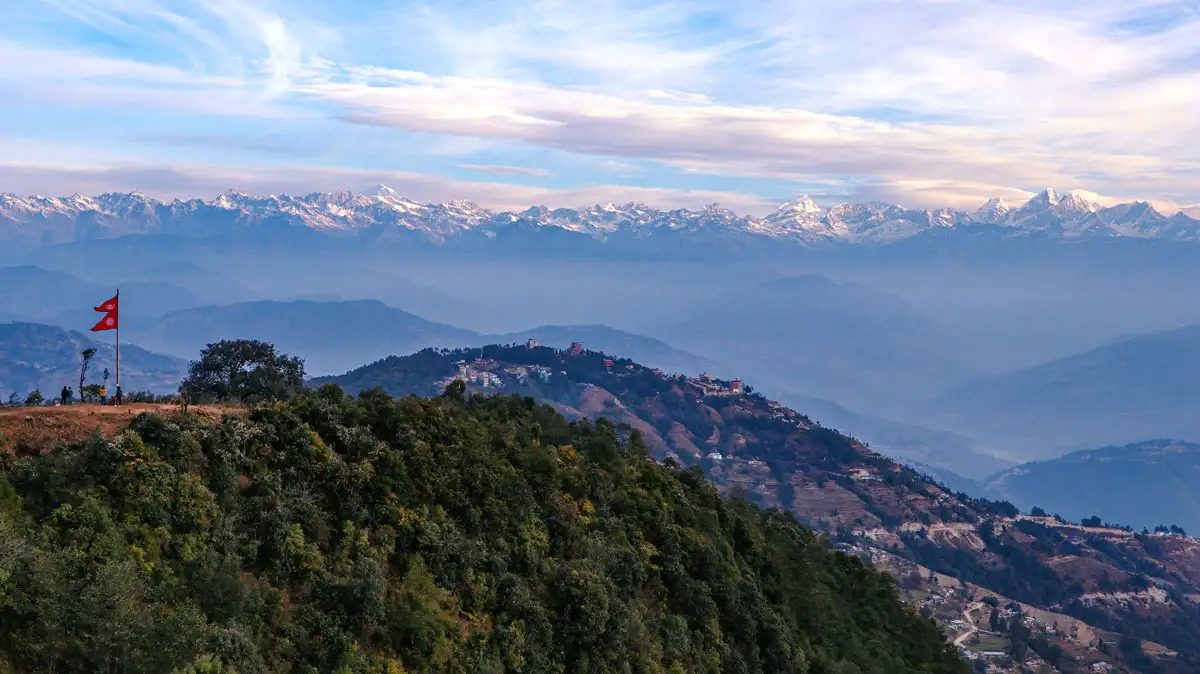
Both lakes offer views of the Annapurna range on clear mornings. At Begnas, however, the absence of lakeside development means the reflections remain unbroken. The combination of Annapurna II, Annapurna IV, Lamjung Himal, and Machhapuchhre (Fishtail Mountain) in the still water creates a scene of extraordinary calm, especially at sunrise.
Phewa Lake is ideal for travelers who want convenience, variety of activities, and a buzzing social scene. Begnas Lake is perfect for those who prefer silence, natural beauty, and genuine local immersion. Many travelers now plan 1 to 2 extra days specifically to experience both — a decision they rarely regret.
Despite its quiet reputation, Begnas Lake offers a satisfying range of activities. These cater to different traveler types — from families wanting gentle scenery to adventure seekers looking for active days.
Rowing a wooden boat across Begnas early in the morning is one of the most meditative experiences in all of Nepal. Rental boats are available from the main ghat (landing area) near Begnas Bazaar. Paddle quietly across the glassy surface, watch local fishermen cast nets, and let the Himalayan peaks fill your horizon. Electric motorboats are also available for those who prefer a more leisurely cruise.
Rates are affordable and negotiable. Most visitors spend 1 to 2 hours on the water. Sunset is another magical time for boating, as the light turns golden on the Annapurna foothills.
Begnas Lake is renowned locally for its freshwater fish, particularly Rohu, Grass Carp, and Silver Carp. Fishing trips can be arranged through local operators near the lakeshore. Some guesthouses and homestay operations organize fishing outings as part of their packages — guests catch their own dinner and the host family cooks it the same evening. This simple, direct experience is one that many visitors describe as a genuine highlight of their Nepal trip.
Responsible fishing practices are encouraged; always confirm regulations with local operators before casting.
A network of footpaths and dirt tracks circles much of Begnas Lake. Walking the lakeshore takes 2 to 3 hours at a leisurely pace. Along the way, you pass through small Gurung and Magar farming communities, terraced fields of rice and millet, and shaded sections of subtropical forest. Cyclists find the terrain rewarding — the gradients are manageable, and the views compensate for every uphill stretch.
The eastern shoreline provides particularly clear views of the Annapurna range at sunrise. Arriving before 6:00 AM on a cloudless morning — most common in October, November, and February — rewards patience with extraordinary mountain reflections in the still water. Sunset paints the western hills behind the lake in amber and rose, creating equally dramatic photographic opportunities.
The hills surrounding Begnas Lake form the beginning of some of the most underrated trekking terrain in the Pokhara Valley. Unlike the heavily trodden Annapurna Base Camp Trekking route, trails near Begnas pass through villages where teahouse menus are still handwritten in Nepali and few other trekkers are visible on the path.
The trail up Begnas Hill rises from the southeastern corner of the lake and climbs through dense rhododendron and pine forest to a hilltop that stands at roughly 1,500 meters. The ascent takes approximately 1.5 to 2 hours from the lakeside. At the top, panoramic views extend across both Begnas and Rupa lakes below, with the entire Annapurna Massif forming the northern horizon. On exceptionally clear days, Dhaulagiri and Manaslu are also visible. The trail is manageable for reasonably fit travelers and requires no technical equipment.
Begnas and Rupa lakes are separated by a narrow ridge known as Pachbhaiya. A trail crosses this ridge, offering views of both lakes simultaneously from the saddle. The walk from Begnas Bazaar to Rupa Lake’s shoreline takes about 2 hours on foot. Rupa is even less visited than Begnas, making this trail feel like genuine discovery. The route passes through Magar and Gurung villages, and local guesthouses on the Rupa side can provide tea and simple meals.
Sundari Danda, meaning “beautiful hill” in Nepali, is a ridge northeast of Begnas offering arguably the finest sunrise view in the Pokhara Valley that most visitors never see. The trail leaves from Rupa Lake’s eastern shore and climbs steeply through village terraces before leveling off on a broad ridge. The full Annapurna panorama visible from here — including close-up views of Annapurna II at 7,937 meters — is genuinely jaw-dropping. Trek agencies in Pokhara can organize a guided day trek combining Begnas boating with the Sundari Danda sunrise experience.
For more serious trekkers, Begnas Lake serves as a quieter starting point for entering the broader Annapurna trekking region. Several trail routes connect the Begnas valley with the main Annapurna Circuit Trek trail network, passing through Majhthana, Dhikurpokhari, and eventually Khudi or Bhulbhule where the circuit formally begins. This approach avoids the busy Besi Sahar to Bulbhule road section and adds authentic off-track village trekking at the start of the journey.
The Begnas-Rupa wetland complex is one of the most biologically rich freshwater habitats in the Pokhara Valley. Travelers with an interest in birds, butterflies, or ecology find Begnas Lake particularly rewarding.
The lake and its surrounding marshes support over 100 recorded bird species. Seasonal visitors include bar-headed geese, common teal, northern pintail, and several species of egret and heron. Year-round residents include pied kingfisher, little cormorant, common moorhen, and various warblers in the lakeside reed beds.
Winter months — November through February — bring the greatest density of waterbirds, including migratory species flying south from Central Asia. Early morning birdwatching from a rowing boat is the most productive method. Binoculars and a field guide to Himalayan birds are recommended.
The lake’s relatively undisturbed ecosystem supports healthy populations of native freshwater fish. Species include Rohu (Labeo rohita), Katla, Common Carp, and Grass Carp. Mahseer — a prized sport fish in Nepal — can also be found in connected waterways. The fishing community around Begnas has practiced sustainable fishing for generations, which partly explains the lake’s continued ecological health.
The hillsides above Begnas are covered in subtropical broad-leaved forest, with dominant species including Schima, Castanopsis, Alnus, and patches of bamboo. Higher up toward Begnas Hill and Sundari Danda, pine and rhododendron become more prevalent. In March and April, rhododendron blooms in reds and pinks across the hillsides above the lake — a spectacular natural display that coincides with Nepal’s spring trekking season.
One of the most distinctive features of the Begnas Lake experience is its authentic local character. The communities living around the lake belong primarily to the Gurung, Magar, and Brahmin-Chhetri ethnic groups — each contributing to a cultural landscape that feels genuinely rooted rather than tourist-oriented.
The Gurung and Magar peoples have deep roots in the Pokhara Valley and the surrounding hills. Both groups have strong traditions as mountain warriors — many Gurung and Magar men serve or have served as Gurkha soldiers in the British and Indian armies. Their villages around Begnas maintain traditional stone-and-mud architecture, communal threshing floors, and agricultural calendars tied to the monsoon cycle.
Visiting these villages — especially the ones above the lakeshore toward Begnas Hill — offers genuine cultural insight. Hospitality here is not a commercial transaction. An invitation for tea inside a farmhouse is freely offered and freely given, and the conversations that follow — about farming, family, mountain life — are often among the most memorable moments of a Nepal journey.
The small market town at the southern end of Begnas Lake serves as the local commercial and social hub. Vegetable sellers, tea shops, hardware merchants, and fishing supply stores line a single main street. Arriving on a local market day adds color and activity. A brief wander through Begnas Bazaar in the early morning, watching daily life unfold before the tourist day begins, provides a grounding contrast to the polished lakeside cafes of Phewa.
The terraced fields cascading from the hills down to the lakeshore are actively cultivated. Depending on the season, visitors see paddy planting (June-July), harvest (October-November), or winter crops of mustard and vegetables. During harvest season, the golden terraces reflecting in the lake create extraordinary natural compositions and a sense of the agrarian rhythms that still underpin life in rural Nepal.
A growing number of families around Begnas Lake open their homes to travelers as homestays. Staying in a Gurung or Magar household near the lakeshore means waking to the sound of roosters, eating freshly cooked dal bhat by a wood fire, and participating — if you wish — in daily household tasks. These homestays are typically arranged through local cooperatives or community organizations, with proceeds going directly to the host family.
Accommodation around Begnas Lake is deliberately low-key. There are no international chain hotels, no rowdy bars, and no luxury resorts in the conventional sense. What you find instead is a selection of guesthouses, eco-lodges, and homestays that prioritize calm, nature, and local character.
Several family-run guesthouses cluster around Begnas Bazaar and along the southern lakeshore road. Rooms are simple but clean, typically including an attached bathroom, a veranda with lake views, and home-cooked meals. Prices range from USD 10 to USD 30 per night. These guesthouses are ideal for solo travelers and backpackers who prioritize authenticity over amenities.
A small number of eco-lodges sit on slightly elevated ground above the lakeshore, offering more comfort while maintaining a strong connection to the natural environment. These properties typically feature garden settings, birdwatching decks, and simple kayaking or boating access. Rates range from USD 40 to USD 80 per night with breakfast. Advance booking is advisable during peak season (October–November, February–March).
As noted above, homestays around Begnas Lake offer the most immersive accommodation experience available. Rates are modest — typically USD 15 to USD 25 per person including meals. Several community homestay networks operate in villages above the lake; your tour operator or the Begnas Bazaar area can help connect you with participating families.
Many travelers choose to base themselves in Pokhara — where a wider range of hotels suits all budgets — and visit Begnas as a day trip or half-day excursion. This is especially practical for families with children or travelers combining Begnas with other Pokhara activities such as paragliding, zip-lining, or the World Peace Pagoda visit. Pokhara’s one-day tour options can incorporate a Begnas Lake stop efficiently.
Begnas Lake is accessible year-round, but each season presents different conditions. Understanding the seasonal rhythm helps in choosing the right time for your specific interests.
This is Nepal’s peak trekking and travel season, and for good reason. The monsoon rains that fall from June to September clear the air of dust and haze, leaving the Himalayas in sharp relief against deep blue skies. At Begnas, October and November bring cool mornings, warm afternoons, crystal-clear water, and unobstructed mountain views. Migratory birds begin arriving in November. Rhododendron forests turn golden, and agricultural harvests add color to the hillside terraces.
Spring brings warming temperatures, blooming rhododendrons on the hillsides above Begnas, and continued good visibility before the pre-monsoon haze builds. March sees the peak of rhododendron bloom — reds and pinks cascade down forested slopes around the lake. This is also an excellent season for birdwatching, as resident species become active and the birdsong around the lakeside forest intensifies. Trekking on the Begnas Hill trail and Sundari Danda is particularly rewarding in spring.
Winter at Begnas is cold — morning temperatures can drop near freezing at the lakeshore — but the lake is exceptionally still and atmospheric in the early morning. Mist often lies low over the water in January, creating surreal scenes. Birdwatching peaks in winter as migratory waterbirds are present in the largest numbers. Tourist density is lower than in autumn, meaning an even quieter experience than usual.
The monsoon transforms the hills around Begnas into extraordinary shades of green. Terraced paddy fields fill with water, leeches appear on forest trails, and rain is frequent — often daily. Mountain views are largely obscured by cloud. Boating and lakeshore walking continue between rain spells. The monsoon season suits travelers comfortable with wet conditions who want to see Nepal at its most lushly alive and who appreciate significantly reduced tourist numbers.
Food near Begnas Lake reflects the honest, unpretentious cooking traditions of the Pokhara Valley. Expect fewer fusion menus and more authentic Nepali home-style cuisine.
Dal Bhat — lentil soup, steamed rice, vegetable curries, and pickles — is the staple meal of Nepal and the default offering at guesthouses and local restaurants around Begnas. A complete Dal Bhat plate provides generous, balanced nutrition and is typically refillable without extra charge. It is eaten at both lunch and dinner in most Nepali households. At lakeside guesthouses, fresh fish curry is often added to the Dal Bhat plate — a Begnas-specific variation that travelers consistently praise.
Given Begnas Lake’s fishing heritage, fresh fish is the local specialty. Rohu fish curry cooked with turmeric, cumin, and dried chili is the most common preparation. Fried fish with achar (spiced pickle) is another local favorite. Several lakeside restaurants and guesthouses prepare fish caught the same day — a freshness that is immediately apparent in the flavor.
Small tea houses dotting the lakeshore and surrounding villages serve sweet milk tea (chiya), black tea, and light snacks including sel roti (fried rice bread), beaten rice (chiura), and omelets. These tea houses are social spaces where locals gather, and stopping for a glass of chiya while watching boat traffic on the lake is one of the simple pleasures that define the Begnas experience.
Vegetarian food is widely available and well-executed at most local guesthouses. Vegan options are possible but require clear communication — butter and yogurt are frequently used in cooking. Gluten-free travelers can generally eat safely with Dal Bhat. Alcohol is available in some guesthouses but Begnas is far less nightlife-oriented than Phewa Lakeside; this suits most visitors perfectly well.
The area around Begnas Lake is best explored on foot or by bicycle. Footpaths connect the main lakeshore with surrounding villages and hilltop viewpoints. Rickshaw taxis operate near Begnas Bazaar for short distances. For longer travel — to Rupa Lake, Sundari Danda, or back to Pokhara — local buses or private taxis are practical options.
The Nepali Rupee (NPR) is the local currency. ATMs are available in Pokhara city but not at Begnas itself. Carry sufficient cash before leaving Pokhara — most guesthouses, restaurants, and local vendors operate on a cash-only basis.
Mobile network coverage in the Begnas area is reasonable for the major Nepali carriers (Ncell and NTC). Wi-Fi is available at some guesthouses but should not be relied upon for data-intensive tasks. Downloading offline maps (such as Maps.me with Nepal data) before leaving Pokhara is strongly recommended.
Begnas Lake is a low-risk destination with no altitude-related health concerns. Standard travel health precautions apply: drink bottled or purified water, use insect repellent during monsoon season, and carry a basic first-aid kit. Medical facilities are limited near the lake itself; more comprehensive care is available in Pokhara city.
The relative pristineness of Begnas Lake is worth protecting. Carry out all non-biodegradable waste, avoid single-use plastics, and use biodegradable soap if bathing near the water. When visiting villages, ask permission before entering private property and before photographing local people. Purchasing handicrafts and produce directly from local artisans and farmers supports the community most effectively.
Even in mild seasons, mornings near the lake are cool. A light fleece or jacket is useful year-round. In monsoon season, waterproof footwear and a good rain jacket are essential. For trekking on surrounding trails, a daypack, water bottle, sunscreen, and trail snacks are practical additions.
Foreign nationals visiting Nepal require a valid passport and a Nepal visa. Tourist visas are available on arrival at Tribhuvan International Airport and at major land border crossings. Detailed and current information on visa requirements is available in the Nepal Visa Guide on Nepal Tour Package.
Begnas Lake does not demand your attention. It does not advertise, does not compete, and does not try to impress. It simply exists — still and beautiful — a few kilometers beyond the reach of mass tourism in one of the world’s most visited valleys.
For the traveler willing to look a little further, Begnas offers the rare gift of a destination that has not yet been reshaped by the industry of being visited. The fishermen are still fishing. The farmers are still farming. The mountains still reflect in the water before sunrise, unspoiled and immense.
Whether you spend a morning rowing out across the glassy surface, a day hiking to Begnas Hill for a panorama that few photographs have captured, or a night sleeping in a Gurung family’s home while rain falls soft on the rice terraces — you will leave Begnas Lake with something harder to find than a great view. You will leave with the memory of a place that felt genuinely real.
Nepal has no shortage of extraordinary destinations. However, Begnas Lake reminds you why the places slightly off the main path are often the ones that stay with you longest.
Ready to include Begnas Lake in your Nepal travel itinerary? Browse our Nepal tour packages and Pokhara day tours to build your perfect trip. Our local experts are available to craft a custom itinerary that combines Pokhara’s iconic highlights with the quiet magic of Begnas.