๐Ÿ“ง Quick Questions? Email Us
nepaltourpackage@outlook.com

๐Ÿ“ž Talk to a Travel Expert (Bimalendra)
+977-9841620757

Lumbini Maya Devi Temple Travel Guide: Everything You Need to Know Before Visiting Buddha’s Birthplace

Nepal Tour Package > Blog > Lumbini Maya Devi Temple Travel Guide: Everything You Need to Know Before Visiting Buddha’s Birthplace
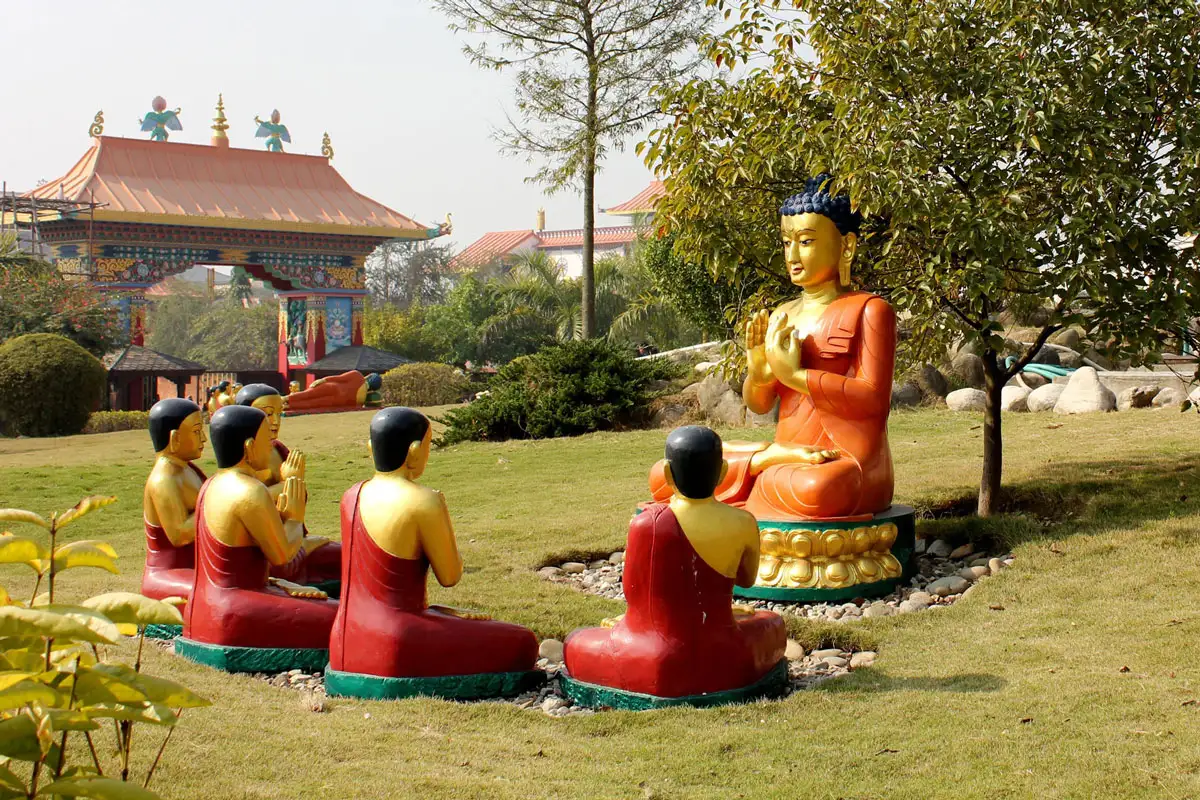
Golden and colorful statues depicting Lord Buddha teaching his disciples in a beautifully manicured garden in Lumbini, Nepal.

If you are planning a trip to the exact birth site of Siddhartha Gautama Buddha, this Lumbini Maya Devi Temple travel guide covers everything a real visitor needs: the marker stone location, entry fees, opening hours, dress code, transportation from Kathmandu and India, permits, and a practical day-by-day plan. We have combined official Lumbini Development Trust information with on the ground travel logistics so you can plan with confidence rather than guesswork.

Maya Devi Temple sits inside the Sacred Garden of Lumbini, in Rupandehi district of Nepal’s Terai lowlands, roughly 22 kilometers from Bhairahawa (Siddharthanagar) and about 5 kilometers from the Indian border town of Sunauli. UNESCO inscribed Lumbini as a World Heritage Site in 1997, recognizing it as the archaeologically verified birthplace of the historical Buddha, born around the 6th century BCE to Queen Maya Devi of the Shakya clan.

Maya Devi Temple is open daily, the marker stone inside the temple identifies the precise spot of Buddha’s birth, entry costs range from around NPR 80 for Indian nationals to NPR 700 for other foreign nationals (per the current Lumbini Development Trust conservation fee schedule), and the best time to visit is October to March when the Terai heat is manageable.

Why Visit Lumbini and Maya Devi Temple

Lumbini is not a reconstructed shrine or a symbolic monument. Archaeological excavations conducted under UNESCO supervision confirmed layers of brick structures dating back to the 3rd century BCE and earlier, anchoring Lumbini as one of the few places on earth where a major world religion’s founding event can be pinpointed to an actual, excavated spot. For Buddhist pilgrims this is comparable in weight to Bethlehem or Mecca for other faiths. For history and archaeology travelers, it is a rare chance to stand where a verified ancient event occurred rather than a legend attached to a general region.

Beyond the temple itself, Lumbini functions as a living international monastic town. More than 25 countries have built monasteries and stupas within the Lumbini Monastic Zone, designed by Japanese architect Kenzo Tange, creating a genuinely global Buddhist campus that most visitors do not expect until they arrive.

History, Myth, and Religious Importance

According to Buddhist tradition recorded in texts like the Lalitavistara Sutra, Queen Maya Devi was traveling from Kapilvastu to her parental home in Devadaha when she stopped in the garden of Lumbini and gave birth while holding the branch of a sal tree, said to stand near the location of today’s Bodhi tree. Tradition holds that the newborn took seven steps and declared this his final rebirth.

In 249 BCE, Emperor Ashoka visited Lumbini in person and erected a sandstone pillar to mark the spot, inscribing it in Brahmi script confirming this as the Buddha’s birthplace. That inscription remains one of the most important primary sources in world religious history, because it is a contemporary, physical record rather than a later retelling. The site was lost to dense forest for centuries after Buddhism declined in the region, and was rediscovered in 1896 by archaeologist Alois Anton Fuhrer, who located the buried Ashoka Pillar. Excavations continued through the 20th century and intensified after UNESCO’s 1997 inscription, culminating in the 2013 discovery of a timber shrine beneath the temple dated to around the 6th century BCE, among the earliest physical evidence of the Buddha’s life anywhere in the world.

Special Cultural and Religious Activities in Lumbini

Lumbini is not only a historical stop; it is an active site of worship and practice.

  • Buddha Jayanti (Buddha Purnima): The single most important annual event, usually falling in April or May on the full moon, marking Buddha’s birth, enlightenment, and death simultaneously. Monasteries hold processions, chanting, candle offerings, and community feasts.
  • Daily meditation and chanting: Monks from the Sacred Garden and nearby monasteries conduct group meditation, particularly around sunrise, which visitors are often welcome to join quietly.
  • Monastic Zone ceremonies: Different national monasteries (Thai, Myanmar, Cambodian, Vietnamese, Korean, German, French) hold their own festival calendars, so a visit during a national Buddhist holiday of any of these countries may coincide with a ceremony.
  • Meditation retreats: Several monasteries and the Lumbini International Research Institute offer short retreats and courses for serious practitioners, separate from casual sightseeing.

Highlights and Top Attractions in the Sacred Garden

Maya Devi Temple and the Marker Stone

The core of the site is a whitewashed rectangular temple built over the excavated ruins. Inside, protected under a raised walkway and a plexiglass boundary, sits the marker stone believed to identify the exact spot of Buddha’s birth. This stone is not decorative; it is the archaeological reference point that anchors the entire site’s authenticity. Visitors walk on an elevated boardwalk around the excavated brick foundations to view it without stepping on the ruins themselves. A carved relief nearby depicts Maya Devi holding the sal tree branch during the birth, though the original relief is protected inside and what most visitors photograph is a replica in the garden area.

The Ashoka Pillar

Standing just outside the temple, the sandstone pillar erected by Emperor Ashoka in 249 BCE is protected by a metal railing. Its Brahmi inscription is the oldest surviving epigraphic proof that Lumbini is Buddha’s birthplace, making it arguably the single most historically significant object at the site.

The Sacred Pushkarini Pond

Just south of the temple lies the Pushkarini, the sacred pond where tradition holds Maya Devi bathed before giving birth, and where the infant was given his first ritual bath. Beyond the origin story, the pond carries ongoing spiritual weight for pilgrims as a place of purification; many walk its edge in quiet reflection rather than rushing past it as a photo stop. The still water reflecting the ancient brick platforms and the Bodhi tree above it is also one of the most photographed compositions in Lumbini.

The Bodhi Tree

A large, actively growing Bodhi (sacred fig) tree stands beside the pond, draped in prayer flags left by pilgrims from across Asia. While not the original tree from the Buddha’s era, it continues the living tradition of Bodhi trees as devotional focal points across Buddhist sites.

Pro tip for photography: Early morning light (just after opening) hits the Ashoka Pillar and the pond from the east, giving the cleanest, least crowded shots of both the pillar and the Bodhi tree together. Midday sun in the Terai is harsh and flat for photos.

Things to Do in Lumbini Beyond the Temple

  • Cycle or take an electric rickshaw through the Monastic Zone to see the Thai, Myanmar, Cambodian, Korean, Vietnamese, and Chinese monasteries, each built in a distinct national architectural style.
  • Visit the Lumbini Museum, which houses artifacts from the excavation and a scholarly overview of Buddhist archaeology in the region.
  • Walk or cycle to the World Peace Pagoda, built by Japanese Buddhist monks, at the northern end of the Monastic Zone.
  • Take a half-day trip to Tilaurakot, the excavated ruins of ancient Kapilvastu, believed to be the palace where Siddhartha spent his childhood.
  • Join a short guided meditation session at one of the international monasteries that welcomes visitors.
  • Explore Lumbini Bazaar for handicrafts, prayer flags, and simple Nepali and Indian Terai food.

Sample Lumbini Itinerary

Day Focus Key Stops
Day 1 (Arrival) Settle in, evening temple visit Fly or drive in, check into hotel, visit Maya Devi Temple and Sacred Garden at sunset
Day 2 (Full Sacred Garden and Monastic Zone) Deep exploration Sunrise return to Maya Devi Temple, Ashoka Pillar, Pushkarini pond, cycle through Eastern and Western Monastic Zones, Lumbini Museum
Day 3 (Extended circuit) Regional Buddhist heritage Half-day excursion to Tilaurakot (ancient Kapilvastu), World Peace Pagoda, departure or onward travel

Travelers with only one day can compress Day 1 and Day 2 into a single, longer sunrise-to-sunset visit, though this sacrifices some of the quieter monastery time.

How to Reach Lumbini

From Kathmandu by Flight

The fastest option is flying from Kathmandu’s Tribhuvan International Airport to Gautam Buddha International Airport in Bhairahawa. Buddha Air, Yeti Airlines, and Shree Airlines operate multiple daily flights, with a flight time of roughly 30 to 35 minutes. From the airport, it is about a 45 minute, 22 kilometer drive by taxi to Lumbini itself.

From Kathmandu by Tourist Bus or Private Vehicle

Overland travel from Kathmandu to Lumbini covers roughly 260 kilometers of mountain and hill road and typically takes 8 to 10 hours by tourist bus or private car, depending on road conditions in the hills. Tourist buses generally drop passengers at Bhairahawa or directly at Lumbini Bazaar near the site’s main entrance gates. This route works well if you are combining Lumbini with a broader Nepal itinerary through Chitwan National Park, since Chitwan sits roughly on the way.

From the Indian Border (Gorakhpur / Sunauli)

Many travelers from India reach Lumbini overland through the Sunauli border crossing. Gorakhpur, the nearest major Indian city with rail and air connections, is about 90 to 100 kilometers from the Sunauli border, roughly a 2.5 to 3 hour drive or taxi ride. From Sunauli, Lumbini is a short 20 to 25 minute taxi or shared jeep ride of about 22 kilometers. This makes Lumbini genuinely feasible as a day trip or overnight add-on for travelers already in eastern Uttar Pradesh, particularly those visiting Kushinagar or Varanasi on a broader Buddhist circuit.

Getting Around Lumbini Itself

  • Electric rickshaw: The most popular way to cover the spread-out Monastic Zone comfortably. A full day hire covering the major monasteries and stupas is a practical, affordable option and spares you walking in Terai heat.
  • Bicycle rental: Available in Lumbini Bazaar near Gate 1, ideal for travelers who prefer a slower, self-paced route between the ruins and monasteries.
  • Walking: Feasible only for the immediate Sacred Garden area; the wider Monastic Zone is too large to comfortably cover on foot in one visit.
  • Electric van service: The Lumbini Development Trust has introduced electric van transport for visitors within the site, reducing reliance on private vehicles inside the sacred zone.

Maya Devi Temple Opening Hours and Best Time to Visit

Maya Devi Temple and the Sacred Garden are generally open from sunrise to sunset daily, with the temple building itself commonly operating on a schedule of early morning and afternoon hours. Because timing details can shift seasonally, always confirm the current hours posted at the ticket counter on arrival.

Best time to visit: October through March offers the most comfortable weather, with cool mornings and mild daytime temperatures ideal for cycling around the Monastic Zone. April and May bring the Buddha Jayanti festival but also rising heat. June through September is monsoon season with high humidity, heavy rain, and the most intense heat of the year; this period is best avoided unless your travel dates are fixed.

Season Months Weather Recommendation
Cool and Dry October to February Mild days, cool nights, low humidity Best overall visiting window
Warm and Festive March to May Rising heat, Buddha Jayanti festival Good for the festival, plan for heat
Monsoon June to September Hot, humid, heavy rainfall Least recommended, muddy paths possible

Dress Code, Shoe Removal, and Temple Etiquette

Maya Devi Temple is an active place of worship, not a museum, and the Lumbini Development Trust enforces respectful visitor conduct.

  • Shoes must be removed before entering the temple premises; carry a light bag or use the shoe racks provided near the entrance.
  • Dress modestly, covering shoulders and knees; loose, breathable cotton clothing works well given the Terai heat.
  • Food and drinks are not permitted inside the temple and should be left at the entrance.
  • Keep voices low, avoid loud conversation, and be mindful of pilgrims engaged in prayer or meditation.
  • Photography inside the inner sanctum near the marker stone is restricted in some areas; follow posted signage and staff instructions rather than assuming photography is universally allowed.

Lumbini Development Trust Conservation Fee and Entry Tickets

Entry to the Maya Devi Temple and Sacred Garden is managed through the Lumbini Development and Conservation Fee, set by the Lumbini Development Trust under Nepal’s Ministry of Culture, Tourism and Civil Aviation. According to the Trust’s current published rates, the per-day conservation fee structure is as follows:

Category Nepali Nationals Indian Nationals SAARC + Myanmar Nationals Other Foreign Nationals
Conservation Fee (per day) NPR 20 NPR 80 NPR 400 NPR 700
Still Camera (per day) NPR 100 NPR 100 USD 3 USD 3
Video Camera (per day) NPR 1,000 NPR 1,000 USD 25 USD 25
Short Video / Music Video / Documentary NPR 3,000 NPR 3,000 NPR 3,000 NPR 3,000
Professional Filming NPR 10,000 USD 1,000 USD 1,000 USD 1,000
Meditation Pass (12 days) Free NPR 500 NPR 500 NPR 1,000

The conservation fee is waived for monks, nuns, persons with disabilities, and local residents of the three surrounding districts. Tickets can be purchased in cash at the entrance, via the official Lumbini Development Trust ticketing portal, or through the QR code payment option posted at the counters. Because fee structures are periodically revised by the government, always verify the exact current rate before travel through the official Lumbini Development Trust website rather than relying solely on third party blogs.

Featured snippet answer: The Lumbini conservation fee for foreign tourists (excluding SAARC nations) is currently NPR 700 per day, SAARC and Myanmar nationals pay NPR 400, Indian nationals pay NPR 80, and Nepali citizens pay NPR 20, with separate charges for still and video cameras.

Camera Permits and Drone Regulations

Still camera use inside the general Sacred Garden area typically requires the modest still camera fee listed above, while video cameras carry a higher daily charge. Professional filming, including for commercial or documentary purposes, requires a separate and significantly higher permit and should be arranged with the Lumbini Development Trust office in advance rather than assumed on arrival.

Drones are a restricted category. Flying drones inside the Lumbini Monastic Zone falls under Nepal’s civil aviation and heritage site regulations, and unauthorized drone use around religious and archaeologically protected zones can result in confiscation of equipment or fines. Any traveler wishing to fly a drone for legitimate purposes should apply for permission through the Lumbini Development Trust and relevant civil aviation authorities well before arrival; casual recreational drone flying without a permit should be avoided entirely.

Long Term Meditation Pass

For travelers interested in a deeper practice rather than a short visit, Lumbini offers a 12-day meditation pass, priced at NPR 500 for Indian and SAARC nationals and NPR 1,000 for other foreign nationals, with Nepali citizens exempt. This pass is intended for those planning to spend extended time at meditation centers within the Monastic Zone rather than casual sightseeing visitors. Applications are generally made directly through the Lumbini Development Trust office or the meditation center you plan to stay with, and it is worth contacting your chosen monastery or center in advance to confirm space and any additional requirements, since capacity at retreat centers is limited.

Accommodation in Lumbini

Lumbini’s accommodation scene has grown substantially, ranging from simple pilgrim guesthouses to full service hotels.

  • Luxury and mid-range hotels: Several well-appointed hotels sit near Lumbini Gate 1 and along the road toward Bhairahawa, offering air conditioning, restaurants, and garden settings suited to travelers wanting comfort after a day of temple visits.
  • Budget guesthouses: Numerous simple guesthouses cluster around Lumbini Bazaar, popular with backpackers and pilgrims on a tighter budget.
  • Monastery stays: Some monasteries within the Monastic Zone offer basic accommodation for genuine pilgrims and meditation practitioners, though these are not a substitute for standard tourist lodging and usually require advance arrangement.

Food, ATMs, and Practical Services in Lumbini Bazaar

Lumbini Bazaar, just outside the main site entrance, functions as the practical service hub for visitors.

  • ATMs and money exchange: Available in Lumbini Bazaar and Bhairahawa, though it is wise to carry sufficient Nepali rupees in cash before arriving, since machine availability can be inconsistent compared to Kathmandu.
  • Restaurants: Expect primarily Nepali and North Indian vegetarian cuisine given the pilgrim clientele, alongside simple Western style cafes catering to international tourists near the main gate.
  • SIM cards and connectivity: Nepali mobile networks (Ntc, Ncell) work reliably in Lumbini and Bhairahawa; purchasing a local SIM in Kathmandu before departure is more convenient than trying to source one in Lumbini itself.

Costs and Budget Breakdown

Expense Category Approximate Budget Traveler Cost Approximate Comfort Traveler Cost
Kathmandu to Bhairahawa flight (one way) USD 75 to 100 USD 100 to 150
Ground transport (rickshaw/taxi in Lumbini, per day) USD 8 to 15 USD 20 to 40
Accommodation (per night) USD 15 to 30 USD 60 to 150+
Meals (per day) USD 8 to 15 USD 20 to 40
Temple conservation fee and camera permit USD 6 to 10 (foreign national) USD 6 to 10 (foreign national)

These figures are indicative planning ranges rather than fixed prices, since airfares and hotel rates fluctuate seasonally.

Who Should Visit Lumbini

Lumbini rewards a wide range of travelers, though the experience differs by traveler type:

  • Spiritual and Buddhist pilgrims will find Lumbini the emotional and religious centerpiece of any Nepal or South Asia trip.
  • Families benefit from the open, walkable Sacred Garden and the relatively low physical demand compared to mountain trekking, making it accessible for children and grandparents alike.
  • History and archaeology enthusiasts get a rare chance to see excavated, dated ruins directly tied to a named historical figure.
  • Luxury travelers can base themselves at comfortable hotels near Gate 1 and hire private vehicles for a relaxed, guided circuit.
  • Solo travelers and backpackers find Lumbini easy to navigate independently by bicycle or rickshaw, with straightforward budget lodging.
  • Senior travelers should note that while the Sacred Garden itself is flat and manageable, the Terai heat outside the cool season can be taxing, so October to February travel is particularly advisable.

Responsible Tourism in Lumbini

Lumbini is simultaneously a UNESCO heritage site, an archaeological excavation, and a living place of worship, which means responsible visits matter more than at a purely secular attraction.

  • Stay on designated walkways around the excavated ruins rather than stepping onto protected brick foundations.
  • Avoid loud behavior, disruptive photography (such as flash photography near meditating monks), or treating the temple purely as a photo backdrop.
  • Support the local economy by eating at Lumbini Bazaar establishments and hiring local rickshaw and bicycle operators rather than bypassing them.
  • Respect monastery-specific rules, since each national monastery in the Monastic Zone may have its own etiquette expectations for visitors.
  • Dispose of waste properly; Lumbini’s open garden spaces are easily affected by litter given high visitor volumes during festivals.

Mistakes to Avoid When Visiting Lumbini

  • Assuming Lumbini is a single small temple rather than a large monastic campus; without a rickshaw or bicycle, most visitors only see a fraction of the site.
  • Arriving at midday during hot season and underestimating the Terai heat.
  • Forgetting to carry cash, since card payment is not universally reliable at smaller vendors and rickshaw operators.
  • Skipping Tilaurakot, which many rushed itineraries miss despite it being a meaningful extension of the Buddha’s early life story.
  • Not confirming the latest conservation fee and camera permit rates in advance, since government fee schedules are periodically revised.
  • Planning only a few rushed hours when a comfortable, unhurried visit realistically needs a half day at minimum, and a full day to see the Monastic Zone properly.

Nearby Attractions Around Lumbini

  • Tilaurakot (Ancient Kapilvastu): The excavated ruins of the palace city where Siddhartha Gautama is believed to have spent his childhood before renouncing royal life, roughly a short drive from Lumbini.
  • World Peace Pagoda: A striking white stupa built by Japanese Buddhist monks at the northern edge of the Monastic Zone.
  • Devadaha: Associated with Maya Devi’s maternal family home, of interest to travelers tracing the fuller Buddha birth narrative.
  • Chitwan National Park: A logical add-on for travelers combining Lumbini with wildlife safari experiences, reachable by road as part of a broader Terai circuit.
  • Kushinagar, India: Across the border, the site of Buddha’s death (Mahaparinirvana), commonly paired with Lumbini on Buddhist circuit itineraries.

Suggested Tour Packages

For travelers who prefer a fully organized experience rather than independent logistics, Nepal Tour Package Pvt. Ltd. designs custom Lumbini itineraries that can include:

  • A dedicated Lumbini and Kapilvastu heritage tour combining Maya Devi Temple, the Monastic Zone, and Tilaurakot.
  • A Buddhist circuit itinerary linking Kathmandu’s Boudhanath and Swayambhunath stupas with Lumbini for a complete Nepal Buddhist heritage journey.
  • A Lumbini and Chitwan combination tour pairing spiritual heritage with wildlife safari experiences in one Terai trip.
  • Private, guided transport and English speaking local guides for travelers who want historical context delivered on site rather than researched independently.

If you would like a itinerary built around your travel dates, group size, and comfort level, our Kathmandu based travel planning team can put together a tailored proposal with transparent, all-inclusive pricing.

Conclusion

Maya Devi Temple is one of the rare places in the world where faith, history, and archaeology meet at a single, verifiable point of ground. Whether you are approaching Lumbini as a pilgrim retracing the Buddha’s earliest steps, a family looking for a meaningful and manageable cultural stop, or a history traveler drawn to a UNESCO World Heritage Site with genuine archaeological depth, this Lumbini Maya Devi Temple travel guide should give you what you need to plan a respectful, well-timed, and cost-aware visit. Combine your Sacred Garden visit with the wider Monastic Zone and a side trip to Tilaurakot, and you will come away with a far fuller picture of Lumbini than a rushed half-day stop allows.


Ready for your next adventure? Let us handle the details.

Nepal Tour Package

๐Ÿ“ž +977 9841620757 (Available on WhatsApp, Viber, WeChat, RedNote)

โœ‰๏ธ info@nepaltourpackage.com / nepaltourpackage@outlook.com

๐Ÿ’ป www.nepaltourpackage.com

๐Ÿ“ Kathmandu, Nepal

Frequently Asked Questions (FAQs)

Where exactly is Buddhaโ€™s birth marker stone located inside Maya Devi Temple?

The marker stone sits within the excavated brick ruins inside the templeโ€™s main sanctum, viewed from an elevated walkway rather than direct floor access, and is protected to preserve the archaeological layer beneath it.

What is the spiritual significance of the Pushkarini pond in Lumbini?

Tradition holds that Queen Maya Devi bathed in the Pushkarini pond before giving birth and that the infant received his first ritual bath there, making it a site of purification and quiet reflection for pilgrims today.

What are the Maya Devi Temple opening hours?

The Sacred Garden is generally accessible from sunrise to sunset daily, with the temple building typically operating on set morning and afternoon hours; confirm exact timings at the entrance on the day of your visit.

Is there a dress code at Maya Devi Temple?

Yes. Shoulders and knees should be covered, shoes must be removed before entering the temple, and food and drink are not allowed inside.

How much is the Lumbini Development Trust conservation fee?

Current published rates are NPR 20 for Nepali citizens, NPR 80 for Indian nationals, NPR 400 for SAARC and Myanmar nationals, and NPR 700 for other foreign nationals, per day, though it is worth verifying current rates before travel.

How much does an entry ticket cost for SAARC and Indian citizens?

SAARC nationals pay a conservation fee of NPR 400 per day, while Indian nationals pay NPR 80 per day under the current fee structure.

Do I need a separate permit for a camera inside Lumbini?

Yes. Still cameras and video cameras carry separate daily fees, with higher charges for foreign nationals compared to Nepali and Indian visitors, and professional filming requires a distinct, higher cost permit.

How can I apply for a long term meditation pass in Lumbini?

The 12-day meditation pass is arranged through the Lumbini Development Trust or the specific monastery or meditation center you plan to stay with, and is intended for serious practitioners rather than casual visitors.

Are drones allowed inside the Lumbini Monastic Zone?

Drone flights are restricted and require prior permission from the Lumbini Development Trust and relevant civil aviation authorities; flying without authorization risks confiscation or fines.

How do I travel from Kathmandu to Lumbini by flight?

Fly from Tribhuvan International Airport in Kathmandu to Gautam Buddha International Airport in Bhairahawa, a flight of roughly 30 to 35 minutes, then continue by taxi about 22 kilometers (around 45 minutes) to Lumbini.

What is the tourist bus fare and journey time from Kathmandu to Lumbini?

Overland tourist buses cover the roughly 260 kilometer route in about 8 to 10 hours, with drop offs typically at Bhairahawa or directly at Lumbini Bazaar near the main gates.

How much does it cost to hire an electric rickshaw for a full day Lumbini tour?

A full day electric rickshaw hire covering the major monasteries and stupas across the Monastic Zone is an affordable option compared to private taxis, and is the most common way independent travelers cover the site.

Where can I rent a bicycle in Lumbini to explore the ruins?

Bicycle rental shops operate in Lumbini Bazaar near the main entrance gates, giving visitors a flexible, self-paced way to move between the Sacred Garden and the Monastic Zone.

How far is Lumbini from the Gorakhpur border crossing in India?

Gorakhpur is roughly 90 to 100 kilometers from the Sunauli border crossing, about a 2.5 to 3 hour drive, with Lumbini a further short 20 to 25 minute ride of about 22 kilometers from the border.

What is the best time to visit Lumbini for the Buddha Jayanti festival?

Buddha Jayanti usually falls in April or May on the full moon and draws large crowds; booking accommodation near Lumbini Gate 1 well in advance is recommended for travelers planning to attend.

Do you have any feedback.

Fell free to send message to us

Leave a Reply

๐Ÿ™‹ Need Help Planning Your Trip?

Our travel experts are online now โ€” get instant answers to your questions!
๐Ÿ“ž +977 9841620757


๐Ÿ’ฌ Chat with Us Now

โšก Avg. response time: under 10 minutes

๐Ÿ”ฅ LIMITED-TIME LOW FARES

โœˆ๏ธ Search Cheap Flights

๐Ÿ”’ Secure Booking
๐Ÿ’ฐ Best Price Guarantee
โšก Instant Results
๐ŸŒ 500+ Airlines

A wide landscape view of the massive Annapurna mountain range and the sharp peak of Mount Machapuchare rising above dark forested hills.
Ghorepani Poon Hill Travel Guide 2026: Sunrise, Route, Cost & Planning
July 19, 2026
Panoramic view from a Nagarkot hilltop featuring the Nepal national flag waving on a ridge overlooking rolling hills and a massive snow-covered mountain range.
Nagarkot, Nepal: The Complete Sunrise, Trekking & Travel Cost Guide (2026)
July 17, 2026
An elevated high-angle view looking down at the stone Krishna Mandir temple and red-tiled pagoda roofs of Patan Durbar Square.
The Complete Patan Durbar Square Guide: Entrance Fees, Map & Hidden Courtyards
July 15, 2026
We are using cookies to give you the best experience. You can find out more about which cookies we are using or switch them off in privacy settings.
AcceptPrivacy Settings

GDPR

Need Help?