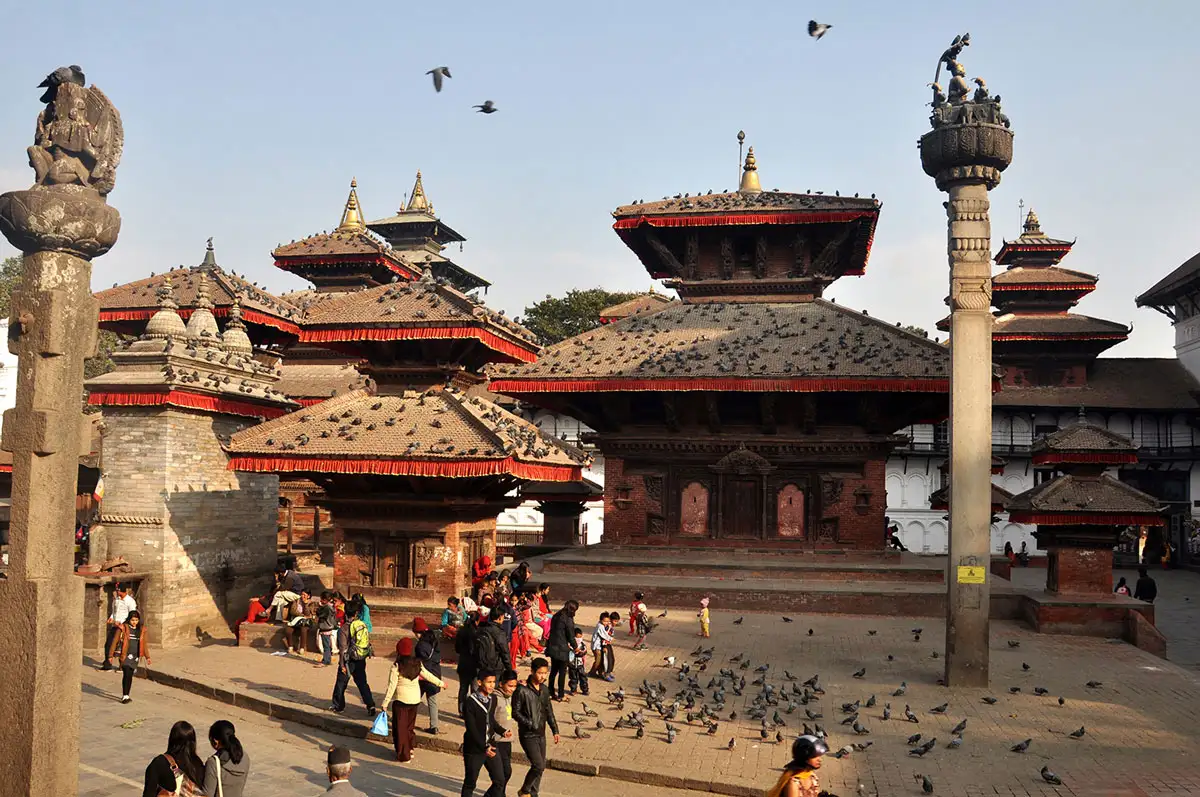
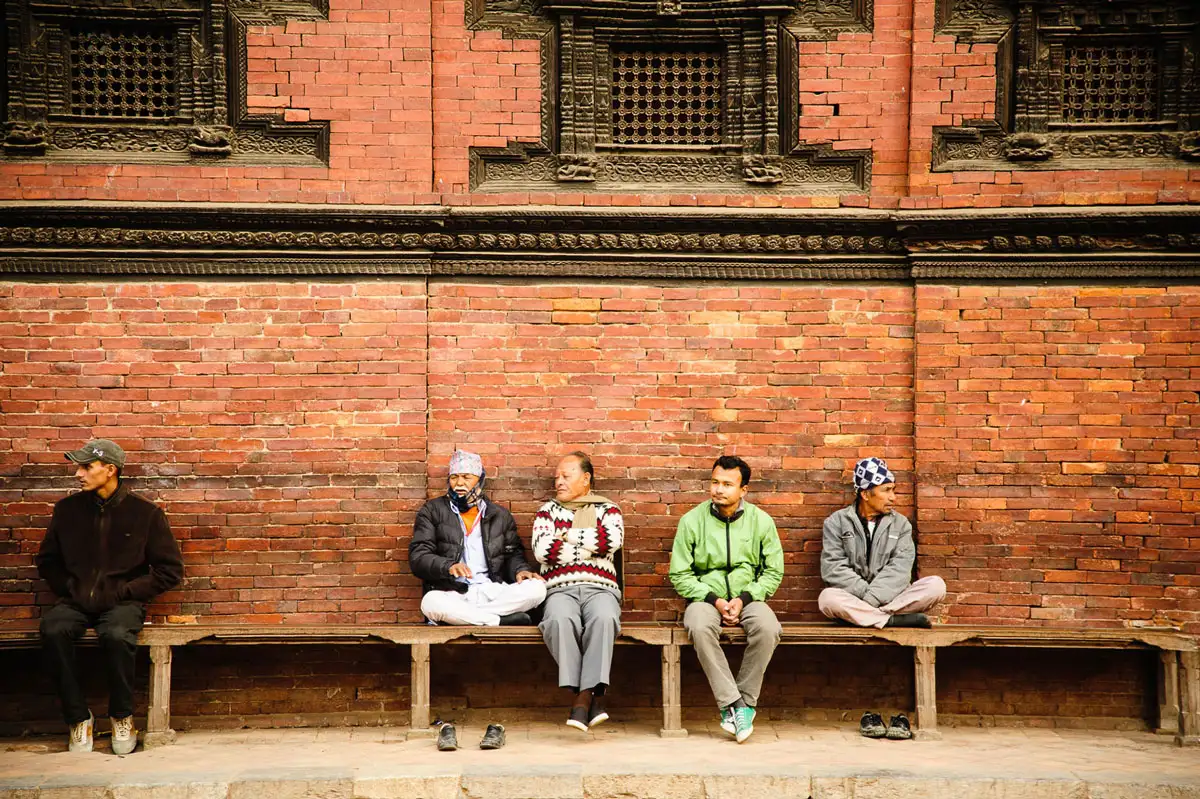
Patan Durbar Square sits at the heart of Lalitpur, five kilometers south of central Kathmandu, and it is, quietly, the most architecturally refined of Nepal’s three royal squares. If you only have room in your itinerary for one durbar square, most Kathmandu Valley guides, local historians, and long term residents will tell you the same thing: make it this one. The stone carved temples stand closer together than in Kathmandu or Bhaktapur, the Patan Museum inside the old palace is considered one of the finest small museums in South Asia, and the surrounding lanes of Lalitpur still function as a living workshop for Newari metalwork, wood carving, and thangka painting.
This guide is built around the questions travelers actually ask before and during a visit, not generic history copied from a plaque. You will find current entrance fees, a breakdown of what is and is not included in your ticket, a self guided walking route through the courtyards, honest transportation costs from Thamel, and practical notes on photography, food, and safety that most competing guides skip entirely.
Quick answer: Patan Durbar Square is a UNESCO listed royal plaza in Lalitpur, Nepal, home to the former Malla royal palace, the Patan Museum, and stone temples including Krishna Mandir. Entry costs NPR 1,000 for international visitors and NPR 250 for SAARC nationals, and the ticket includes the Patan Museum. Most visitors need two to three hours to see the square properly.
Patan Durbar Square earns its reputation honestly. It was the seat of the independent Malla kingdom of Lalitpur from the 16th to 18th centuries, and because the city was never as badly damaged by the 2015 Gorkha earthquake as Kathmandu Durbar Square, a larger share of what you see is original stonework rather than post quake reconstruction.
What sets Patan apart from its two sister squares:
Patan’s roots reach back further than either of Nepal’s other durbar squares. Local chronicles and the research of Tibetologist David Snellgrove trace organized settlement here to before the Christian era, with early Buddhist communities forming around what is now the old city core. The name Patan comes from the Sanskrit word for “city,” while Newar residents still call it Yala.
The palace complex you see today, however, largely dates from the reign of King Siddhi Narsingh Malla in the 17th century, when Patan operated as an independent Malla kingdom alongside Kathmandu and Bhaktapur. Under Malla patronage, the square became a showcase for Newari artisans working in stone, wood, and bronze, a golden age of temple building that produced Krishna Mandir, the Golden Gate, and the palace’s three inner courtyards. Nepal’s unifier, Prithvi Narayan Shah, absorbed Patan into a unified Nepal in 1768, largely without destroying its monuments, which is one reason so much of the original craftsmanship survives.
Religiously, Patan Durbar Square is unusual in South Asia for how comfortably Hinduism and Vajrayana Buddhism sit side by side. Krishna Mandir draws Hindu pilgrims, while Hiranya Varna Mahavihar (the Golden Temple) a few minutes away is an active Buddhist monastery. This overlap reflects Newar religious practice generally, where the same household may observe both traditions.
Several major Newari festivals bring the square to life, and timing a visit around one can transform an ordinary sightseeing stop into something memorable.
Pro tip: If your trip dates overlap with any of these, arrive well before the stated start time. Local families claim courtyard viewing spots hours in advance, and Patan Durbar Square offers no formal seating.
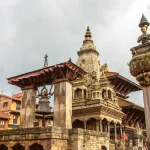
Krishna Mandir is the square’s single most photographed structure, and for good reason. Commissioned by King Siddhi Narsingh Malla around 1637, it is built almost entirely from carved stone rather than the brick and timber typical of Newari temples, a deliberate architectural statement inspired by North Indian shikhara style temples the king had seen on pilgrimage. Look closely at the first floor frieze for scenes from the Mahabharata and Ramayana carved directly into the stone. A pillar in front of the temple carries a gilded statue of King Yoga Narendra Malla, hands folded, facing his palace.
The Golden Gate (Sun Dhoka) is the ornate gilded entrance to Mul Chowk, decorated with repoussé metalwork depicting deities and mythical creatures, considered one of the finest surviving examples of Newari metal craft. Directly opposite, atop a tall stone pillar, sits a gilt copper statue of King Yoga Narendra Malla. Local legend holds that as long as the small bird perched above his head remains, the king may one day return to his palace, a story guides still tell visitors today.
Sundari Chowk, the smallest of the palace’s three courtyards, holds Tusha Hiti, a sunken royal bathing pool built entirely from carved stone. Every surface, from the water spout shaped like a mythical creature to the surrounding wall niches, is covered in intricate carving depicting Hindu deities and tantric symbols. This was a private ritual bathing space for Malla kings, not a public pool, and its scale is intentionally intimate.
Mul Chowk is the central and largest courtyard, historically used for royal ceremonies and Dashain festival rituals, centered on a shrine to the goddess Taleju, the Malla dynasty’s protective deity. Keshav Narayan Chowk, the northernmost courtyard, now houses the main entrance to the Patan Museum and takes its name from a since relocated statue of Vishnu.
Set inside the restored palace rooms surrounding Keshav Narayan Chowk, the Patan Museum holds one of the finest collections of Hindu and Buddhist bronze, stone, and wood art in South Asia. Exhibits are organized thematically rather than chronologically, walking visitors through iconography (how to identify specific deities by their attributes), the lost wax casting process used to make many of the pieces on display, and the architectural history of the palace itself, with detailed explanations of the wooden strut carvings and roof construction. Budget at least 45 minutes if art and craft interest you, longer if you enjoy reading exhibit text closely.
A five minute walk north of the main square, the Golden Temple is a three tiered Buddhist monastery believed to date to the 12th century, though most of its gilt copper facade was added later. It remains an active monastery with resident monks, and visitors are welcome but expected to remove shoes and leather items before entering the inner courtyard.
A ten minute walk from the square, Kumbheshwar is one of only two five story pagoda temples in the Kathmandu Valley (the other being Nyatapola in Bhaktapur). Dedicated to Shiva, it surrounds a sacred pond said to be fed by water from the holy Gosaikunda lake high in the mountains, a claim tied to local pilgrimage traditions rather than verified hydrology.
Travelers often ask which square to prioritize if time is limited. Here is a side by side comparison.
| Feature | Patan Durbar Square | Kathmandu Durbar Square |
|---|---|---|
| Founding dynasty period | Malla golden age, 16th to 17th century | Malla and later Shah dynasty additions |
| Layout | Compact, three palace courtyards close together | Sprawling, spread across a wider area |
| Signature structure | Krishna Mandir, stone shikhara style | Kasthamandap and Hanuman Dhoka palace |
| Earthquake damage (2015) | Moderate, largely restored | Heavier, some sites still under reconstruction |
| Museum quality | Patan Museum, widely praised, included in ticket | Tribhuvan Museum, included in ticket, smaller scope |
| Crowd level | Lower, calmer atmosphere | Higher, closer to Thamel tourist zone |
| Entry fee (foreign) | NPR 1,000 | NPR 1,000 to 1,500 |
| Best for | Architecture lovers, photographers, art enthusiasts | First time visitors wanting a central, walkable location |
Patan Durbar Square generally offers denser, better preserved stone architecture and a stronger museum, while Kathmandu Durbar Square wins on convenience if you are staying in Thamel. Serious travelers with time for only one should choose Patan; those wanting maximum ease should stay with Kathmandu.
This pace suits most travelers, but photographers and history enthusiasts often extend the visit to a full day.
Patan Durbar Square sits in Lalitpur, directly across the Bagmati River from Kathmandu.
Many travelers combine a Patan Durbar Square visit with nearby Kathmandu attractions in a single day tour, since the driving distance between valley landmarks is short.
| Season | Months | Conditions | Recommendation |
|---|---|---|---|
| Autumn | October to November | Clear skies, mild temperatures, festival season | Best overall time to visit |
| Winter | December to February | Cool, dry, occasional morning fog | Good for photography, fewer crowds |
| Spring | March to April | Warm days, clear mountain views | Very good, second best window |
| Summer/Monsoon | May to September | Hot, humid, daily rain likely | Visit early morning, carry rain gear |
October and November offer the clearest skies and coincide with major Newari festivals, making it the single best window to visit Patan Durbar Square. Early morning visits year round avoid both crowds and the midday heat.
Within a single day, the square is at its most photogenic in the early morning (soft light, fewer tourists, locals performing morning rituals) and again in the late afternoon as the sun angles low across the stone temple facades.
This is one of the most searched practical questions about Patan, and the answer has changed more than once over the years as local authorities restructured how fees are collected.
| Visitor Category | Entry Fee | Notes |
|---|---|---|
| International (non SAARC) tourists | NPR 1,000 | Includes Patan Museum |
| SAARC nationals (including Indian citizens) | NPR 250 | Valid passport required as proof |
| Nepali citizens, general public | Free | Museum only ticket costs NPR 30 separately |
| Nepali students (with school ID letter) | NPR 10 | Museum entry |
| Nepali students (with student ID) | NPR 15 | Museum entry |
| Children under 10 | Free in most cases | Confirm at counter, policy can vary |
Does the Patan Durbar Square ticket include entry to the Patan Museum? Yes. Since a one door ticketing agreement between the local municipality and the museum administration, a single ticket covers both the open square and courtyards, and full access to the Patan Museum galleries. You no longer need to buy two separate tickets, as was once the case.
Where to buy entrance passes for the Lalitpur heritage zone: Tickets are sold at the official counter near the main southern entrance to the square, not from street vendors or unofficial sellers. Buying from anyone other than the official counter risks a fake or invalid ticket.
Can international tourists pay Patan ticket fees in foreign currency? The ticket counter primarily accepts Nepali rupees, and while some counters may accept US dollars at an informal exchange rate, it is far more reliable and cost effective to pay in NPR. Carry small denomination rupee notes, since the counter may not always have change for large bills.
How to extend your Patan Durbar Square entry ticket for multiple days: Standard tickets are generally valid for a single day of entry. If you plan a longer stay in Lalitpur or want to return, ask the ticket counter directly about any multi day options available at the time of your visit, since these policies are set locally and can change. Confirming this in person avoids relying on outdated information.
Note on pricing accuracy: Nepal’s heritage site fees are set by local municipal authorities and do periodically change. The figures above reflect prices confirmed as of 2026, but always verify the current rate at the ticket counter or through Nepal Tourism Board before your visit.
Lalitpur has one of the valley’s strongest Newari food scenes, and eating here is part of the cultural experience, not an afterthought.
| Expense | Approximate Cost |
|---|---|
| Entry ticket (foreign) | NPR 1,000 (~USD 7 to 8) |
| Taxi from Thamel (one way) | NPR 500 to 800 |
| Local guide (2 to 3 hours) | NPR 1,500 to 3,000 |
| Newari lunch | NPR 400 to 900 per person |
| Rooftop cafe coffee | NPR 200 to 400 |
| Small souvenir (metalwork, jewelry) | NPR 500 upward, highly variable |
A realistic half day budget, including transport, entry, guide, and lunch, runs roughly USD 20 to 35 per person, excluding shopping.
Patan Durbar Square remains a living religious site, not a museum piece. Locals worship here daily, so visitors are expected to behave with the same respect they would show in any active temple.
Is it safe to visit Patan Durbar Square late at night for photography? The square itself is generally low crime, but it is not officially lit for night photography and the ticket counter operates during set daytime hours, so late night access to the paid areas is not typically available. The open public square areas outside the ticketed zone can usually be viewed after dark, but visiting alone late at night is not something local guides recommend, particularly for solo travelers unfamiliar with the city. Evening visits during festival periods, when the square is genuinely active with people, are a safer and more rewarding alternative to seeking solitude after dark.
Entry fees directly fund ongoing conservation of the palace complex and its monuments, so simply buying an official ticket already contributes to preservation. Beyond that, buy handicrafts directly from Lalitpur workshops rather than resold items in Thamel, since this keeps income with the artisans who actually make the pieces. Avoid unofficial guides who approach you inside the square without visible identification, and instead book a licensed guide through a registered operator, which supports Nepal’s formal tourism economy and ensures accurate information.
If you want to see Patan Durbar Square as part of a well planned Nepal trip rather than a rushed stopover, our Kathmandu Valley day tours combine Patan with Kathmandu Durbar Square, Boudhanath, and Pashupatinath in a single guided day, led by licensed local guides who bring the history in this guide to life in person. Patan also fits naturally into longer cultural circuits, family holiday itineraries, and pre or post trek city stays. If you would like a custom itinerary built around your dates, pace, and interests, our Kathmandu based travel planners can put one together for you.
Patan Durbar Square rewards travelers who slow down. It is compact enough to see properly in a few hours, yet rich enough in carved stone, museum artifacts, and living craft tradition that many visitors return more than once during a single Nepal trip. Whether you come for the architecture of Krishna Mandir, the quiet dignity of Sundari Chowk, or simply a calmer alternative to Kathmandu’s busier Durbar Square, Patan delivers one of the most complete cultural experiences in the entire Kathmandu Valley. Plan your entry fee, book a knowledgeable local guide if you can, and give the square the unhurried visit it deserves.
📞 +977 9841620757 (Available on WhatsApp, Viber, WeChat, RedNote)
✉️ info@nepaltourpackage.com / nepaltourpackage@outlook.com
📍 Kathmandu, Nepal