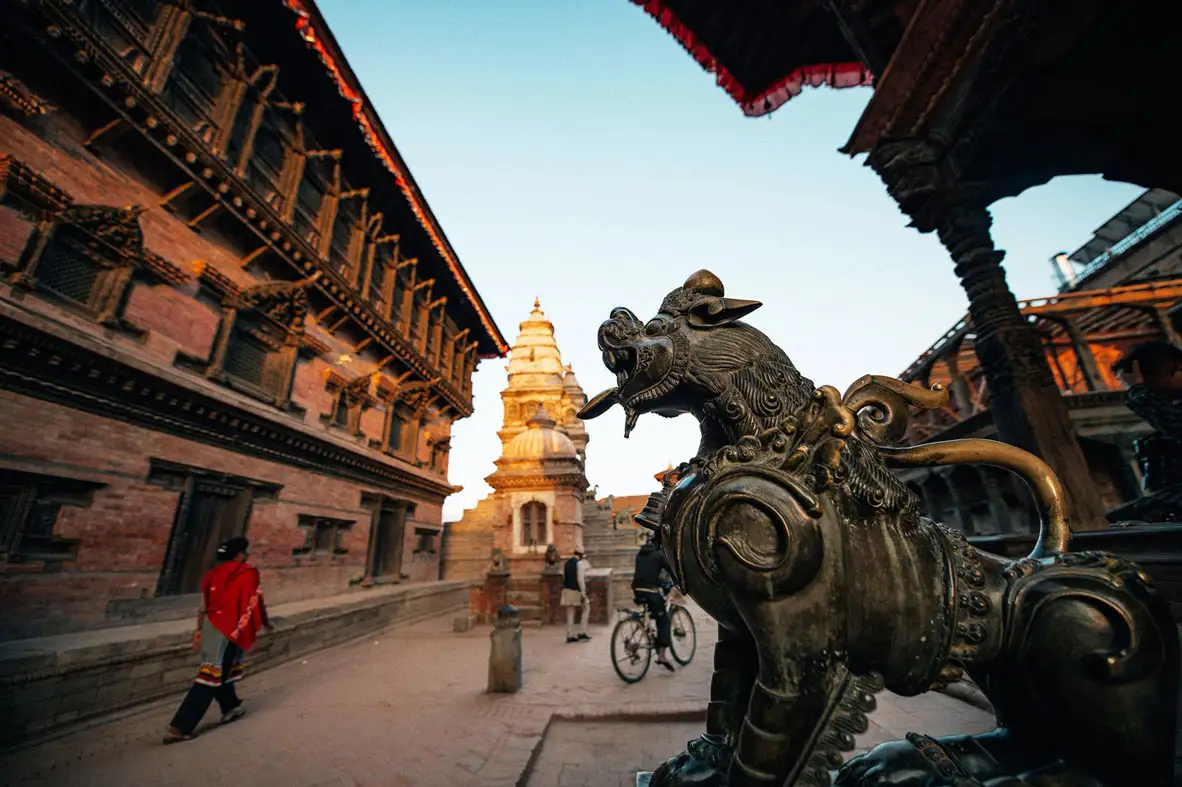
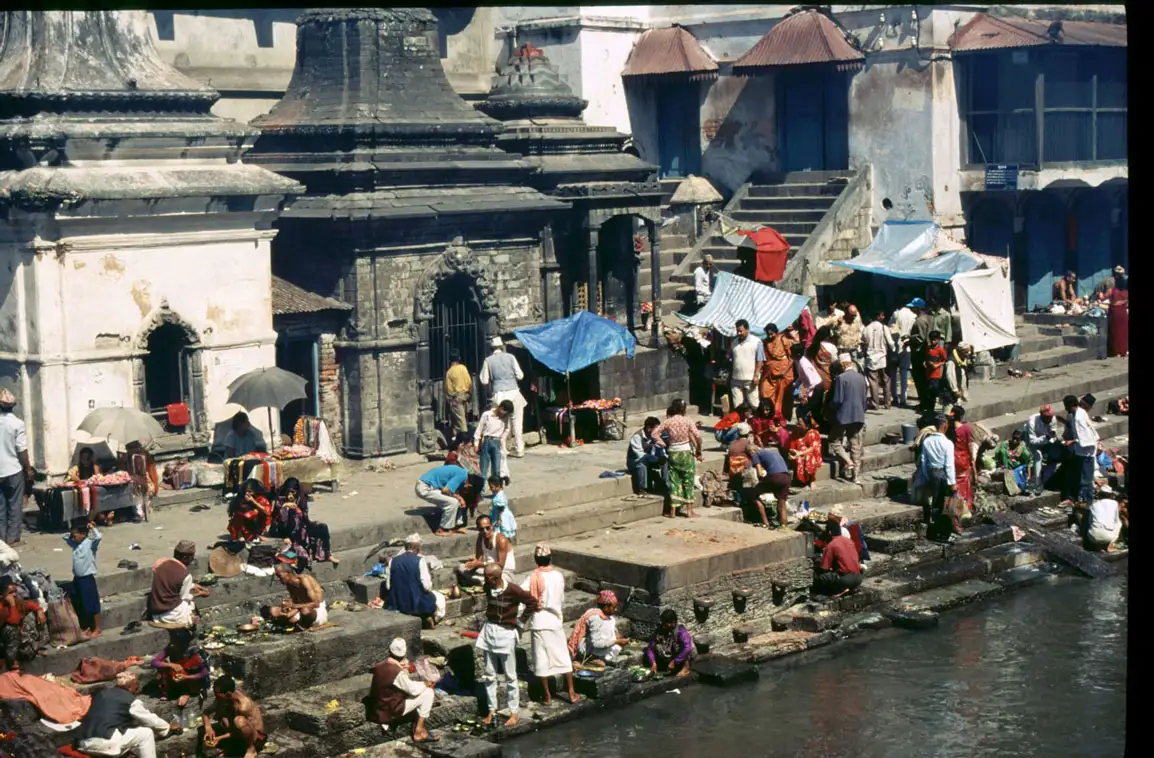
If you have one afternoon and one evening to understand Nepal’s spiritual soul, spend it at Pashupatinath Temple in Kathmandu. This is not a polished museum piece behind glass. It is a living, breathing temple complex where priests still perform ancient rituals every single morning, where families say goodbye to loved ones on the same riverbank that tourists photograph, and where the boundary between everyday life and deep faith simply does not exist.
Pashupatinath Temple Kathmandu sits on the banks of the sacred Bagmati River in eastern Kathmandu and is the most revered Hindu temple in Nepal, dedicated to Lord Shiva in his form as Pashupati, “Lord of All Beings.” It is a UNESCO World Heritage Site, one of the four holiest Shiva temples in the world alongside Kedarnath, Badrinath, and Kashi Vishwanath in India, and the single most important pilgrimage site for Hindus in Nepal.
This guide covers everything a real traveler needs: the honest entry fee situation (including SAARC pricing confusion that trips up a lot of visitors), whether non-Hindus can actually enter, how to respectfully watch a cremation without becoming “that tourist,” the evening aarati timing and where to sit for it, and the practical details competitors leave out, like what a legitimate guide should cost and how to spot the fake sadhus before they spot you.
| Detail | Information |
|---|---|
| Location | Eastern Kathmandu, on the banks of the Bagmati River, about 5 km from Thamel |
| UNESCO Status | Part of the Kathmandu Valley UNESCO World Heritage Site (inscribed 1979) |
| Dedicated to | Lord Shiva, worshipped here as Pashupati (“Lord of the Animals”) |
| Built / Rebuilt | Origins traced to the 5th century; current pagoda structure rebuilt in the 17th century |
| Opening Hours | Approximately 4:00 AM to 9:00 PM daily |
| Entry Fee (Foreigners) | NPR 1,000 (roughly USD 7 to 8) |
| Entry Fee (Indian Nationals) | Free |
| Entry Fee (Nepali Nationals) | Free |
| Non-Hindu Access | Cannot enter the main sanctum; can view from the eastern bank and terraces |
| Evening Aarati | Begins around sunset, roughly 6:00 to 6:30 PM in winter, closer to 7:00 PM in summer |
| Ideal Visit Duration | 1.5 to 2 hours for a general visit, longer if attending the aarati |
| Nearest Airport | Tribhuvan International Airport, about 3 to 4 km away |
Pashupatinath Temple is worth visiting because it offers a rare, unfiltered window into how Hinduism is actually lived in Nepal, combining active worship, open-air cremation rites, resident sadhus, and a nightly fire ceremony, all within one UNESCO-listed riverside complex.
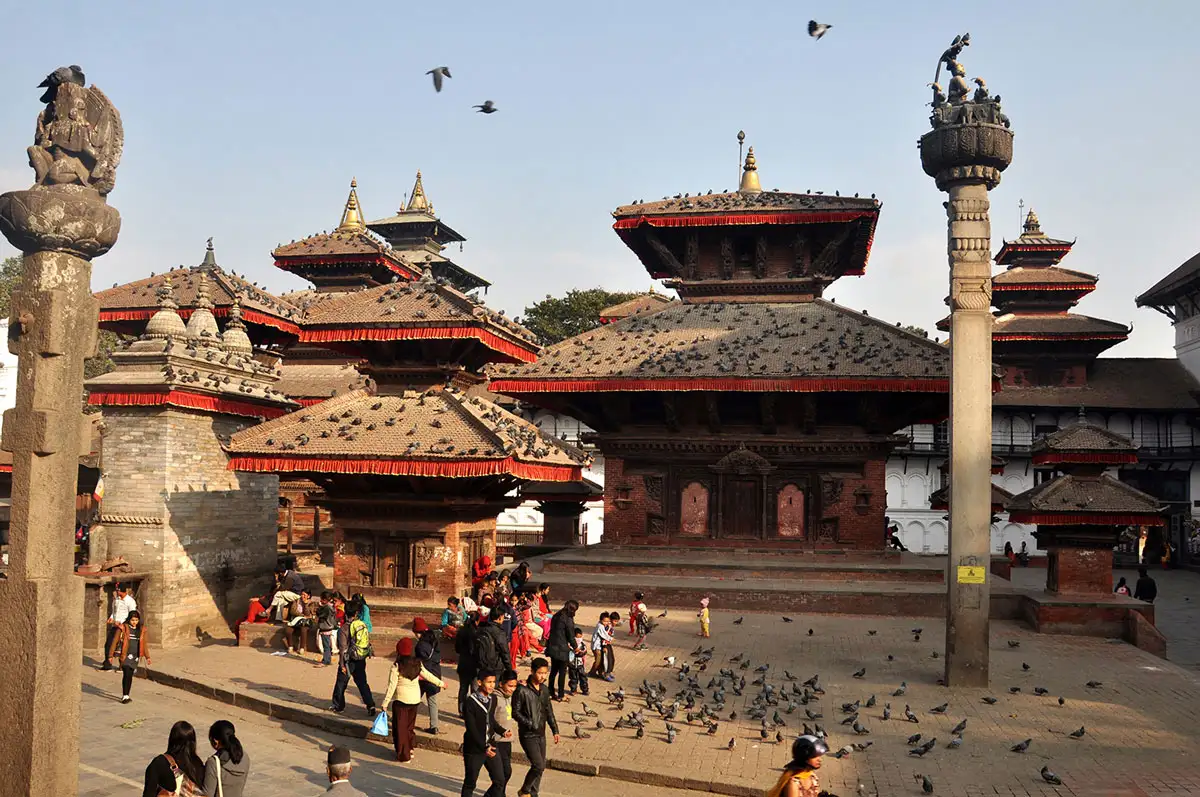
Most temples you visit as a traveler are quiet, static, and roped off. Pashupatinath is the opposite. Priests chant morning prayers a few meters from where a family may be lighting a funeral pyre. Sadhus with matted hair and ash-streaked skin sit cross-legged near shrines that have stood for centuries. Monkeys move freely across rooftops and stone terraces as if they own the place, which, in a way, they do.
For spiritual travelers, this is a pilgrimage stop with genuine religious weight. For cultural travelers, it is one of the most honest places in Kathmandu to observe Hindu death rites, something few destinations anywhere allow visitors to witness so openly. For photographers, the late-afternoon light on the golden pagoda roofs and the smoke rising from Aryaghat create images you will not find anywhere else in the Kathmandu Valley.
Pashupatinath’s documented history stretches back to at least the 5th century, though local tradition places its spiritual origins centuries earlier. The temple you see today, with its two-tiered pagoda roof, gold-plated finial, and intricately carved silver doors, was rebuilt in its current form in the 17th century after earlier structures were damaged over time.
The most repeated legend explains the name itself. According to Hindu mythology, Lord Shiva and his consort Parvati once rested on the banks of the Bagmati River and were so captivated by the valley’s beauty that they transformed into deer and wandered into the forest. When the other gods eventually persuaded Shiva to return to Mount Kailash, he agreed but left behind a linga, a sacred symbol of his presence, at this exact spot. Because Shiva lived here in animal form, he became known as Pashupati, “Lord of all living beings,” and the site became permanently sacred.
Religiously, Pashupatinath ranks among the holiest Shiva temples on Earth. It is considered one of the four principal Shiva pilgrimage sites in the subcontinent, alongside Kedarnath and Badrinath in Uttarakhand and Kashi Vishwanath in Varanasi. For devout Hindus, especially Shaivites, completing a pilgrimage circuit that includes Pashupatinath carries deep spiritual merit.
The temple complex extends well beyond the main shrine. It includes the Guhyeshwari Temple dedicated to the goddess Shakti, the Vasuki Temple, the Panch Deval complex (once a British residency, now a care home for the elderly), and dozens of smaller shrines and votive statues (chaityas) scattered along the terraces above the river.
Beyond the daily rituals, Pashupatinath comes alive during specific festivals that reveal a different, more intense side of the temple.
Maha Shivaratri (February or March): This is the single biggest event at Pashupatinath, drawing over a million devotees, including thousands of sadhus who travel from India for the occasion. Expect overnight worship, fire rituals, devotional chanting that continues until dawn, and crowds far beyond a normal day. If you want to witness Nepal’s largest religious gathering, this is it, but arrive early and expect very limited personal space.
Teej Festival (August or September): Celebrated primarily by Hindu women, Teej sees the temple grounds filled with women in red saris fasting and praying for their husbands’ health and longevity. The atmosphere is colorful, musical, and distinctly different from the more austere daily rhythm of the temple.
Bala Chaturdashi (November or December): A lesser-known but locally significant festival where devotees walk barefoot through the forest near the temple at night, scattering seven types of grain in memory of deceased relatives.
Monday Worship: Every Monday is considered especially auspicious for worshipping Lord Shiva, so expect noticeably larger crowds of local devotees compared to other weekdays.
The two-tiered pagoda structure with its gold roof and silver doors houses the sacred Pashupati lingam. Only Hindus may enter the inner sanctum, but the exterior architecture, wood carvings, and golden Nandi (Shiva’s bull, his vehicle) statue facing the entrance are visible to everyone from just outside.
Aryaghat is the most sacred cremation ghat on the Bagmati, traditionally reserved for members of Nepal’s royal family and prominent public figures, with additional ghats along the riverbank used for general cremations. This is where Hindus believe the soul achieves the best possible passage toward moksha, liberation from the cycle of rebirth.
A row of small, nearly identical stone shrines along the western terrace, each housing a Shiva linga. It is one of the most photographed corners of the complex and a favorite gathering spot for resident sadhus.
A short walk from the main complex, this temple is dedicated to the goddess Shakti and is considered one of the four Shakti Peethas in the Kathmandu Valley. Non-Hindus also cannot enter the inner sanctum here, but the surrounding grounds are open.
Smaller shrines across the river that most rushed guided tours skip entirely. If you have extra time, these quieter courtyards offer a break from the crowds near the main ghats.
A nod to the Shiva-and-Parvati-as-deer legend, a small enclosure near the temple keeps deer as living symbols of the myth.
Non-Hindus cannot enter the main sanctum of Pashupatinath Temple, but they are welcome to explore the outer complex, cross the Bagmati River, walk the terraces, view the cremation ghats from a respectful distance, and attend the evening aarati, all of which are open to visitors of any faith or nationality.
This is one of the most searched questions about the temple, and the honest answer sits in the middle. The inner sanctum housing the sacred Pashupati lingam is restricted to practicing Hindus only, a rule enforced by temple staff at the entrance to the main shrine. This is not unique to Pashupatinath; several major Hindu temples in Nepal and India apply similar restrictions.
That said, the vast majority of what makes Pashupatinath worth visiting, the ghats, the surrounding shrines, the sadhus, the aarati, the architecture, the river itself, is entirely accessible to non-Hindu tourists. Most travelers who visit report that the outer complex alone easily fills 90 minutes to two hours.
Entry to Pashupatinath Temple is free for Nepali citizens and Indian nationals. All other foreign visitors, including citizens of other SAARC countries such as Bangladesh, Sri Lanka, Bhutan, Pakistan, the Maldives, and Afghanistan, currently pay NPR 1,000 (roughly USD 7 to 8) at the entrance gate.
Here is where a lot of other guides give travelers outdated or simply incorrect information, so it is worth breaking down clearly.
| Visitor Category | Entry Fee (2026) | Notes |
|---|---|---|
| Nepali citizens | Free | Valid ID may be requested |
| Indian nationals | Free | Passport or valid Indian ID typically required at the gate |
| Other SAARC nationals (Bangladesh, Sri Lanka, Bhutan, Pakistan, Maldives, Afghanistan) | NPR 1,000 | Some older listings quote a discounted SAARC rate; confirm current pricing at the gate since this has changed over time |
| All other foreign nationals | NPR 1,000 (approx. USD 7 to 8) | Payable in Nepali Rupees at the entry counter |
| Children | Policies vary | Ask at the counter, as young children are sometimes exempted |
Is entry free for Indian citizens at Pashupatinath Temple? Yes. Indian nationals enter free of charge, the same as Nepali citizens, reflecting the temple’s status as a shared pilgrimage site for both countries. A valid passport or Indian identity document may be requested to confirm nationality.
Is there a separate discounted rate for SAARC nationals? In practice, most current traveler reports and ground-level pricing show a single flat foreigner rate of NPR 1,000 applied to all non-Indian, non-Nepali visitors, SAARC or not. Some older third-party sites still list a lower “SAARC rate,” so if you hold a passport from another SAARC nation, it is worth asking politely at the counter, but do not be surprised if the standard NPR 1,000 rate applies.
Tickets are sold at the main entrance counter near the western gate, the primary tourist entry point closest to Thamel and central Kathmandu. There is no need to book online in advance. Cash in Nepali Rupees is the standard payment method; carrying small denominations makes the process faster, especially during busy periods around festivals or the evening aarati rush.
Pro tip: Arriving before 6:00 AM occasionally means no staff are yet at the counter, and some early visitors report entering without paying. This is not a guaranteed or recommended strategy, and Nepal Tourism Board policy is that the fee applies during all open hours, so budget for the standard ticket price rather than planning around a loophole.
| Time | Activity |
|---|---|
| 4:30 PM | Arrive at the main entrance, buy tickets, meet your guide if hiring one |
| 4:45 PM | Explore the main temple exterior, Nandi statue, and western terraces |
| 5:15 PM | Cross the Bagmati River to the eastern ghats for temple views |
| 5:30 PM | Walk to Pandra Shivalaya and observe sadhus (photography etiquette applies) |
| 5:45 PM | Quietly observe the cremation ghats from the designated viewing areas |
| 6:00 PM | Find a seat on the steps opposite the aarati platform |
| 6:15 to 7:00 PM | Watch the Sandhya Aarati ceremony |
| 7:00 PM | Depart by taxi back toward Thamel or your hotel |
If you prefer daylight photography and a quieter atmosphere, flip this itinerary to a morning visit between 6:00 AM and 9:00 AM instead, then return separately for the evening aarati.
Pashupatinath Temple is located about 5 km from Thamel in eastern Kathmandu, roughly a 15 to 25 minute taxi ride depending on traffic, and is also reachable by local bus, ride-share apps, or a scenic 45 to 60 minute walk from Boudhanath Stupa.
This is the most common and easiest option for most travelers. A one-way taxi from Thamel typically costs between USD 8 and 15, taking around 15 to 25 minutes depending on Kathmandu’s often unpredictable traffic. A few practical notes:
Pashupatinath sits only about 3 to 4 km from the airport, making it a realistic stop for travelers with a long layover or an early evening arrival before checking into a hotel. Expect roughly a 10 to 15 minute taxi ride.
Local microbuses run along routes passing near Pashupatinath, and fares are extremely low (well under USD 1). This option suits budget travelers comfortable navigating Kathmandu’s informal bus system, though it requires more time and local knowledge than a taxi.
Many travelers combine Pashupatinath and Boudhanath Stupa in a single day, since the two UNESCO sites are roughly 3 to 4 km apart. Walking between them takes about 45 minutes to an hour and passes through residential neighborhoods that feel notably different from central Kathmandu’s tourist zones.
Hiring a licensed guide at Pashupatinath Temple typically costs between USD 10 and 20 for a one to two hour walking tour, and is genuinely worth it given how much of the complex’s symbolism, mythology, and ritual meaning is invisible to a first-time visitor without context.
At the entrance gate and inside the complex, you will likely be approached by several men offering guide services, some with official-looking laminated cards, some without any credentials at all. This is one area where doing a little homework protects both your wallet and your experience.
How to find a legitimate guide:
A word of caution: Several travelers report being approached by unlicensed “guides” who deliver only a superficial overview (often just pointing at the temple exterior and the ghats) despite charging full price. If a self-proclaimed guide cannot answer basic questions about the Pashupati legend or the difference between Aryaghat and the other cremation platforms, consider that a red flag.
Aryaghat is the most sacred cremation ghat at Pashupatinath, traditionally used for Nepal’s royal family and dignitaries, and Hindus believe cremation here offers the soul a superior path toward moksha because of the site’s proximity to the holy Bagmati River and the Pashupati shrine.
Watching an open-air cremation is, for many travelers, the most emotionally significant part of a Pashupatinath visit, and also the part that requires the most care and self-awareness.
In Hindu belief, the body is composed of five elements (earth, water, fire, air, and space) that must be returned to nature upon death. At Pashupatinath, the body is first bathed in the Bagmati River, believed to cleanse the soul before its final journey, then wrapped in cloth and carried to the ghat on a bamboo stretcher by close male relatives. The eldest son or closest male relative traditionally lights the pyre. Cremation here is believed to shorten or bypass the cycle of rebirth, granting the soul a more direct path to moksha, liberation, largely because of the sanctity of the location itself rather than the ritual alone.
This is a real funeral, not a performance, and treating it as one is one of the fastest ways to disrespect a grieving family and the sanctity of the site.
Photography is generally allowed in the outer complex and from designated viewpoints overlooking the cremation ghats, but it is strictly prohibited inside the main temple sanctum, and close-up photos of grieving families or active funeral rites are considered deeply disrespectful even where technically not policed.
A simple rule that most experienced travelers follow: if you would not want a stranger photographing your family during your own moment of grief, do not photograph someone else’s. Wide shots of the ghats, the river, the architecture, and the general atmosphere are widely accepted. Zooming in on a specific family or a body being prepared crosses a line that damages both the family’s dignity and, frankly, Nepal’s hospitality toward future visitors.
Quick photography etiquette checklist:
The Bagmati River is considered one of Nepal’s holiest rivers, believed to be spiritually linked to the Ganges, and Hindus regard bathing in its waters near Pashupatinath as a way to cleanse sin, while cremation on its banks is believed to aid the soul’s journey toward liberation.
The Bagmati flows directly past the main temple, physically dividing the complex into two banks, one holding the temple itself, the other holding the ghats where the evening aarati and cremations take place. This is not incidental. In Hindu cosmology, moving water carries purifying power, and a river flowing past a major Shiva shrine multiplies that significance considerably.
Locals and pilgrims describe the Bagmati here in much the same reverent terms used for the Ganges at Varanasi. That comparison is not accidental. Pilgrims who cannot travel to Varanasi often consider a visit to Pashupatinath and the Bagmati a meaningful substitute, spiritually connected through shared Shaivite tradition.
A note on trustworthiness: Travelers often notice, and sometimes comment critically on, the visible pollution in the Bagmati near the temple. This is a real and acknowledged environmental issue in Kathmandu, and various restoration campaigns have targeted the river’s health over the years. Its spiritual significance to Hindus is not diminished by its current physical condition, but it is worth knowing before you arrive so the sight does not come as a jarring surprise.
The Pashupatinath evening Sandhya Aarati takes place daily on the eastern bank of the Bagmati River, directly across from the main temple, generally starting around sunset, roughly 6:00 to 6:30 PM in winter months and closer to 7:00 PM during summer, and lasting approximately 30 to 45 minutes.
This nightly fire ceremony has become one of the signature experiences of a Kathmandu visit, often compared to the famous Ganga Aarti in Varanasi, though smaller in scale and, many visitors say, more intimate.
A group of priests, usually three, stand on a raised platform facing the river and the temple, holding large multi-tiered oil lamps. They move the lamps in slow, circular motions while chanting mantras, as musicians play drums, cymbals, and sometimes bells in a steadily building rhythm. Devotees on both banks sing bhajans, devotional songs, and some perform the Tandava, a dance associated with Lord Shiva, in his honor.
The stone steps on the eastern bank, directly facing the aarati platform, offer the clearest sightline and the atmosphere most travelers come for. Arriving between 5:30 PM and 6:00 PM secures a good seated position before the crowd builds, particularly important on Mondays and during festivals when local devotee numbers increase significantly.
Visitors, including tourists, are often able to purchase small butter lamps or oil lamps from vendors near the ghats and light them as a personal offering during the ceremony. This is optional but a meaningful way to participate rather than simply observe.
The Tandava, a cosmic dance associated with Shiva representing both creation and destruction, is performed by devotees and sometimes sadhus during the more energetic sections of the aarati. It is one of the most visually striking parts of the ceremony and a highlight for photographers, though the same photography etiquette (no flash, respectful distance) applies here as elsewhere in the complex.
There is some seasonal variation reported across sources, generally clustering between 6:00 PM and 7:00 PM. Rather than fixating on an exact minute, plan to be seated by 5:30 to 6:00 PM regardless of season, since the ceremony builds gradually and the earlier atmosphere, as musicians warm up and the crowd gathers, is part of the experience.
The best time to visit Pashupatinath Temple is during Nepal’s autumn (September to November) or spring (March to May) months, when clear skies and comfortable temperatures make both daytime exploring and the evening riverside aarati genuinely pleasant, though the temple itself operates year-round regardless of season.
| Season | Months | Conditions | Verdict |
|---|---|---|---|
| Autumn | September to November | Clear skies, mild temperatures, good visibility | Best overall, peak season |
| Spring | March to May | Warm days, generally clear, occasional haze | Excellent, second-best option |
| Winter | December to February | Cold mornings and evenings, clear skies, chance to see Maha Shivaratri | Good for festival timing, dress warmly for the aarati |
| Monsoon | June to August | Heavy rain, humidity, occasional flooding near the river | Least ideal, though the temple remains open |
Since Pashupatinath is an outdoor, riverside complex with significant time spent walking terraces and sitting for the evening aarati, weather affects comfort more than at an indoor attraction. Bring a light jacket for winter evenings, since temperatures near the river drop noticeably after sunset even when the daytime was mild.
Most travelers base themselves in Thamel or Boudhanath rather than staying immediately adjacent to the temple itself, since Thamel offers far more choice for restaurants, shopping, and onward travel logistics.
Small local eateries and tea stalls line the streets approaching the temple, serving momos (Nepali dumplings), chiya (spiced tea), and simple thali sets. For a fuller meal, most travelers head back toward Boudhanath or Thamel afterward, both of which offer far greater variety, from traditional Newari cuisine to international options. If you plan to attend the evening aarati, eating beforehand is sensible, since options directly around the temple thin out after dark.
Pashupatinath Temple is generally open from 4:00 AM to 9:00 PM daily, with the main morning puja rituals taking place roughly between 5:00 AM and 12:00 PM, and evening prayers and the Sandhya Aarati occurring from around 5:00 PM until closing.
| Time Block | What Happens |
|---|---|
| 4:00 AM to 7:00 AM | Early morning rituals, quietest and most contemplative time to visit |
| 7:00 AM to 12:00 PM | Continued morning worship, moderate visitor numbers |
| 12:00 PM to 5:00 PM | Some sources note reduced temple activity around midday; general complex access continues |
| 5:00 PM to 6:00 PM | Crowds build ahead of the evening aarati |
| 6:00 PM to 7:00 PM | Sandhya Aarati ceremony (seasonal timing) |
| 7:00 PM to 9:00 PM | Temple winds down toward closing |
If your priority is a peaceful, uncrowded visit, arrive at opening time. If your priority is the aarati and the liveliest cultural atmosphere, arrive between 5:00 and 5:30 PM.
Tourists should dress modestly at Pashupatinath Temple, covering shoulders and knees at minimum, avoiding tight or revealing clothing, and being prepared to remove shoes before entering shrine areas, since this is an active, sacred religious site rather than a tourist attraction with relaxed dress norms.
Practical dress guidance:
Not all sadhus at Pashupatinath are genuine ascetics; some are individuals dressed for photo opportunities who expect payment (typically NPR 100 to 500) for posing, and the temple grounds are also home to large numbers of monkeys known to snatch food, sunglasses, and loose items from visitors.
Pashupatinath is genuinely home to authentic sadhus, wandering ascetics who have renounced worldly life in pursuit of spiritual liberation. It is also, honestly, home to some individuals who dress the part specifically for tourist photographs and expect a fee in return. This is well documented by long-time visitors and is not something to be alarmed by, just aware of.
How to handle it respectfully:
Large troops of rhesus macaques live throughout the Pashupatinath complex, and they are bold. Keep food out of sight, hold bags securely, and avoid direct eye contact or sudden movements if a monkey approaches. They are known to snatch sunglasses, phones left on ledges, and any food carried openly.
Many genuine sadhus and temple priests are open to offering a blessing (often involving a tika, a mark of colored powder on the forehead) in exchange for a modest donation. This differs from the paid photo-posing described above; a blessing is a small spiritual gesture rather than a photo transaction. Approach respectfully, offer a small donation (a few hundred rupees is typical), and accept the blessing with a simple gesture of thanks rather than treating it as a photo op in itself.
Pashupatinath is a functioning religious and funerary site first, and a tourist attraction second. Responsible visitors:
| Traveler Type | Suitability |
|---|---|
| Spiritual travelers and Hindu pilgrims | Essential, one of the holiest sites accessible on a Nepal itinerary |
| Cultural travelers and history enthusiasts | Highly recommended for the architecture, mythology, and living traditions |
| Photographers | Excellent, especially for the golden hour temple views and the evening aarati |
| Families with older children | Suitable, though prepare children in advance for the presence of open-air cremation |
| Families with young children | Consider a shorter visit focused on the temple exterior and aarati, away from ghat proximity |
| Travelers uncomfortable with death and funeral rites | Approach with caution, or focus the visit on the temple architecture and aarati rather than the ghats directly |
| Luxury travelers | Well suited to a private guided visit combined with a broader Kathmandu heritage tour |
| Solo travelers | Very manageable independently, though a licensed guide adds significant depth |
For travelers who prefer a structured experience rather than independent navigation, several practical options exist:
If you are planning a Nepal trip that includes Pashupatinath alongside trekking, wildlife, or other cultural stops, working with a local Kathmandu-based operator to build a custom itinerary is generally more efficient than piecing together transport and guides independently, particularly for travelers with limited time in the city.
Pashupatinath Temple Kathmandu is not a place you simply check off a list. It asks something of you, a bit of patience with the crowds, a willingness to sit quietly near unfamiliar rituals, and a genuine respect for the fact that this is, first and foremost, a living place of worship and mourning rather than a backdrop for a vacation photo. Get the practical details right (the honest entrance fee, realistic aarati timing, respectful photography habits) and Pashupatinath rewards you with one of the most memorable cultural experiences anywhere in Nepal. Whether you come for an hour before your flight or build an entire evening around the Sandhya Aarati, this UNESCO World Heritage site remains one of the most essential stops on any Kathmandu itinerary.
If you are still shaping the rest of your Nepal trip, whether that means adding trekking days in the Annapurna or Everest region, a wildlife safari in Chitwan, or a broader Kathmandu Valley heritage circuit, connecting with a local Nepal-based tour operator for a customized itinerary is generally the most efficient way to fit everything in without wasting travel days on logistics.
📞 +977 9841620757 (Available on WhatsApp, Viber, WeChat, RedNote)
✉️ info@nepaltourpackage.com / nepaltourpackage@outlook.com
📍 Kathmandu, Nepal