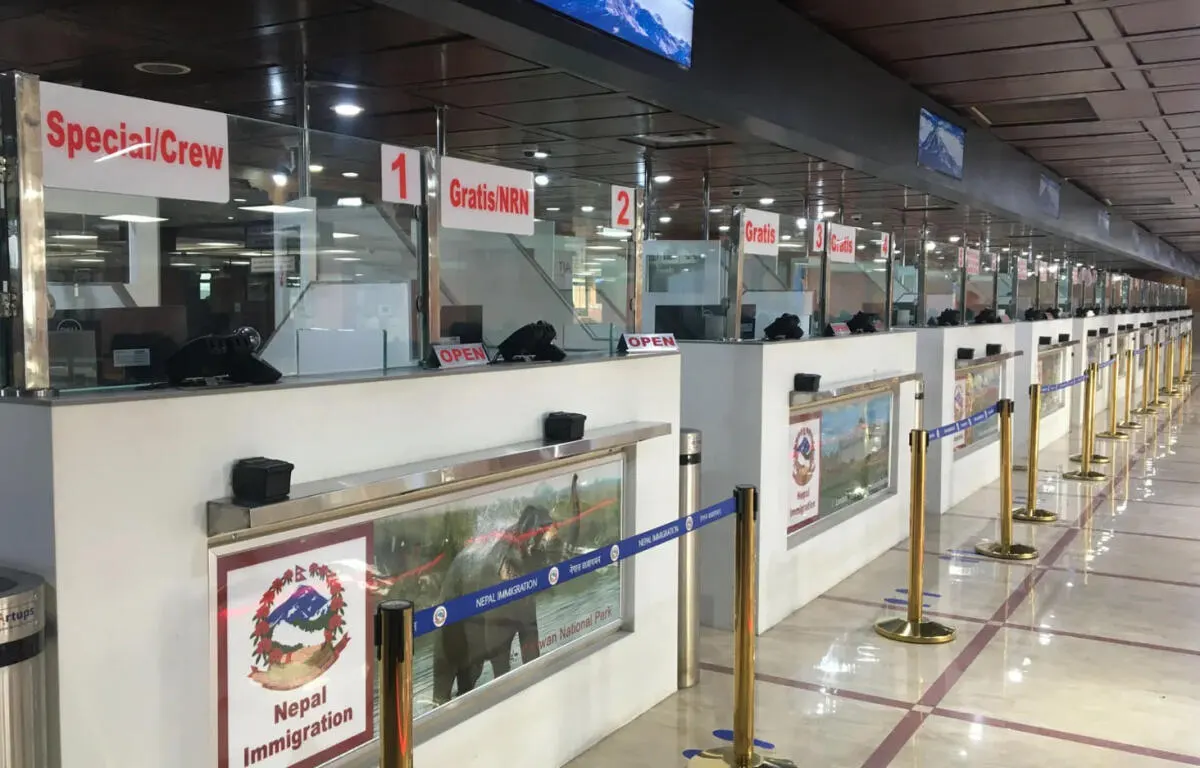
If you’re flying into Kathmandu’s Tribhuvan International Airport or crossing an overland border from India, most nationalities can get a Nepal tourist visa on arrival without visiting an embassy first. The fee depends purely on how long you plan to stay: USD 30 for 15 days, USD 50 for 30 days, and USD 125 for 90 days, payable in cash (USD or another major convertible currency) or, increasingly, by card at select counters. Nepal also runs a free online pre-arrival application through the Department of Immigration’s official portal — this isn’t a full e-visa or ETA with online payment; it’s a pre-registration form that saves you time in the queue, while the actual fee is still settled at the airport or border. Indian citizens don’t need any visa at all, SAARC nationals and Chinese citizens usually get a free 30-day gratis visa, and children under 10 are exempt from the fee.
Where most travelers get tripped up isn’t the visa itself — it’s the details around it: whether their passport has six months of validity left, whether their currency notes are crisp enough to be accepted, how the 150-day annual cap actually works if you leave and re-enter, and what happens if a flight delay pushes them past their visa’s expiry. This guide walks through every one of those situations with real numbers, a step-by-step airport process, an extension and overstay-fine breakdown, and country-specific exemption rules — so you can walk up to the visa counter (or skip most of the line with your printed receipt) knowing exactly what to expect.
Most travelers can get a Nepal tourist visa on arrival at Tribhuvan International Airport (Kathmandu) or at major land borders with India. It costs USD 30 (15 days), USD 50 (30 days), or USD 125 (90 days), paid in cash or card, takes roughly 20–60 minutes depending on the season, and requires a passport valid for six months, a passport-style photo, and (ideally) a printed receipt from Nepal’s online pre-arrival form. Indian nationals don’t need a visa. A small list of nationalities must apply through a Nepali embassy in advance instead of arriving without one.
Nepal’s visa policy is one of the more traveler-friendly systems in South Asia, but “easy” doesn’t mean “no planning required.” Your visa duration decides how much of the country you can realistically see. A 15-day visa is tight if you’re combining Kathmandu, Pokhara, Chitwan, and a trek. A 30-day visa is the sweet spot for most itineraries, including popular treks like Everest Base Camp or Annapurna Circuit with buffer days for weather delays — a very real factor at altitude. A 90-day visa suits slow travelers, volunteers on short stints, digital nomads, or anyone doing multiple treks back-to-back.
Getting this decision right before you land saves you a trip to the Department of Immigration office mid-trip, and it protects you from the overstay fines discussed further down.
Nepal issues multiple-entry tourist visas in three standard durations:
| Visa Duration | Best For |
|---|---|
| 15 days | Short cultural trips, quick pilgrimage visits, weekend-adjacent business-plus-tourism trips |
| 30 days | The most popular choice — covers Kathmandu, Pokhara, Chitwan National Park, and a standard 12–16 day trek with buffer days |
| 90 days | Long-stay travelers, multi-trek itineraries, yoga/meditation retreats, digital nomads, volunteers |
Important: All three visa categories are tourist visas under Nepali immigration law — a 90-day visa doesn’t grant different rights than a 15-day one; it simply buys more time. None of them permit paid work, business activity, or formal study.
This is the number most travelers search for first, so here it is plainly.
| Duration | Fee (USD) | Fee (approx. EUR/GBP equivalent) |
|---|---|---|
| 15 days | $30 | Accepted in EUR, GBP, and other major currencies at the going rate |
| 30 days | $50 | Same |
| 90 days | $125 | Same |
How much does a 30-day Nepal tourist visa cost? A 30-day tourist visa costs USD 50, payable in cash or, at many counters, by card. This is the most-booked duration because it comfortably covers Nepal’s three most-visited hubs plus one major trek.
What does a 90-day multiple-entry Nepal visa cost? A 90-day tourist visa costs USD 125 and already includes multiple-entry privileges — useful if you plan to nip across the border to India or Tibet and return without buying a fresh visa.
Pro tip: Fees are reviewed periodically by the Department of Immigration, Nepal. While the above rates have held steady through 2026, always cross-check the current schedule on the official immigration website before you travel, especially if your trip is more than a few months away.
Cash remains the more reliable option at Tribhuvan International Airport, even though card payment terminals have become more common and more stable in recent years.
Practical advice from experience on the ground: bring the exact visa fee in cash as your primary plan, and treat your card as a backup, not the other way around.
This is one of the most misunderstood parts of Nepal’s visa process, so let’s be precise about it.
Nepal offers an online pre-arrival application form through the Department of Immigration’s official portal. It is often loosely referred to online as an “e-visa” or “ETA,” but functionally it is closer to pre-registration, not a complete electronic visa with advance online payment.
What the online form actually does:
The application stays active in the system for only 15 days. If your travel date is more than two weeks away, wait before submitting, or you’ll need to redo the form.
Where to apply: Only use Nepal’s official government portal for this. Third-party websites that charge a “processing fee” for the online form are not official government providers — the government’s own pre-arrival form is free to submit; you only ever pay the actual visa fee to immigration directly.
How long does Nepal e-visa processing take from diplomatic missions? If you’re applying in advance through a Nepali embassy or consulate abroad (required for a small list of nationalities, or preferred by some travelers who want to avoid the airport queue entirely), processing generally takes 3 to 5 business days, though this varies by mission. Apply 7 to 10 days before departure to build in a safety margin.
How to track your Nepal immigration visa application status: Once submitted, your online form generates a receipt with a unique barcode/reference number. If you applied through an embassy, that mission will confirm processing directly; for the pre-arrival airport form, the barcode receipt itself is your confirmation — there isn’t a separate public tracking portal for VOA pre-registrations, so keep the emailed receipt safe and reach out to the relevant Nepali diplomatic mission if you haven’t heard back on an embassy application within the stated processing window.
A common stumbling point is the exact photo specification for the online form:
Bring extra copies beyond just the visa: if you’re heading to a national park or a trekking region, you’ll likely need the same-format photo again for your TIMS card and park entry permits (Sagarmatha, Annapurna, Langtang, and similar), so 4–6 printed photos in total is a sensible number to pack.
Typical processing time: 20–60 minutes. During peak trekking seasons (March–May and September–November), queues can stretch toward the higher end, so factor this into tight onward connections or pre-booked transfers.
Have these ready before you reach the counter:
Do you need a return flight ticket to get a Nepal visa? There’s no blanket legal requirement written into the tourist visa rules demanding proof of onward travel for every nationality. In practice, though, airlines and immigration officers can and do ask for it, so book a return or onward ticket (even a fully refundable one) rather than risk denied boarding at your origin airport.
A specific, government-designated list of nationalities must apply through a Nepali embassy or consulate in advance rather than arriving without a visa. As of the current Department of Immigration policy, this list commonly includes nationals of:
Afghanistan, Iraq, Cameroon, Ghana, Somalia, Eswatini (Swaziland), Palestine, Zimbabwe, Nigeria, Ethiopia, Liberia, and Syria — along with stateless persons and refugees traveling on travel documents.
This list is subject to change, so if you hold a passport from one of these countries, verify directly with your nearest Nepali diplomatic mission or the official immigration website before booking flights — airlines can refuse boarding if you arrive without a pre-issued visa and your nationality is on the restricted list.
US passport holders face no special restrictions beyond the standard rules:
This makes the process for American travelers essentially identical to that of UK, EU, Australian, and Canadian citizens.
Nepal’s visa policy carves out several exemptions worth knowing before you assume you need to pay:
Do Indian citizens need a tourist visa for Nepal entry? No. Indian nationals do not require any visa to enter Nepal and can stay for an extended period using valid identification such as a passport, voter ID card, or other accepted government ID — no visa fee, no visa sticker, no expiry countdown in the usual sense.
Gratis (free) visa rules for SAARC citizens visiting Nepal: Citizens of Bangladesh, Bhutan, Maldives, Pakistan, and Sri Lanka are generally eligible for a free 30-day tourist visa once per calendar visa year. Afghan nationals require a specific recommendation from the Department of Immigration to access a gratis visa on arrival. This exemption typically applies only to your first entry of the year — subsequent visits within the same calendar year are usually charged at standard rates.
How do Chinese nationals get a free tourist visa for Nepal? Citizens of the People’s Republic of China are currently eligible for a free tourist visa under a bilateral arrangement between the two governments. As with any gratis category, it’s worth reconfirming current terms at the embassy or official portal before travel, since these arrangements are periodically reviewed.
Nepal visa exemptions for children under 10 years old: Children under 10 years of age are exempt from the visa fee, though a visa is still technically issued and the standard duration rules and documentation (passport, photo) still apply — it’s a fee waiver, not a paperwork waiver.
| Nationality/Category | Visa Requirement | Fee |
|---|---|---|
| Indian citizens | No visa needed | N/A |
| SAARC citizens (except Afghanistan) | Visa required, gratis first 30 days/year | Free (first visit); standard fee after |
| Chinese nationals | Visa required | Free |
| Children under 10 | Visa required | Free |
| Most other nationalities | Visa on arrival or embassy visa | $30 / $50 / $125 |
| Restricted-list nationalities (see above) | Embassy visa only, no VOA | Standard fee applies |
Falling in love with Nepal and wanting more time is common — the process for extending is straightforward but has firm cost structures.
How much does it cost to extend a Nepal tourist visa? The standard structure is a minimum extension fee of USD 45 for the first 15 days, plus USD 3 per additional day beyond that block. Extensions are processed at the Department of Immigration in Kathmandu (Kalikasthan) or the Immigration Office in Pokhara — not at the airport or land borders, and not online from outside the country.
Where can you extend a Nepal tourist visa? Only at designated immigration offices inside Nepal: primarily Kathmandu and Pokhara. Bring your passport, the completed extension application (submitted online in advance through the immigration portal before your in-person visit), and the fee.
What’s the maximum number of days a tourist can stay in Nepal per calendar year? 150 days total, per calendar year (January to December) — combining your original visa duration and any extensions, and regardless of how many separate entries you make. Leaving Nepal and re-entering does not reset this allowance; it’s a cumulative annual cap, not a per-trip one.
What’s the overstaying tourist visa fine per day in Nepal? If your visa expires before you regularize your status, the Department of Immigration applies a daily overstay fine, commonly cited around USD 3–5 per day, in addition to any extension fee owed once you do regularize. Persistent or lengthy overstays can escalate to detention or deportation in serious cases, so the safest move if you realize you’ve overstayed is to go directly to the Department of Immigration and start the regularization process immediately rather than waiting or trying to exit uncorrected.
Common mistake to avoid: Assuming the 150-day cap resets each time you cross a border. It doesn’t — it’s tracked against the calendar year as a whole.
To make the numbers concrete, here’s how visa costs typically slot into a broader trip budget:
For most independent travelers, visa costs represent a small fraction of total trip spend compared to trekking permits, guide/porter fees, domestic flights, and accommodation — but they’re one of the few costs you can plan for with total certainty before you leave home.
Nepal has two clear trekking-friendly windows: March to May (spring, rhododendrons in bloom, warming temperatures) and September to November (post-monsoon, the clearest mountain visibility of the year). Both are also the busiest periods at immigration counters, so:
Nepali immigration officers process extremely high volumes of travelers, especially during peak season. A calm, patient, well-prepared traveler with documents in order moves through noticeably faster than one improvising at the counter. Basic courtesy — a smile, a “dhanyabad” (thank you) — is appreciated, as it is throughout Nepal.
Visa on Arrival suits you if:
Applying at a Nepali embassy in advance suits you if:
Overstaying or working informally on a tourist visa undermines the trust that keeps Nepal’s visa-on-arrival system open and simple for everyone. If your plans genuinely change and you need more time, use the official extension process rather than letting your visa lapse — it protects both you and the ease of entry for future travelers.
A tourist visa gets you into Nepal — it does not grant permission to trek in restricted or conservation areas. Depending on your route, you’ll also need:
Budget separate time and photos for these — they use the same 1.5″x1.5″ photo format as your visa application.