If you want one Himalayan sunrise view near Kathmandu that actually delivers, without the crowds, the queues, or the concrete sprawl of Nagarkot, Dhulikhel is the answer. This Dhulikhel travel guide covers everything a traveler actually needs: the stone paved Old Town and its 17th century Newari temples, the climb to Kali Temple viewpoint, how to reach Dhulikhel from Kathmandu by taxi, bus, or ride hailing app, where to stay from community homestays to Dwarika’s wellness resort, and the Namobuddha and Panauti heritage circuit that most articles barely mention.
Dhulikhel sits at roughly 1,550 meters on the eastern rim of the Kathmandu Valley, about 30 km from the capital along the Arniko Highway, the historic road that has connected Nepal to Tibet for centuries. Unlike Nagarkot, which grew almost entirely as a hilltop viewpoint, Dhulikhel is a living Newari bazaar town with its own temples, courtyards, farmland, and trade history, and the mountain view is simply a bonus that comes with staying there.
Dhulikhel is a 1,550 meter Newari hill town 30 km east of Kathmandu, reached in 1 to 2 hours by road, known for Himalayan sunrise views over Langtang and Gauri Shankar, a stone paved Old Town with centuries old temples, and a range of stays from homestays to the luxury Dwarika’s Resort.
Most travelers ask the same underlying question: is Dhulikhel worth a day trip or an overnight stay from Kathmandu? For the vast majority of visitors, yes, and an overnight stay is worth the extra cost because sunrise only happens once a day and traffic on the Arniko Highway can eat up your morning if you try to drive in early from Kathmandu.
Three things set Dhulikhel apart from other Kathmandu Valley hill stations:
Dhulikhel also works well as a base for exploring Namobuddha, one of the holiest Buddhist pilgrimage sites in the valley, and Panauti, a heritage town that many first time visitors never hear about because it rarely appears in mainstream Nepal itineraries.
Long before it became a resort town, Dhulikhel bazaar was a functioning trade post on the route linking the Kathmandu Valley to Tibet, the same corridor now followed loosely by the Arniko Highway toward the Kodari border. Newari traders and porters used to rest here on the multi day journey between the valley and the Tibetan plateau, and that trading history shaped the town’s layout: a compact bazaar core built around temple squares, with homes doubling as shopfronts, a pattern still visible in the Old Town today.
Local tradition dates settlement in the area back many centuries, with the town’s major temples constructed during the Malla period. The Bhagwati Temple, built around 1673 AD, and the Kali Temple, dated to roughly 1703 AD, anchor the old town square and remain active places of worship rather than roped off monuments. Newari communities, alongside Brahmin, Chhetri, Tamang, and Dalit families, have lived here for generations, and that mixed heritage shows up in the festivals, food, and architecture you will encounter.
The name “Dhulikhel” is popularly connected to the dusty trading paths merchants once walked (dhuli relating to dust), though as with many old Nepali place names, oral tradition varies by household and neighborhood elder you ask, and no single account should be treated as definitive.
Travelers timing a trip around local culture should watch for:
If your dates align with any of these, local guesthouse owners are usually happy to explain what is happening and whether outside visitors are welcome to observe.
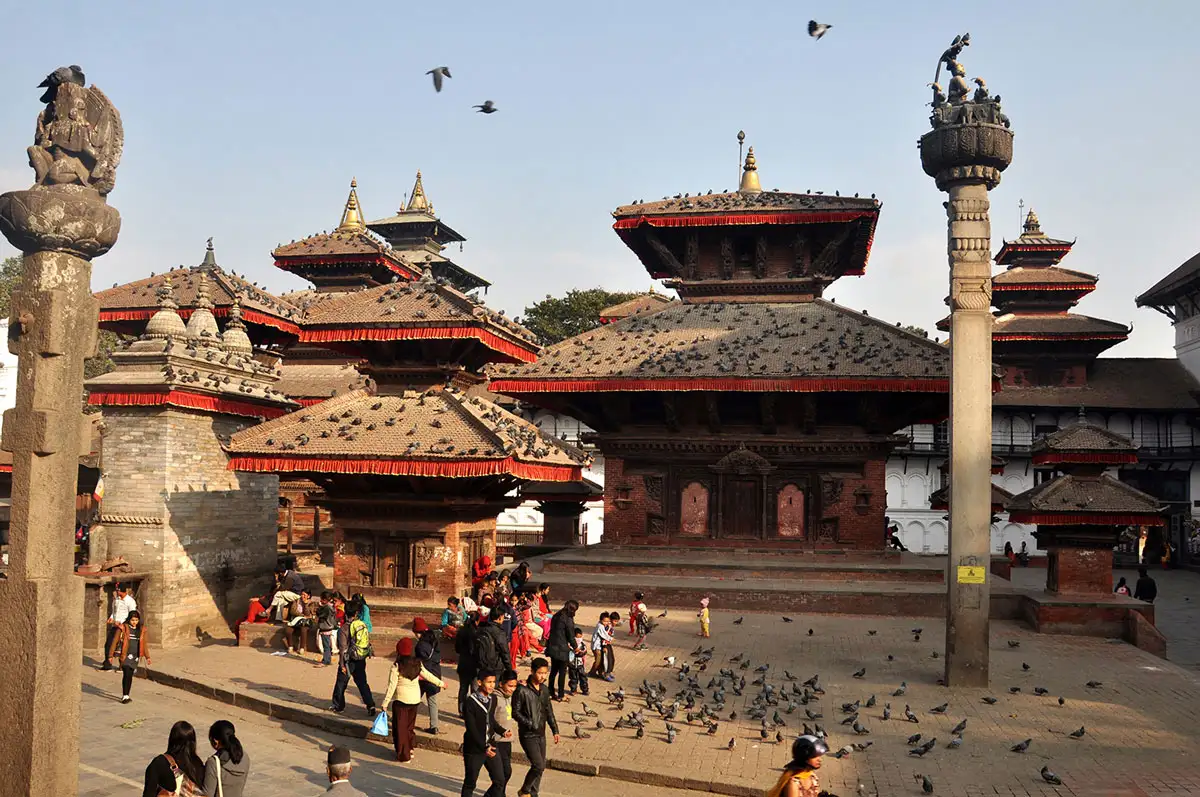
Dhulikhel’s Old Town is a compact, walkable network of stone paved lanes centered on Bhagwati Temple square, lined with multi tiered Newari brick houses featuring carved wooden windows, and best explored on foot in 60 to 90 minutes before or after the sunrise viewpoint hike.
Start at the Old Town square, where the Bhagwati Temple sits alongside older Newari residences with elaborately carved wooden window frames, a hallmark of traditional valley architecture. Many of these homes are over 200 years old and still inhabited, so walk respectfully and ask before photographing people or interiors.
From the square, narrow stone lanes fan out past small shrines, courtyards used for drying grain and chilies in season, and shopfronts selling everything from prayer flags to daily groceries. Unlike Bhaktapur’s Durbar Square, there is no entry fee and no ticket booth, which is itself one of Dhulikhel’s biggest draws for budget conscious and repeat visitors to Nepal.
Key stops in the Old Town:
Pro Tip: Early morning, between 6:30 and 8:00 AM, is the best time to walk the Old Town. Locals are out sweeping courtyards, opening shops, and performing morning puja, giving you an authentic slice of daily life before the day’s heat and any tour groups arrive.
The climb to Kali Temple viewpoint above Dhulikhel involves a long stone staircase up the ridge behind the Old Town, taking most travelers 30 to 45 minutes at a steady pace, and rewards you with one of the most accessible 360 degree Himalayan panoramas in the entire Kathmandu Valley.
Locals commonly describe the ascent as “a thousand steps,” and while the exact count varies depending on which trailhead you use, it is a genuinely substantial stone staircase, not a casual stroll. The path begins near the eastern edge of the Old Town and climbs steadily through terraced fields and pine groves before reaching the ridge.
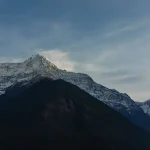
At the top, the Kali Temple itself is a modest but atmospheric shrine, often draped in red prayer flags and vermillion powder from recent worship. The real payoff is the view: on a clear morning, the ridge offers an unobstructed sweep of the Langtang range to the northwest and, further east, the distinctive twin summit of Gauri Shankar.
What to expect on the climb:
Important Note: If you’re climbing before sunrise, bring a headlamp or phone flashlight. There is no street lighting on the trail, and the stone steps can be uneven in the dark.
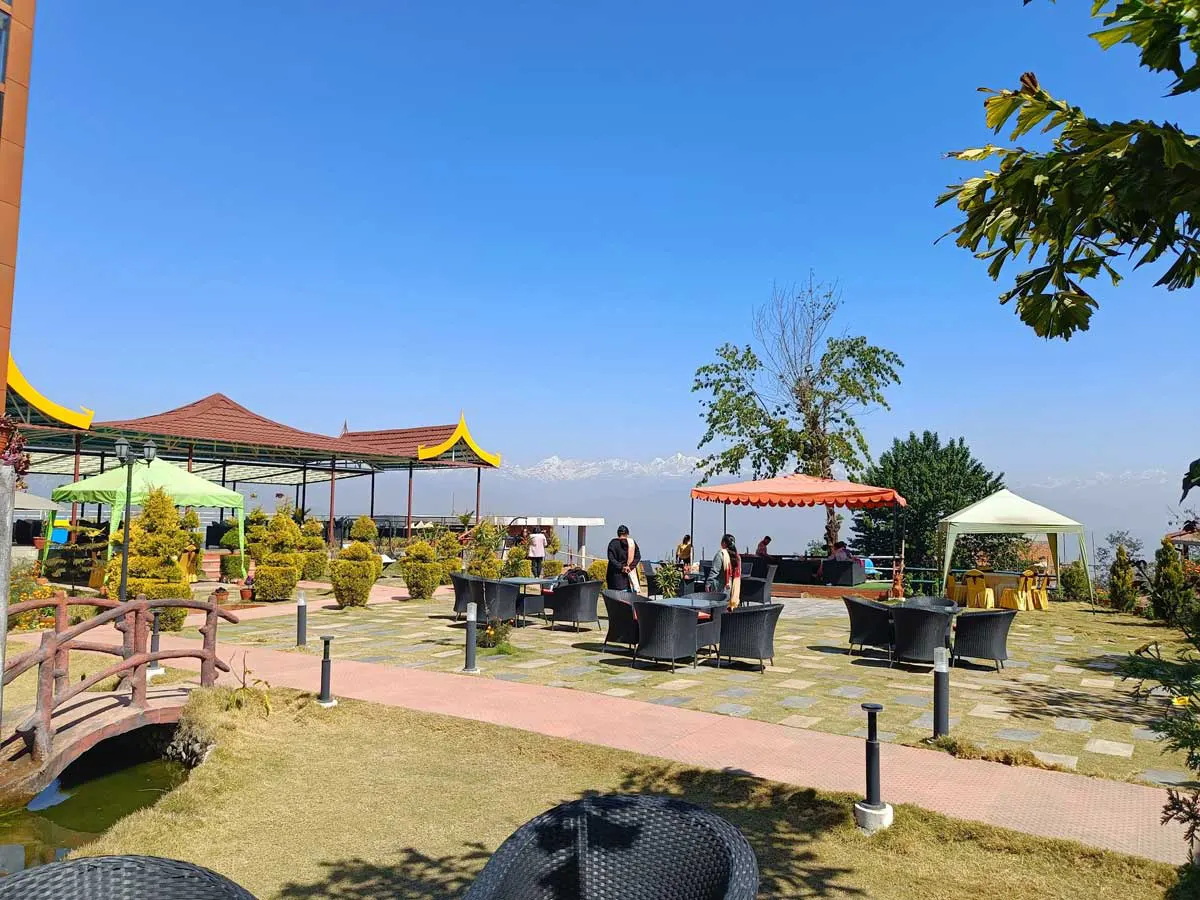
The best sunrise photography spots in Dhulikhel are the Kali Temple ridge viewpoint, the open terrace areas of hillside resorts like Dhulikhel Mountain Resort and Dwarika’s Resort, and the Dhulikhel View Tower, all facing the Langtang and Gauri Shankar ranges to the north and northeast.
For photographers, timing matters more than location. The mountains often appear clearest in the 15 to 20 minutes immediately after first light, before haze builds up over the valley later in the morning. Autumn mornings, particularly October and November, offer the highest odds of a completely clear panorama.
| Viewpoint | Distance from Old Town | Best For | Access |
|---|---|---|---|
| Kali Temple Ridge | 15-20 min walk plus climb | Wide panoramic shots, foreground temple silhouette | Free, public trail |
| Dhulikhel Mountain Resort terrace | 20-25 min walk | Unobstructed north facing view, coffee while shooting | Free for guests, small fee for outside visitors possible |
| Dwarika’s Resort grounds | 15 min drive | Composed, landscaped foreground, tripod friendly | Guests only, or by prior arrangement |
| Dhulikhel View Tower | 10 min walk from bazaar | Elevated 360 degree view, good for beginners | Free, minimal climb |
| Namobuddha ridge road | 30-40 min drive | Wider Himalayan sweep including Rolwaling peaks | Free, public road |
Photography Tip: A 24-70mm equivalent lens covers most compositions here. For a genuinely wide Himalayan panorama shot, a panorama stitch of 3 to 5 frames from the Kali Temple ridge captures far more detail than a single wide angle frame, since the range spans well over 100 degrees of horizon.
For culture and history travelers: Spend a full morning in the Old Town, visit both major temples, and continue on to Panauti in the afternoon for one of the valley’s most underrated heritage towns.
For trekkers and hikers: Treat Dhulikhel as the starting point for the classic Dhulikhel to Namobuddha day hike, or extend it into a two or three day Dhulikhel Namobuddha Panauti loop.
For luxury and wellness travelers: Base yourself at a resort property for two nights minimum, factoring in spa treatments, yoga sessions, and organic farm to table dining that most day trippers never experience.
For families: The Old Town walk and View Tower are manageable for children and older travelers alike, with minimal altitude concerns and short walking distances.
Day 1
Day 2
Extended 3 Day Option: Add an overnight stay at the Namobuddha monastery guesthouse or Namobuddha Resort between Day 2 and Day 3, allowing a full day dedicated to the Dhulikhel Namobuddha hiking trail rather than a rushed drive and return.
Dhulikhel is roughly 30 km from Kathmandu and reachable in 1 to 2 hours depending on traffic, by private taxi (fastest and most flexible), local bus from Ratna Park (cheapest), ride hailing apps like Pathao or InDrive (works but with distance surcharges), or as a stop between Bhaktapur and the Tibet border highway.
A private taxi is the most comfortable and time efficient option, particularly if you’re carrying luggage or traveling with family. Expect the fare to vary with fuel prices, vehicle type, and negotiation, and always agree on the price before departure. Journey time is typically 1 to 1.5 hours in light traffic, though this can stretch significantly during Kathmandu’s morning and evening rush periods or on festival travel days.
Regular local and micro buses depart from the Ratna Park area of Kathmandu heading toward Dhulikhel and onward along the Arniko Highway. This is by far the most budget friendly option, though buses can be crowded, make frequent stops, and take noticeably longer than a private vehicle, often 2 hours or more.
From Tribhuvan International Airport, expect roughly 1 to 1.5 hours by private car directly to Dhulikhel resorts under normal traffic conditions, similar to the Kathmandu city center transfer time since the route largely bypasses the busiest downtown streets via the Ring Road.
Yes, you can book a Pathao or InDrive ride from Kathmandu to Dhulikhel, though most drivers on these platforms are set up for shorter in city trips. For a 30 km intercity run, expect to negotiate directly with the driver through the app’s messaging feature, and be prepared for some drivers to decline longer fares during peak hours. For a stress free experience, especially with luggage, a pre arranged private taxi or hotel transfer tends to be more reliable.
Bhaktapur Durbar Square sits directly along the route between Kathmandu and Dhulikhel, making it an easy and popular combination. Most travelers either:
Pro Tip: Combining Bhaktapur and Dhulikhel in one day is one of the most efficient ways to see Kathmandu Valley heritage and Himalayan views without adding an extra travel day to your itinerary.
| Method | Approx. Time | Best For | Comfort Level |
|---|---|---|---|
| Private Taxi | 1-1.5 hours | Families, luggage, flexible timing | High |
| Local Bus (Ratna Park) | 2+ hours | Budget travelers, solo backpackers | Basic |
| Tourist Bus / Shared Van | 1.5-2 hours | Solo and small groups wanting a middle ground | Moderate |
| Pathao / InDrive | Variable, negotiated | Tech savvy travelers already using the apps | Moderate |
| Private Hotel Transfer | 1-1.5 hours | Luxury and resort guests | High |
The best time to visit Dhulikhel for clear Himalayan views is autumn (late September to November), followed by winter (December to February) for the crispest morning visibility, while spring (March to May) offers warm weather and blooming rhododendrons with slightly hazier mountain views, and the June to August monsoon brings lush greenery but frequent cloud cover.
| Season | Months | Mountain Visibility | Weather | Notes |
|---|---|---|---|---|
| Autumn | Sept – Nov | Excellent | Clear, mild days, cool nights | Peak season, book resorts ahead |
| Winter | Dec – Feb | Very good, especially early morning | Cold nights, sunny days | Fewer crowds, some fog possible |
| Spring | Mar – May | Good, some haze | Warm, rhododendrons blooming | Pleasant hiking weather |
| Monsoon | Jun – Aug | Poor to fair | Frequent rain, humid | Lush landscapes, fewer tourists, muddy trails |
Because Dhulikhel sits at a relatively modest 1,550 meters, altitude sickness is not a genuine concern for the vast majority of visitors, even those arriving directly from sea level. That said, some travelers feel mild fatigue after a long flight combined with a same day mountain transfer, so building in a slow first evening is a sensible precaution rather than a medical necessity.
Dhulikhel offers accommodation across every budget tier, from community homestays in the Old Town costing a fraction of resort rates, to mid range boutique properties with mountain facing rooms, up to Dwarika’s Resort, one of Nepal’s most established luxury wellness retreats with Ayurvedic treatments and organic farm dining.
Dwarika’s Resort Dhulikhel (also marketed as Dwarika’s Sanctuary, A Himalayan Wellness Retreat) is the town’s flagship luxury property, built around Ayurvedic wellness programs, yoga, singing bowl and meditation therapies, an organic farm supplying its restaurants, and a spa built into the resort’s design philosophy. It sits roughly 6 to 10 km from Namobuddha Monastery and about an hour from Tribhuvan International Airport by private car.
Room rates at this tier fluctuate significantly by season, room category, and whether wellness packages or all inclusive meal plans are bundled in, so travelers should always confirm current pricing directly with the resort or a trusted local operator rather than relying on older published figures. As a general positioning guide, expect this property to sit firmly in Nepal’s five star luxury bracket, well above standard boutique hotel pricing in the region.
Several mid range properties along the ridge offer genuinely good mountain facing rooms without luxury pricing, typically featuring:
For travelers who want genuine cultural immersion at a low cost, Old Town Dhulikhel has family run guesthouses and community homestays offering:
| Tier | Example Style | Typical Features | Best For |
|---|---|---|---|
| Luxury | Dwarika’s Resort | Ayurveda, spa, organic dining, wellness programs | Honeymooners, wellness travelers, special occasions |
| Mid Range Boutique | Ridge view resorts | Mountain facing rooms, restaurant, garden terrace | Couples, small families, photography focused travelers |
| Budget / Homestay | Old Town guesthouses | Home cooked food, shared facilities, local family hosts | Backpackers, cultural travelers, solo travelers |
Pro Tip: Book resort tier accommodation at least 2-3 weeks ahead during October and November, Nepal’s peak tourist season, when rooms with unobstructed mountain views sell out first.
Dhulikhel’s food scene ranges from traditional Newari dishes like chatamari and bara served in Old Town eateries, to organic farm to table menus at resort restaurants, with several rooftop cafes offering both mountain views and home style Nepali cooking.
Traditional Newari cuisine here includes dishes rarely seen on Kathmandu’s more tourist oriented Thamel menus:
Resort restaurants, particularly at the luxury tier, lean into organic and farm to table concepts, using produce grown on site or on nearby partner farms, paired with Himalayan herbal teas. Several rooftop cafes in the bazaar area combine this same organic and locally sourced ethos with mountain facing seating, making them popular breakfast spots before the sunrise hike or after it.
Local Tip: Ask your guesthouse host what’s in season. Newari cooking changes considerably by month, and dishes offered during festival periods are often not on the regular menu.
The Dhulikhel to Namobuddha hike covers approximately 10 to 12 km one way, takes 4 to 5 hours at a moderate pace, reaches a maximum altitude of around 1,750 meters at Namobuddha, and passes through pine forest, terraced farmland, and small Newari and Tamang villages along the way.
This is one of the most rewarding short hikes in the Kathmandu Valley region, offering genuine rural scenery without requiring multi day trekking logistics or permits. The trail typically starts from the edge of Dhulikhel’s Old Town, climbs past Gaukhuneshwar Mahadev, continues through the village of Kavrekot, and gradually ascends to Namobuddha, one of Nepal’s most significant Buddhist pilgrimage sites.
Trail highlights:
For travelers with two to three days, combining all three destinations creates one of the most complete and least crowded heritage and nature circuits near Kathmandu:
This circuit works equally well in reverse and can be shortened to a single long day by hiring a private vehicle to cover the Namobuddha to Panauti leg instead of walking it.
Namobuddha offers accommodation directly tied to the pilgrimage experience:
Practical Tip: Water is genuinely scarce at Namobuddha since everything is transported up from the valley. Guesthouses actively ask guests to conserve water, and this is a reasonable and important request to respect, not just a suggestion.
A realistic daily budget in Dhulikhel ranges from modest figures for backpackers using homestays and local buses, to moderate spending for mid range travelers using boutique resorts and private transport, up to premium nightly rates for luxury wellness stays at properties like Dwarika’s Resort, excluding international flights.
| Category | Budget Traveler | Mid Range Traveler | Luxury Traveler |
|---|---|---|---|
| Accommodation | Homestay / guesthouse | Boutique ridge resort | Dwarika’s Resort tier |
| Transport (from KTM) | Local bus | Private taxi or tourist van | Private car / hotel transfer |
| Meals per day | Local Newari eateries | Mix of local and resort dining | Resort organic dining |
| Activities | Free (Old Town, Kali Temple hike) | Some guided hikes, spa add ons | Full wellness programs, guided experiences |
Actual costs shift with season, current exchange rates, and fuel prices, so treat these as a planning framework rather than fixed figures, and confirm current rates with your accommodation or tour operator before booking.
Yes, Dhulikhel bazaar has ATMs and bank branches serving both locals and tourists, though options are more limited than in central Kathmandu, so it’s wise to carry sufficient Nepali rupees before arriving, particularly if you’re heading onward to Namobuddha or Panauti where facilities are sparser still.
Most resort properties also accept major credit cards, and some can arrange currency exchange for guests, though rates are typically less favorable than dedicated exchange counters in Kathmandu or Thamel. As a general rule, withdraw or exchange what you expect to need before leaving the capital, and treat any Dhulikhel ATM access as a backup rather than your primary plan.
Dhulikhel’s temples and Old Town homes are living religious and residential spaces, not tourist installations. A few points of etiquette make a genuine difference:
Dhulikhel’s local tourism boards and community groups have deliberately worked to avoid the kind of overcommercialization seen in some other Kathmandu Valley hill stations. Travelers can support this by:
Ideal for:
Less ideal for:
Yes, Dhulikhel is essentially a free to explore alternative to Nagarkot, with no entry ticket required for its Old Town, Kali Temple viewpoint, or View Tower, while also offering a genuine heritage bazaar that Nagarkot, built primarily as a modern viewpoint settlement, does not have.
Both towns offer strong Himalayan panoramas, but the underlying character differs meaningfully. Nagarkot developed largely around hotels built specifically for the view, while Dhulikhel is a centuries old trading town where the mountain view is a secondary, if spectacular, feature. For travelers who want both a cultural experience and a sunrise view in one stop, Dhulikhel offers more depth for the same, or lower, cost.
| Factor | Dhulikhel | Nagarkot |
|---|---|---|
| Entry Fee | None | None |
| Cultural Depth | High (Old Town, temples, trade history) | Low (primarily a viewpoint settlement) |
| Distance from Kathmandu | Approx. 30 km | Approx. 32 km |
| Accommodation Range | Homestay to luxury wellness resort | Mostly hotels, fewer homestays |
| Nearby Attractions | Namobuddha, Panauti | Changu Narayan (partial overlap) |
Planning a trip to Dhulikhel is far easier with local expertise handling transport, accommodation selection, and timing around weather and festivals. Nepal Tour Package Pvt. Ltd., a Kathmandu based Destination Management Company, offers custom itineraries covering:
If you would like a tailored itinerary built around your travel dates, budget, and interests, reach out to Nepal Tour Package Pvt. Ltd. for a personalized Dhulikhel travel plan rather than a one size fits all package.
Dhulikhel earns its reputation the honest way: a genuinely old Newari bazaar, a Himalayan sunrise you can reach on foot from your hotel, and enough range in accommodation to fit backpackers and luxury wellness travelers alike. Whether you’re climbing the stone steps to Kali Temple before dawn, wandering the carved wooden windows of the Old Town, or extending your trip into the Namobuddha and Panauti heritage circuit, this Dhulikhel travel guide should give you everything you need to plan a trip that goes well beyond a rushed sunrise photo stop.
If you’d like help turning this guide into an actual itinerary, whether a simple overnight escape or a multi day heritage and hiking circuit, Nepal Tour Package Pvt. Ltd. can put together a plan tailored to your dates, budget, and interests.
📞 +977 9841620757 (Available on WhatsApp, Viber, WeChat, RedNote)
✉️ info@nepaltourpackage.com / nepaltourpackage@outlook.com
📍 Kathmandu, Nepal