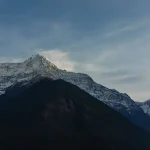
Standing at a breathtaking 8,848.86 metres (29,031.7 feet) above sea level, Mount Everest “Sagarmatha” is the highest point on Earth and one of the most iconic destinations in the world. Known as Sagarmatha in Nepali — meaning “Goddess of the Sky” — and Chomolungma in Tibetan, this colossal Himalayan peak has captivated explorers, mountaineers, and travellers for generations. Situated in the heart of Sagarmatha National Park in northeastern Nepal, Everest is not merely a mountain; it is a symbol of human ambition, spiritual reverence, and the raw, untamed power of nature.
Whether you dream of trekking to Everest Base Camp, gazing at its snow-capped summit from Kala Patthar, or embarking on the full summit climb, Mount Everest Sagarmatha offers an experience unlike any other on the planet. Each year, thousands of trekkers and hundreds of climbers from around the globe make the journey to Nepal to witness this magnificent peak firsthand.
Internal Link Suggestion: Explore our Everest Base Camp Trek packages to begin your journey to the world’s highest peak.
| Detail | Information |
|---|---|
| Local Name | Sagarmatha (Nepali) / Chomolungma (Tibetan) |
| Elevation | 8,848.86 m / 29,031.7 ft (2020 survey) |
| Location | Solukhumbu District, Koshi Province, Nepal |
| Mountain Range | Mahalangur Himal, Greater Himalayas |
| First Ascent | 29 May 1953 – Sir Edmund Hillary & Tenzing Norgay Sherpa |
| Normal Route | South Col Route (Nepal) / Northeast Ridge (Tibet) |
| Difficulty Level | Extremely Difficult (Grade: F / 5.9+ technical) |
| Climbing Status | Open (requires permit from Government of Nepal) |
| Base Camp Altitude | 5,364 m / 17,598 ft (South Base Camp) |
| Nearest Airport | Tenzing-Hillary Airport (Lukla) – 2,860 m |
| Best Trekking Season | March–May (Spring) & September–November (Autumn) |
| National Park | Sagarmatha National Park (UNESCO World Heritage Site) |
The Western world first became aware of Everest’s extraordinary stature through the Great Trigonometrical Survey of India in the 1840s and 1850s. The peak, then catalogued as “Peak XV,” was calculated to be the world’s highest point in 1852 by mathematician Radhanath Sikdar using survey data collected by Sir George Everest’s team. The mountain was officially named Mount Everest in 1865 in honour of Sir George Everest, the British Surveyor General who oversaw much of the survey work.
However, the peak had long been known and revered by the local Sherpa and Tibetan communities under its indigenous names. Sagarmatha was formally adopted by the Government of Nepal and is used on all official Nepali maps and documents. The mountain’s dual identity reflects both its global stature and its deep-rooted connection to the Himalayan peoples.
For the Sherpa people of the Khumbu Valley, Sagarmatha is far more than a geographical landmark. The mountain is regarded as a sacred entity — a divine mother who must be approached with respect and reverence. Before every climbing expedition, Sherpas perform the Puja ceremony, a Buddhist ritual conducted at Base Camp to seek blessings from the mountain deity for a safe and successful climb. Prayer flags strung from yaks and lodges, mani stones carved with sacred mantras, and monasteries perched dramatically above the treeline at Tengboche and Pangboche are constant reminders of the spiritual fabric woven into this landscape.
The Tengboche Monastery at 3,867 metres, one of the most famous monasteries in Nepal, sits directly on the trekking route to Everest Base Camp and serves as a spiritual gateway to the high mountains.
Everest is the centrepiece of Nepal’s tourism industry. The Everest Base Camp Trek alone attracts upwards of 50,000 trekkers annually, generating hundreds of millions of dollars in revenue for local communities, guides, porters, teahouse owners, and the national economy. Climbing permits issued by the Government of Nepal for Mount Everest contribute significantly to national income, with each permit priced at USD 11,000 per person for the South Col (Nepal) route.
Mount Everest is located at coordinates 27°59′17″N, 86°55′31″E, straddling the international border between Nepal (Koshi Province, Solukhumbu District) and the Tibet Autonomous Region of China. The summit sits precisely on this border, with the most popular trekking and climbing routes approaching from the Nepali side.
It forms the centrepiece of the Mahalangur Himal sub-range of the greater Himalayas and is flanked by two other formidable eight-thousanders: Lhotse (8,516 m) to the southeast and Nuptse (7,861 m) to the west, creating the iconic Cwm (Western Cwm) valley between them.
The Everest region is defined by dramatic vertical relief. From the lush rhododendron forests around Namche Bazaar at 3,440 metres, the landscape transforms through dwarf juniper scrub, alpine grasslands, and finally into the barren high-altitude desert of ice, snow, and rock above 5,000 metres. Major features include the Western Cwm, the South Col (7,906 m), the Hillary Step (now significantly altered due to ice loss), and the iconic Khumbu Icefall that guards the lower approach to the summit from the Nepali side.
1. Classic Everest Base Camp (EBC) Trek The most popular route begins in Lukla after a short, spectacular flight from Kathmandu. Trekkers walk through Phakding, Namche Bazaar, Tengboche, Dingboche, Lobuche, and Gorak Shep before reaching Everest Base Camp at 5,364 metres. This route offers the most teahouse infrastructure, stunning mountain panoramas, and cultural immersion in Sherpa villages.
2. Gokyo Lakes & Everest Base Camp Trek A more diverse route that combines the classic EBC approach with a detour through the Gokyo Valley, visiting the Gokyo Lakes and summiting Gokyo Ri (5,357 m) for panoramic views of four eight-thousanders. The two routes are connected via the Cho La Pass (5,420 m), adding a high-altitude pass crossing to the itinerary.
3. Three Passes Trek An advanced circuit crossing three high mountain passes — Renjo La (5,360 m), Cho La (5,420 m), and Kongma La (5,535 m) — offering a comprehensive exploration of the entire Khumbu region.
Trekking to EBC: Moderate to challenging. No technical climbing skills required, but good physical fitness and acclimatisation awareness are essential. Previous high-altitude trekking experience is recommended.
Summit Climbing: Extremely technical and physically demanding. Requires extensive prior high-altitude climbing experience (typically including ascents of 6,000 m and 7,000 m peaks), strong physical conditioning, and proficiency with fixed ropes, ice axes, crampons, and supplemental oxygen systems.
| Day | Route | Altitude |
|---|---|---|
| Day 1 | Fly Kathmandu – Lukla; Trek to Phakding | 2,652 m |
| Day 2 | Phakding – Namche Bazaar | 3,440 m |
| Day 3 | Acclimatisation Day – Namche Bazaar | 3,440 m |
| Day 4 | Namche – Tengboche | 3,867 m |
| Day 5 | Tengboche – Dingboche | 4,410 m |
| Day 6 | Acclimatisation Day – Dingboche | 4,410 m |
| Day 7 | Dingboche – Lobuche | 4,940 m |
| Day 8 | Lobuche – Gorak Shep – EBC – Gorak Shep | 5,364 m |
| Day 9 | Gorak Shep – Kala Patthar – Pheriche | 5,545 m / 4,288 m |
| Day 10 | Pheriche – Namche Bazaar | 3,440 m |
| Day 11 | Namche Bazaar – Lukla | 2,860 m |
| Day 12 | Fly Lukla – Kathmandu | 1,400 m |
Days 13–14 are buffer days for weather delays at Lukla airport.
| Category | Estimated Cost (USD) |
|---|---|
| Budget (teahouses, basic services) | USD 900 – 1,400 |
| Mid-range (guided, good lodges) | USD 1,400 – 2,500 |
| Luxury / Premium guided | USD 2,500 – 5,000+ |
A full Everest summit expedition is one of the most expensive undertakings in adventure tourism:
Note: All permits can be arranged through a registered trekking agency or directly at the Nepal Tourism Board office in Kathmandu. Costs are subject to annual revision.
The primary and most popular gateway to the Everest region is the dramatic flight from Kathmandu’s Tribhuvan International Airport (KTM) to Tenzing-Hillary Airport in Lukla (LUA). This 35-minute flight over the dramatic Himalayan foothills is itself a thrilling experience, as Lukla’s runway is perched on a mountain shelf at 2,860 metres. Airlines operating this route include Tara Air, Summit Air, and Sita Air. Flights depart early in the morning and are highly weather-dependent, so building buffer days into your itinerary is essential. During peak season (April–May and October–November), it is strongly advisable to book flights well in advance, as seats fill quickly and weather cancellations can cause significant delays.
For travellers seeking an alternative to the popular Lukla flight, it is possible to take a long-distance bus or jeep from Kathmandu to Salleri (Solukhumbu district headquarters), a journey of approximately 12 to 14 hours via the Sindhuli Highway. From Salleri or the nearby Phaplu airstrip, trekkers can walk additional days through less-visited lower Khumbu villages to join the main EBC route. This road option is less commonly used but offers an immersive experience through traditional village life, dense forests, and lower-altitude culture that most Lukla-starting trekkers never see. The road journey can be rough and fatiguing but is a cost-effective alternative when Lukla flights are grounded.
An increasingly popular option, especially for those with limited time or returning after a cancelled flight, is the helicopter transfer from Kathmandu directly to Lukla, Namche Bazaar, or even higher points such as Gorak Shep (5,170 m) or Everest Base Camp itself. Helicopter charters are also commonly used as emergency evacuation transports and for VIP sightseeing tours over the Everest region. Dedicated Everest helicopter tours depart from Kathmandu and land at Kala Patthar (5,545 m) for close-up panoramic views of Everest, Lhotse, and Nuptse, before returning to Kathmandu within a single morning — an ideal option for time-constrained travellers.
The Sagarmatha National Park is a sanctuary of remarkable biodiversity despite its extreme altitudes. The lower valleys are blanketed with forests of rhododendron (Nepal’s national flower), pine, hemlock, birch, and juniper, which burst into spectacular bloom in April and May. Above the treeline, hardy alpine grasses, mosses, and lichens cling to the rocky terrain. The park is home to iconic wildlife including the elusive Snow Leopard, the Red Panda, the Himalayan Tahr, Musk Deer, and the Himalayan Black Bear. Bird enthusiasts will delight in sightings of the Impeyan Pheasant (Danphe) — Nepal’s national bird — as well as Himalayan Griffon vultures, Yellow-billed Choughs, and various migratory species. The Khumbu region’s rivers and streams also harbour the endemic Snow Trout, sustained by glacial meltwater.
The Khumbu region is the ancestral homeland of the Sherpa people, a Tibetan ethnic group renowned worldwide for their extraordinary adaptation to high-altitude environments, mountaineering expertise, and warm hospitality. Originally migrants from eastern Tibet several centuries ago, Sherpas have developed a unique culture that blends Tibetan Buddhism with distinctly Himalayan traditions. Trekkers along the EBC route will pass through iconic Sherpa villages including Namche Bazaar (the bustling trading hub of the Khumbu), Khumjung, Khunde, Tengboche, Pangboche, and Dingboche, each offering insight into traditional stone-walled homes, mani walls, chortens (stupas), fluttering prayer flags, and the soothing sound of spinning prayer wheels. The weekly Namche Saturday Market — attended by both Sherpas and Tibetan traders — is a vibrant cultural spectacle not to be missed.
The Tengboche Monastery (Thyangboche Gompa) at 3,867 metres is the spiritual heart of the Khumbu, offering a deeply moving experience of Tibetan Buddhist ceremonies, particularly during the annual Mani Rimdu Festival held in October/November — a three-day celebration of masked dance, music, and religious ritual that draws both local devotees and international visitors. Sagarmatha National Park, as a UNESCO World Heritage Site, is protected not only for its stunning physical landscape — the world’s highest peaks, deepest gorges, and massive glaciers — but also for the extraordinary cultural heritage of its Sherpa inhabitants. Trekking through this living cultural landscape is a privilege that carries with it a responsibility to travel respectfully, support local businesses, minimise waste, and engage with communities in a spirit of genuine curiosity and mutual respect.
Acute Mountain Sickness (AMS) is the single most important health concern for trekkers and climbers in the Everest region, and understanding it before you depart can be life-saving. The golden rule of high-altitude trekking is “climb high, sleep low” — gain altitude gradually by day, but descend to sleep at lower elevations whenever possible. The standard Everest Base Camp itinerary is carefully designed with acclimatisation rest days built in at Namche Bazaar and Dingboche, and it is critical that trekkers do not rush these rest days even if they feel well. Symptoms of AMS include persistent headache, nausea, fatigue, dizziness, and loss of appetite; these are warning signs that the body is struggling to adapt, and ignoring them by continuing to ascend can rapidly escalate into the life-threatening conditions of High Altitude Pulmonary Oedema (HAPE) or High Altitude Cerebral Oedema (HACE). The only proven cure for severe AMS is immediate descent, and having travel insurance that covers helicopter evacuation from high altitude is absolutely non-negotiable for any trek in the Everest region.
Packing correctly for an Everest trek is as important as physical preparation. Layering is the fundamental principle — temperatures can swing from pleasantly warm (10–15°C) at lower altitudes during the day to well below freezing (-10°C to -20°C) at higher elevations and at night, particularly at Gorak Shep and Everest Base Camp. Essential items include a high-quality down jacket rated to at least -20°C, a moisture-wicking base layer, a mid-layer fleece, waterproof and windproof outer shell, insulated trekking boots (not trail runners — proper insulated, high-ankle boots rated to -20°C are required above 4,500 m), trekking poles, a quality sleeping bag rated to -15°C or lower, sunscreen (SPF 50+), UV-protective sunglasses (the sun’s UV radiation is significantly more intense at altitude), a quality headlamp with spare batteries, a water purification system (tablets or filter), and a comprehensive first aid kit including acetazolamide (Diamox) for AMS prevention (consult your physician before use).
The best preparation for an Everest Base Camp Trek begins at home, months before departure. Cardiovascular fitness is paramount — regular running, cycling, swimming, stair climbing, and weighted pack hikes will build the aerobic base needed to sustain days of walking at altitude. Trekkers who have previously completed other high-altitude hikes — such as the Annapurna Circuit Trek or treks in the Indian Himalayas — will have a significant advantage in understanding their body’s response to altitude. Always trek with a licensed, government-registered guide who holds a wilderness first aid certification and is experienced in identifying and responding to altitude-related emergencies; trekking solo in the Everest region is not recommended, particularly above Namche Bazaar. Ensure you have comprehensive travel insurance that specifically covers high-altitude trekking (above 5,000 m), medical evacuation, and trip cancellation — read the policy exclusions carefully and don’t assume standard travel insurance provides adequate coverage.
Internal Link Suggestion: Also consider our Nepal Tour Packages for customised itineraries combining Everest trekking with cultural city tours.
Spring is widely considered the best time to visit Mount Everest for both trekking and climbing. March brings warming temperatures, rhododendron forests ablaze in pink and red bloom, and increasingly stable weather patterns. April and May are the prime summit window, when the powerful jet stream shifts north of the Himalayas, creating a brief period of calmer winds and higher temperatures at altitude. The trails are at their most lively and social during this period, but teahouses fill quickly, so early booking is essential. Visibility is generally excellent, offering crystal-clear views of the Himalayan giants.
September to November offers the second peak season, equally popular among serious trekkers. Post-monsoon air is freshly washed and extraordinarily clear — many trekkers argue that October offers the most spectacular mountain views of any time of year. Temperatures are cooler than spring but still manageable, and the landscapes are lush and green from the monsoon rains. October and November are the most popular months overall; trails and teahouses are busy, so advance bookings are again recommended.
Winter trekking to Everest Base Camp is possible but significantly more challenging. Temperatures drop to -20°C to -30°C at higher elevations, many teahouses above Namche Bazaar close for the season, and snowfall can make the trails above Tengboche slippery and difficult. However, those who brave the cold are rewarded with empty trails, uncrowded teahouses (where open), lower costs, and spectacular snow-dusted mountain scenery. Experienced cold-weather trekkers who are well-equipped can find winter a uniquely rewarding time to visit.
The monsoon season brings heavy rainfall, leeches on lower trails, low cloud cover, and poor mountain visibility to the Everest region. Trails become muddy and slippery, river crossings can become dangerous due to high water levels, and Lukla flights face frequent delays. Most serious trekkers avoid the Khumbu during this period. However, the inner Himalayan rain shadows — such as the Upper Mustang region — remain excellent destinations during monsoon months.
Mount Everest Sagarmatha is more than a destination — it is a transformative journey that pushes boundaries, rewires perspectives, and leaves every traveller forever changed. Whether you stand at Everest Base Camp watching climbers disappear into the icefall, summit Kala Patthar at dawn as the first rays of gold catch the peak’s impossibly high summit pyramid, or simply walk through a Sherpa village and drink butter tea by a yak-dung fire, the Everest region will leave an indelible mark on your soul.
Our team at Nepal Tour Package specialises in crafting personalised, responsible, and unforgettable Everest trekking experiences for travellers of all backgrounds and experience levels. From arranging permits and accommodation to matching you with experienced licensed guides and ensuring your safety every step of the way, we take care of every detail so you can focus entirely on the experience.
Mount Everest Sagarmatha is located in the Solukhumbu District of Koshi Province, northeastern Nepal, on the border with the Tibet Autonomous Region of China. It lies within Sagarmatha National Park, a UNESCO World Heritage Site, approximately 140 kilometres northeast of Kathmandu.
Mount Everest stands at 8,848.86 metres (29,031.7 feet) above sea level, making it the highest mountain on Earth. This official height was confirmed by a joint survey conducted by Nepal and China in 2020, updating the previously accepted figure of 8,848 metres.
The Everest Base Camp Trek is rated moderate to challenging and does not require any technical climbing skills. However, it demands good physical fitness, mental resilience, and the ability to walk 5–7 hours per day for multiple consecutive days at altitudes between 2,860 m and 5,545 m.
The total cost of an Everest Base Camp Trek ranges from approximately USD 900 to USD 2,500+ depending on the level of service, whether you use a guide or trek independently, and your accommodation preferences. This typically includes flights, permits, accommodation, meals, and guide/porter fees.
A full Mount Everest summit expedition costs between USD 30,000 and USD 100,000+ through a commercial guiding company. The Government of Nepal climbing permit alone costs USD 11,000, with additional expenses covering Sherpa guides, supplemental oxygen, equipment, base camp logistics, and expedition support.
The EBC Trek is accessible to determined beginners who are in good physical condition and have prepared adequately. However, it is not recommended for complete hiking novices without prior preparation. Previous trekking experience at altitude, strong cardiovascular fitness, and thorough knowledge of AMS prevention are all important prerequisites.
Trekkers need three main permits: a TIMS Card, a Sagarmatha National Park Entry Permit, and a Khumbu Pasang Lhamu Rural Municipality Permit. These can be arranged through a registered trekking agency or at permit offices in Kathmandu and Monjo (on the trail).
The standard approach is a 35-minute flight from Kathmandu’s Tribhuvan International Airport to Lukla (Tenzing-Hillary Airport), followed by an 8–10 day trek through the Khumbu Valley to Base Camp. Helicopter transfers are also available for a faster but costlier option.
The best times to visit Mount Everest are spring (March–May) and autumn (September–November). These seasons offer stable weather, clear skies, and the most comfortable trekking conditions. April–May is the primary summit climbing window for expeditions.
The first confirmed ascent of Mount Everest was achieved on 29 May 1953 by Sir Edmund Hillary of New Zealand and Tenzing Norgay Sherpa of Nepal, as part of the ninth British Everest expedition led by John Hunt. Their summit remains one of the greatest achievements in the history of exploration.