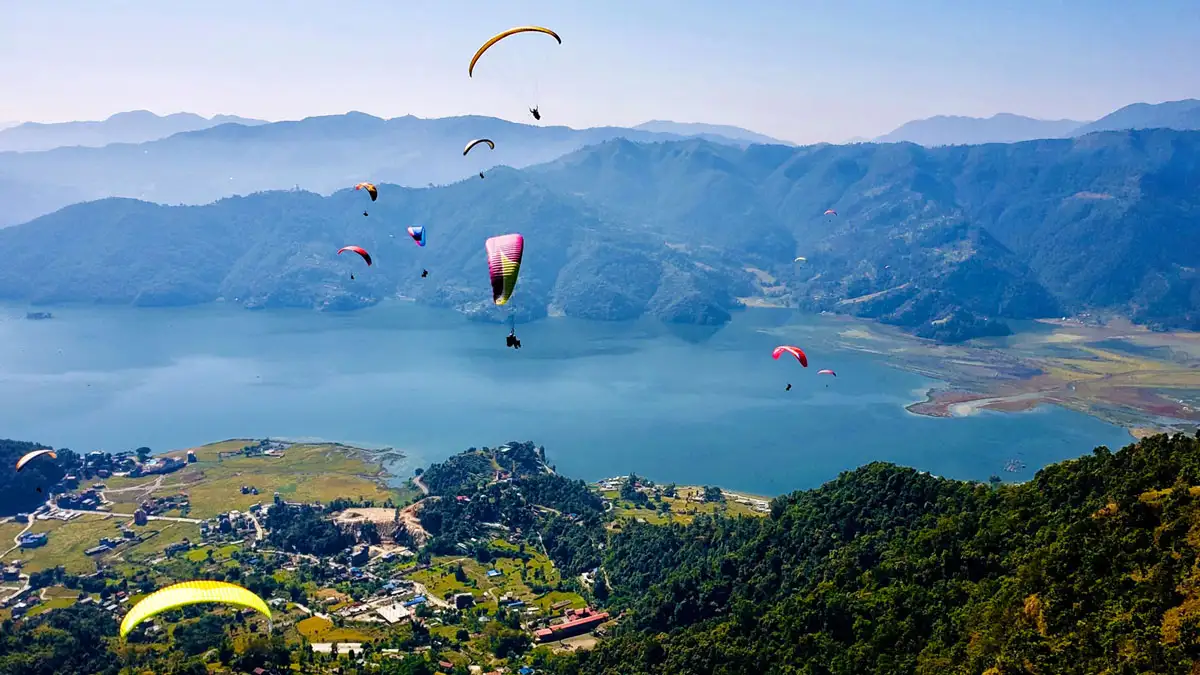
If you’re weighing up paragliding in Pokhara for your 2026 or 2027 Nepal trip, here’s the short version: a standard tandem flight costs roughly NPR 8,500–13,000 (about USD 65–100) per person, lasts 25–30 minutes, and launches from one of three approved hillside sites above Phewa Lake. Cross-country and “cloud buster” flights, which chase thermals for 45–90 minutes and climb well above 4,000 meters, run from NPR 12,000 up to USD 180 depending on the operator and package. Every legitimate flight includes hotel pickup, safety gear, a licensed pilot, and basic insurance — but GoPro photos and video are frequently a separate add-on, so it pays to ask before you pay, not after you land.
What most guides written before mid-2025 get wrong is the takeoff point. For a stretch of 2023–2024, Pokhara’s paragliding operations were pushed away from the famous Sarangkot hilltop to the more distant Mandredhunga ridge because of the new Pokhara International Airport’s flight paths. As of the current arrangement between the Civil Aviation Authority of Nepal (CAAN) and the Nepal Airsports Association (NAA), flights have resumed from Sarangkot, Toripani, and Bahakot, with landings back at the classic Khapaudi site by Phewa Lake, and flying hours extended to 11:00 am–4:30 pm. This guide covers exactly where you’ll fly from, what you’ll actually pay, how CAAN safety rules protect you, and how to avoid the handful of things that trip up first-time flyers in Pokhara.
Quick answer: Pokhara is consistently ranked among the world’s top five tandem paragliding destinations because of its rare combination of reliable thermals, a soft-landing lake below, and uninterrupted views of the Annapurna range — all accessible without a multi-day trek.
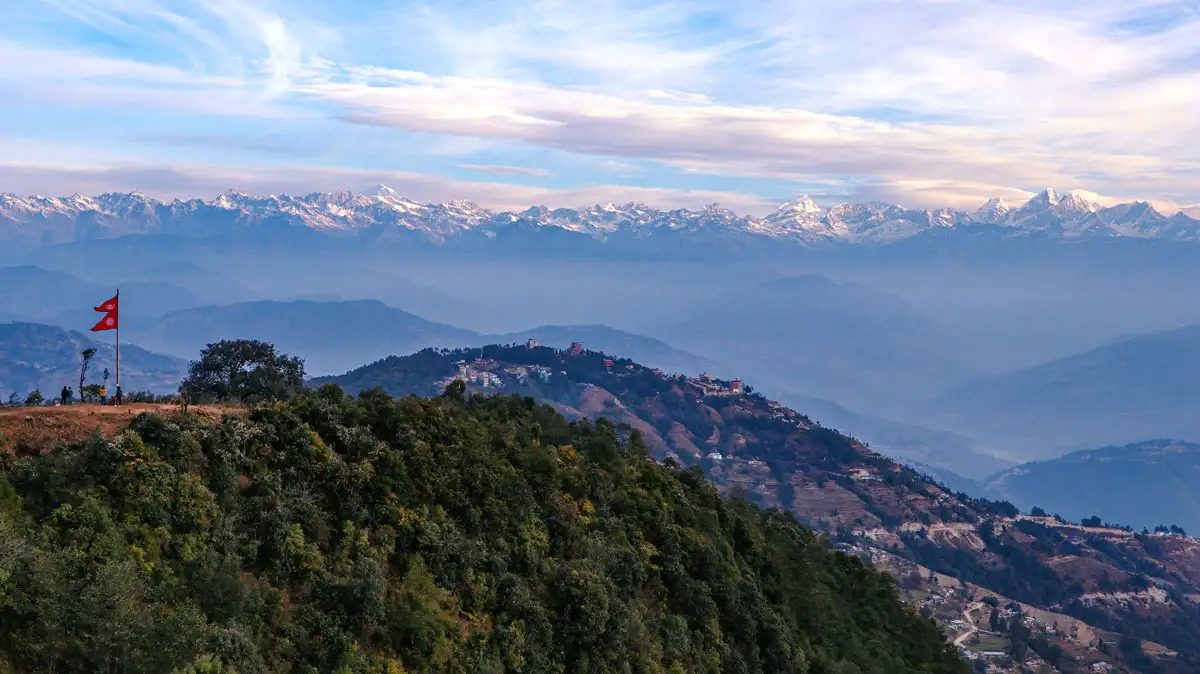
You don’t need to summit anything to see Machhapuchhre (Fishtail), Annapurna, Dhaulagiri, and Himchuli at eye level. A 20-minute jeep ride from Lakeside gets you to a launch point, and half an hour later you’re circling with Himalayan griffon vultures and black kites above Phewa Lake. For travelers short on time — or unable to trek — it’s the fastest way to get a genuine high-altitude Himalayan view.
A standard tandem paragliding flight in Pokhara costs NPR 8,500–13,000 (USD 65–100) per person in 2026, covering a 25–30 minute flight, hotel transfers, licensed pilot, harness, helmet, and basic insurance. Cross-country and acrobatic flights cost more and last longer.
This is what most first-time flyers book. You’re strapped into a harness in front of a licensed pilot who controls the wing throughout.
| Flight Type | Duration | Price (NPR) | Price (USD, approx.) | What’s Typically Included |
|---|---|---|---|---|
| Standard Tandem | 20–30 min | 8,500–13,000 | $65–100 | Hotel pickup/drop, gear, pilot, basic insurance |
| Cross-Country | 40–60 min | 12,000–13,500+ | $95–130 | Above, plus extended thermal-chasing route |
| Cloud Buster | 45–90 min | — | $120–180 | Highest altitude gain, longest airtime |
| Acrobatic/Aerobatic | ~20–30 min | — | $90–130 | Spirals, wing-overs (request in advance) |
Prices vary by operator, season, and whether you book directly in Pokhara or through an international platform. Always confirm the current rate with your chosen company before flying, as association-set price floors can shift year to year.
Pro tip: Booking directly with a licensed operator in Lakeside, in Nepali rupees, is almost always cheaper than booking the same flight through a third-party international app, which typically adds a commission layer.
Not always. Many operators now bundle a basic photo/video package into the base price, but a significant number still charge NPR 1,000–3,000 (roughly USD 10–25) extra for GoPro footage. There is no industry-wide standard, so this is one of the most important things to clarify at the time of booking, not at the launch site.
Ask specifically:
Cross-country (XC) flights use thermals to travel across the valley rather than making a direct descent to the lake. From Sarangkot (or the current approved launch sites), a cross-country tandem typically runs NPR 12,000–13,500 (USD 95–130) per person for 40–60 minutes of flying time, versus 20–30 minutes for the standard flight. You’ll climb higher — often into the 4,000–5,000 meter range on a good thermal day — and cover noticeably more ground before landing near Phewa Lake.
This is genuinely one of the murkier areas of Pokhara paragliding pricing, and different operators handle it differently — so treat any single number you read (including here) as a starting point for questions, not gospel.
Practical takeaway: because pricing structures vary by company rather than by a single enforced national rate card, ask for the total price in both NPR and USD before you commit, and get it in writing (a WhatsApp confirmation or email is enough).
As of the current CAAN–NAA arrangement, paragliding flights operate from three approved sites — Sarangkot (1,592 m), Toripani, and Bahakot — with landings at Khapaudi near Phewa Lake. This reverses the 2023–2024 shift to the more distant Mandredhunga site, which was introduced when Pokhara International Airport opened and needed to keep paragliders clear of its flight paths.
Yes, functionally — Sarangkot is back in active rotation alongside Toripani and Bahakot, following the CAAN/NAA decision that also extended permitted flying hours from 11:00 am–3:00 pm to 11:00 am–4:30 pm. Sarangkot sits at roughly 1,592 meters (5,223 feet) above sea level and remains the site most associated with Pokhara’s classic paragliding photos: launching with Phewa Lake directly below and the Annapurna range filling the horizon.
That said, which exact site your flight departs from on any given day can depend on your operator, wind direction, and air traffic coordination with Pokhara International Airport — so don’t be surprised if your driver takes you to Toripani or Bahakot instead of Sarangkot itself. The flight experience and views are broadly similar across all three, though pilots note that Sarangkot offers the clearest, most unobstructed panorama of the lake and mountains together.
Why this matters for your booking: if a specific launch site matters to you (for photography, for example, or because you’ve read reviews referencing Sarangkot specifically), ask your operator directly which site they currently use — site assignments have changed multiple times in the past three years and may change again as Pokhara International Airport’s operations evolve.
Most operators include this transfer in your flight price. The standard routine:
If you’d rather travel independently, taxis and shared jeeps from Lakeside to Sarangkot take roughly 20–30 minutes and cost a modest fare, but coordinating your own transport with your flight slot adds complexity — most travelers find the included pickup worth it.
The Khapaudi landing zone near Phewa Lake is a flat, open, grassy area chosen specifically for soft landings, with the lake itself acting as an additional safety buffer if a pilot needs to adjust a final approach. Licensed pilots train extensively for lake-adjacent landings, and rescue response (including the Armed Police Force’s dedicated Phewa Rescue Tower boat team) is positioned nearby for water landings.
Even experienced pilots occasionally end up in the lake during a landing, particularly in gusty conditions — this happened in a documented December 2025 incident near Khapaudi, where four people (two pilots, two tandem passengers) were safely rescued from the water within minutes by the Armed Police Force’s rescue tower unit, with no serious injuries reported. It’s a useful real-world reminder of two things: landing-zone incidents do happen occasionally, and the response infrastructure around Phewa Lake is built specifically to handle them quickly.
What keeps the landing zone safe:
The Sarangkot launch point sits at approximately 1,592 meters (5,223 feet) above sea level. During a standard tandem flight, pilots typically climb an additional 500–800 meters above the launch height using thermals, putting most flights around 2,000–2,900 meters ASL. Cross-country and cloud buster flights can climb to 4,000–5,000 meters on strong thermal days.
For comparison, the surrounding peaks visible during your flight — Annapurna (8,091 m), Dhaulagiri (8,167 m), and Machhapuchhre (6,993 m, unclimbed and considered sacred) — remain far above you throughout, so you’re viewing them rather than flying anywhere near their summits.
Tandem paragliding in Pokhara is regulated by the Civil Aviation Authority of Nepal (CAAN) through its Flight Safety Standards Department, which issues pilot licenses, sets equipment and training standards, and works with the Nepal Airsports Association (NAA) to manage takeoff/landing site allocation, daily flight volumes, and operating hours.
You are entitled to ask, and a legitimate company will not hesitate to show you:
Nepal’s aviation safety framework, alongside operator-level codes of conduct, prohibits pilots from flying under the influence of alcohol, requires pre-flight equipment checks, and mandates weather-based go/no-go decisions rather than flying to satisfy a fully booked schedule. Local authorities, including Kaski district police, have periodically stepped up spot checks on operators following past safety concerns and reports of unlicensed operators entering the market — travelers should treat “does this company follow CAAN/NAA rules” as their first vetting question, not an afterthought.
A note on accuracy: exact, verified statistics on pilot-level enforcement actions (such as the frequency of alcohol testing) aren’t something we can confirm with precision from current public sources, so we won’t quote specific numbers we can’t verify. What we can say with confidence is that CAAN and the NAA have an active regulatory relationship, that licensing is mandatory for commercial tandem pilots, and that choosing a licensed operator is the single biggest safety lever within your control as a traveler.
Pokhara’s tandem paragliding sector has an overall strong safety record given the volume of flights — some 250–350 flights per day during peak season across dozens of operators. Serious accidents are relatively rare but not zero: incidents over roughly the past decade have included a small number of fatalities, and periodic non-fatal crashes or hard landings, including landings in Phewa Lake during gusty conditions (as in the December 2025 incident referenced above, in which all four people involved were rescued safely).
In the cases that have been publicly reported and investigated, contributing factors have tended to cluster around: unlicensed or under-qualified operators, poorly maintained equipment at budget operators, and flights that proceeded despite marginal weather (high wind or approaching storms) rather than random, unavoidable equipment failure on well-maintained gear. This is precisely why licensing checks and weather transparency from your operator matter more than the marketing on their website.
What good equipment maintenance looks like:
Reputable operators offer a full refund or a free reschedule to the next available day if your flight is canceled or aborted due to weather — the decision is typically made at the launch site itself, not the office, since conditions can change quickly once you’re on the hill.
Weather cancellations are common enough that you should plan for them, especially during shoulder-season months or the monsoon (June–September), when they’re frequent. Practical advice:
Most Pokhara operators set a maximum passenger weight somewhere between 90 and 100 kg (roughly 198–220 lbs), with some citing a slightly lower ceiling around 95 kg. A small number of operators can accommodate heavier passengers using a larger, higher-rated wing — but this needs to be arranged in advance, not discovered at the launch site.
There’s also typically a practical minimum weight (often cited around 30–35 kg) tied to how tandem harness systems and wing sizing work, which mainly affects the youngest child passengers.
Pro tip: Call ahead and give your operator an honest weight figure when booking. This isn’t a fitness judgment — it’s a straightforward physics and equipment-matching question, and pilots would much rather size the correct wing in advance than improvise at 1,600 meters.
There’s no single, universally enforced minimum age for tandem paragliding in Pokhara. Different operators set their own thresholds, commonly somewhere between 5 and 14 years old, almost always requiring a parent or guardian’s presence and consent, alongside the operator’s separate weight requirements.
Because this varies so much by company, treat “what’s your minimum age for children” as a standard question at booking rather than assuming a fixed national rule. The pilot or operator also retains the right to decline a flight for any passenger, child or adult, they judge unfit on the day — this is a normal and appropriate safety check, not a booking failure on your part.
The clearest Himalayan views typically come in the early-to-mid morning before haze builds up, though thermals (needed for a good, longer flight) are usually stronger from around 11:00 am onward. The best months overall are September–November and March–May; the June–August monsoon season sees frequent cancellations and reduced visibility.
| Time / Season | Visibility | Flying Conditions | Notes |
|---|---|---|---|
| Early morning (7–9 am) | Often clearest | Weaker thermals, shorter/gentler flights | Good for photography, less ideal for longer XC flights |
| Late morning–early afternoon (11 am–2 pm) | Good, can haze up | Strongest thermals | Best for cross-country/cloud buster flights |
| Late afternoon (3–4:30 pm) | Variable | Winds can pick up | Newly extended flying window under current CAAN/NAA rules |
| Oct–Nov (peak autumn) | Excellent | Stable, reliable | Book 1–2 days ahead; busiest season |
| Mar–May (spring) | Good, some haze | Reliable | Second-best season; can be hazier than autumn |
| Dec–Feb (winter) | Good but cooler | Possible fog/shortened windows | Dress warmly; fewer crowds |
| Jun–Sep (monsoon) | Poor, frequent rain | High cancellation rate | Avoid if paragliding is a trip priority |
Wear closed-toe, sturdy shoes (never sandals or flip-flops), a windproof or warm layered jacket, and comfortable, non-restrictive trousers. Layers matter more than heavy clothing, since it’s noticeably colder at altitude than at Lakeside.
Packing checklist for your flight day:
Look for CAAN registration, active Nepal Airsports Association membership, transparent online-booking pricing (rather than opaque “contact us for a quote” listings), consistent recent reviews naming specific pilots, and a clear written cancellation/refund policy.
Questions worth asking before you book, regardless of which operator you choose:
Many established Lakeside operators do offer modest discounts for online advance booking versus walk-in rates during peak season — it’s worth comparing two or three operators’ online listings rather than booking with the first street-side agent you meet.
| Time | Activity |
|---|---|
| 8:00–8:30 am | Hotel pickup from Lakeside |
| 8:45–9:15 am | Drive to launch site (Sarangkot/Toripani/Bahakot) |
| 9:15–9:45 am | Registration, weighing, safety briefing |
| 10:00–11:00 am | Standard tandem flight, or wait for optimal thermal window |
| 11:15 am | Landing at Khapaudi near Phewa Lake |
| 11:30 am–12:00 pm | Return transfer to hotel; receive photos/video |
| Afternoon | Free for Phewa Lake boating, Lakeside cafés, or Davis Falls |
| Item | Approx. Cost (USD) |
|---|---|
| Standard tandem flight | $65–100 |
| GoPro photo/video (if not included) | $10–25 |
| Tip for pilot (optional, appreciated) | $5–10 |
| Transport if arranged independently | $3–8 |
| Typical total for one person | $80–140 |
📞 +977 9841620757 (Available on WhatsApp, Viber, WeChat, RedNote)
✉️ info@nepaltourpackage.com / nepaltourpackage@outlook.com
📍 Kathmandu, Nepal