📧 Quick Questions? Email Us
nepaltourpackage@outlook.com

📞 Talk to a Travel Expert (Bimalendra)
+977-9841620757

Kathmandu Durbar Square: Ancient Newari Palace Complex, Home of the Kumari

Nepal Tour Package > Blog > Kathmandu Durbar Square: Ancient Newari Palace Complex, Home of the Kumari
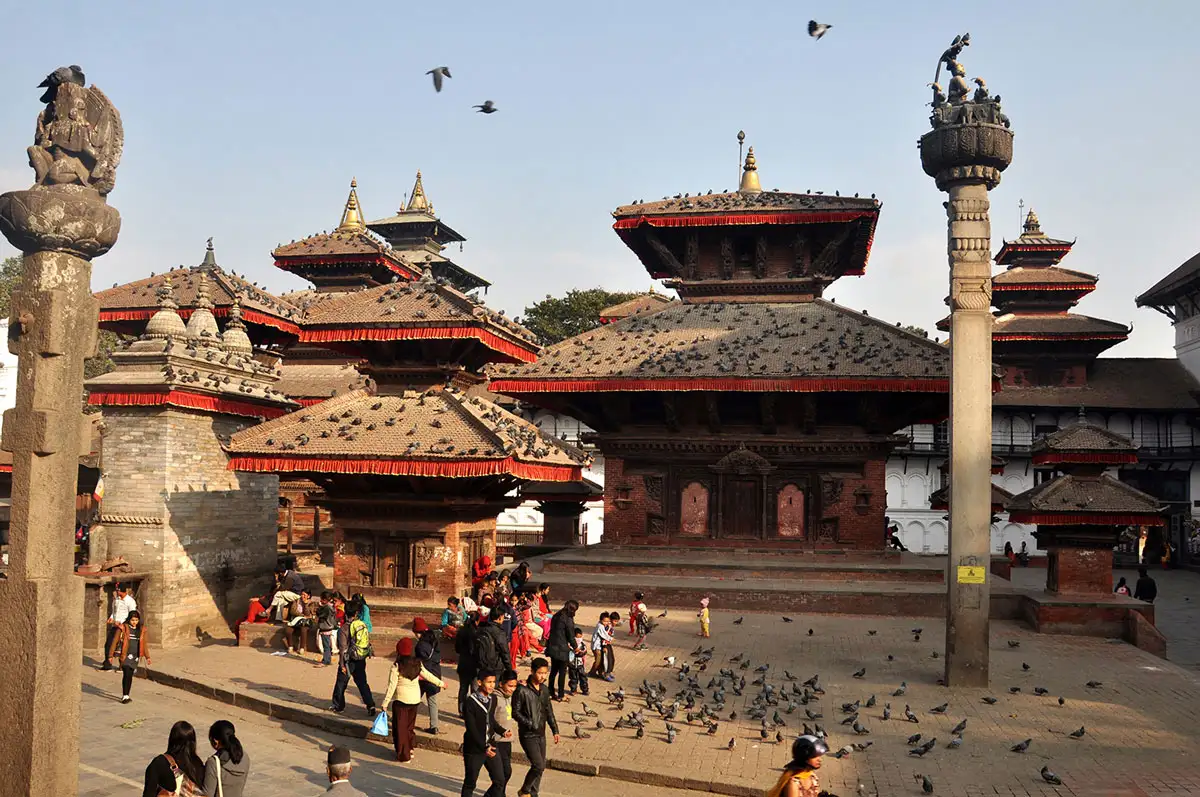
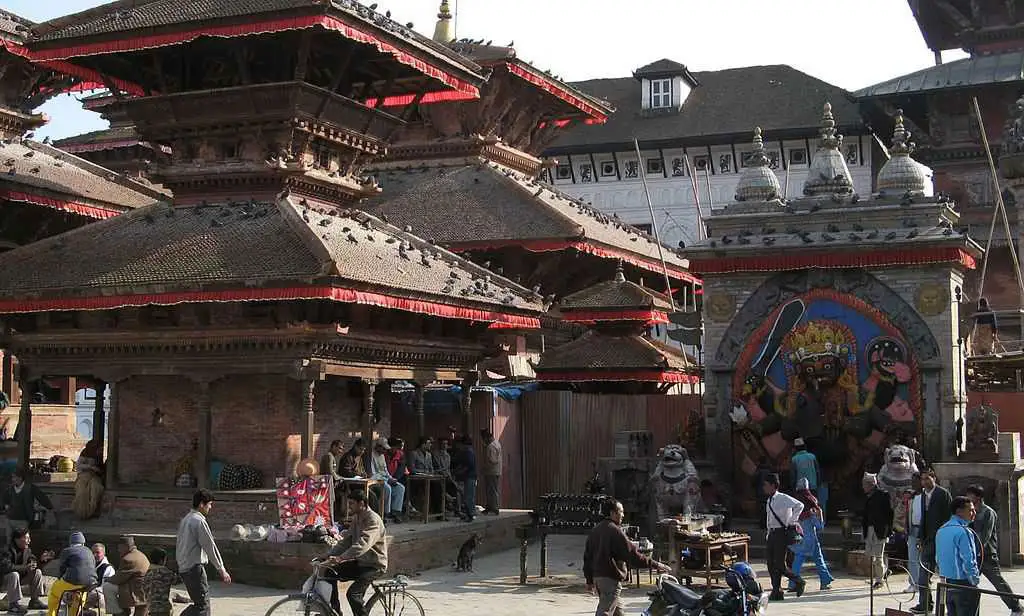
Pigeons resting on the roofs of ancient wooden pagoda temples near the Kaal Bhairav shrine during a Kathmandu cultural sightseeing package

Quick Overview

Kathmandu Durbar Square, also called Basantapur Durbar Square or Hanuman Dhoka Durbar Square, is the historic royal plaza of Nepal’s capital and one of three durbar squares in the Kathmandu Valley recognized as a UNESCO World Heritage Site. Sitting at the old heart of the city, just a 10-minute walk from Thamel, this open-air museum of pagoda temples, carved wooden windows, and stone courtyards was the seat of Nepal’s Malla and Shah kings for centuries. Today it remains a living square, where vendors, pigeons, monks, and tourists share space with some of the finest Newari architecture on earth, including the Hanuman Dhoka Palace, Kasthamandap, Taleju Temple, and the Kumari Ghar, home to Nepal’s living goddess.

For most travelers, Kathmandu Durbar Square is the first proper introduction to Nepal’s layered history of Hindu-Buddhist coexistence, royal patronage, and Newari craftsmanship. A visit typically takes 1.5 to 3 hours depending on whether you explore the Hanuman Dhoka Durbar Museum inside, and it pairs naturally with a walk through nearby Freak Street, Ason Bazaar, or an extended day trip to Patan Durbar Square, roughly 25 minutes away. The site charges a foreign visitor entry fee, and going with a licensed local guide genuinely changes what you get out of the visit, since so much of the symbolism on the buildings is invisible unless someone explains it. Whether you’re squeezing this into a one-day Kathmandu layover before a trek or building it into a longer cultural itinerary, this guide covers exactly what you need: fees, hours, history, what to see, how to get there, and the mistakes most first-time visitors make.


What Is Kathmandu Durbar Square? (Quick Answer)

Kathmandu Durbar Square is a UNESCO World Heritage-listed royal plaza in the old city center of Kathmandu, Nepal, containing palaces, temples, and courtyards built primarily by the Malla kings between the 12th and 18th centuries. It served as the coronation and residential site for Nepal’s monarchy until the mid-20th century and today functions as a heritage site, active Hindu temple complex, and public square. The area is also known as Basantapur Durbar Square and Hanuman Dhoka Durbar Square, names that are used interchangeably by locals and in official signage.


Why Visit Kathmandu Durbar Square

Kathmandu Durbar Square isn’t a static museum piece behind glass — it’s a working square where daily rituals, festivals, and city life still happen exactly as they have for centuries. A few reasons this deserves a spot on your Nepal itinerary:

  • Living heritage, not a recreation. Unlike many historic sites that feel preserved for tourists, locals still worship here, hold festivals like Indra Jatra here, and the Kumari (living goddess) still resides on the square.
  • Architectural density. Within a few hundred meters you’ll find pagoda-style temples, Mughal-influenced gateways, and multi-tiered palace courtyards — a compact crash course in Newari and Malla-era design.
  • 2015 earthquake recovery story. Several structures collapsed in the April 2015 earthquake and have since been rebuilt using traditional techniques, which is itself a compelling story about heritage conservation.
  • Gateway to the old city. The square sits right at the edge of Kathmandu’s oldest trading streets, so it naturally connects to a walking tour of the old town.
  • Manageable for all traveler types. Flat, walkable, shaded seating areas, and short enough that it works for families with kids, older travelers, and people on tight layovers.

Overview: Basantapur, Hanuman Dhoka, and Durbar Square — What’s the Difference?

One of the most common points of confusion for first-time visitors is the overlapping names. Here’s the clearest way to understand it:

Term What It Actually Refers To
Kathmandu Durbar Square The general name for the entire palace-and-temple complex and plaza
Basantapur Durbar Square The southern section of the square, named after the Basantapur Tower; often used as a synonym for the whole area
Hanuman Dhoka Durbar Square Named after the Hanuman Dhoka Palace (the old royal residence) and its entrance gate, guarded by a statue of Hanuman
Hanuman Dhoka Durbar Museum The museum housed inside the former palace, showing royal artifacts, thrones, and coronation rooms
Nasal Chowk One of the internal courtyards inside Hanuman Dhoka Palace, historically used for royal coronations

In short: Basantapur and Hanuman Dhoka are both parts of, and near-synonyms for, Kathmandu Durbar Square — not separate locations. Locals commonly just say “Durbar Square” or “Basantapur” when giving directions.


History of Kathmandu Durbar Square

The history of Kathmandu Durbar Square stretches back over 800 years, though most of the standing structures date from the Malla dynasty (14th–18th century), with later additions and renovations by the Shah dynasty after 1768.

Key historical points:

  • Licchavi and early Malla period: Some form of royal court existed on this site as early as the 12th century, though little from this era survives above ground.
  • Malla dynasty golden age (14th–18th century): Most temples and the palace complex were built or substantially expanded under Malla kings, particularly Pratap Malla in the 17th century, a notable patron of the arts.
  • Kasthamandap: Believed to be one of the oldest structures in the valley, this pavilion is said to have given Kathmandu its name (kastha = wood, mandap = pavilion), built entirely from the wood of a single tree, according to local tradition.
  • 1768 Gorkha conquest: Prithvi Narayan Shah captured Kathmandu Valley and made Hanuman Dhoka his royal palace, shifting political power from the Malla kings to the Shah dynasty, which used the square for coronations until the mid-1900s.
  • 20th century: The royal residence moved to Narayanhiti Palace, but Durbar Square retained its ceremonial and religious importance.
  • 2015 Gorkha earthquake: A magnitude 7.8 earthquake severely damaged or destroyed several temples, including parts of the Gaddi Baithak, Kasthamandap, and other structures. Reconstruction, led by Nepal’s Department of Archaeology with support from international heritage organizations, has restored much of the square using traditional joinery and materials, though some rebuilding work continues in phases.

Why this matters to travelers: understanding this timeline helps make sense of why some buildings look centuries old while others look freshly rebuilt — you’re looking at a genuine multi-generational restoration project, not a themed reconstruction.


Top Attractions Inside Kathmandu Durbar Square

Hanuman Dhoka Palace and Durbar Museum

The former royal palace complex, named after the stone statue of Hanuman guarding its entrance. Inside, the Hanuman Dhoka Durbar Museum displays royal thrones, ceremonial dress, portraits of Shah-era kings, and coronation artifacts across several restored courtyards, including Nasal Chowk, historically used for royal coronation ceremonies.

Kumari Ghar (House of the Living Goddess)

A beautifully carved 18th-century building where the Kumari, a young girl worshipped as a living manifestation of the goddess Taleju, resides. Visitors can enter the courtyard and, if she appears, may briefly see her at an upper window (photography of the Kumari herself is not permitted).

Kasthamandap

A historic wooden pavilion, largely destroyed in the 2015 earthquake and rebuilt using traditional carpentry techniques. Considered one of the namesakes of the city itself.

Taleju Temple

A grand 16th-century temple dedicated to the Malla royal family’s patron goddess, Taleju Bhawani. It’s only open to the public one day a year, during the Dashain festival, but its towering structure dominates the square’s skyline year-round.

Jagannath Temple

Known for its intricately carved wooden roof struts, some depicting erotic imagery, a common feature in traditional Newari temple art meant to symbolize fertility and ward off evil.

Gaddi Baithak

A white, neoclassical building that stands out from the surrounding pagoda architecture, built in the early 20th century in a European Rana-era style, historically used to host state guests.

Basantapur Tower (Nautale Durbar)

A nine-story tower offering (when open) panoramic views over the old city and the square below.

Pro Tip: Many first-time visitors rush through in 45 minutes. Budget at least 90 minutes if you want to actually enter the museum and absorb the carvings rather than just photograph the exterior.


Things to Do at Kathmandu Durbar Square

  • Hire a licensed local guide at the entrance (official guides carry ID badges) for historical and religious context
  • Visit the Hanuman Dhoka Durbar Museum for royal artifacts and valley views from upper floors
  • Watch for the Kumari appearing at her window in the late afternoon
  • Photograph the wood carvings on Jagannath Temple and the surrounding pagodas
  • People-watch from the temple steps, a favorite local pastime
  • Continue on foot into Ason Bazaar and Indra Chowk for a spice-and-textile market walk
  • Visit during a festival, especially Indra Jatra (September) or Dashain (September/October), when the square becomes a stage for masked dances and chariot processions

Sample Half-Day Itinerary: Kathmandu Old City Walk

Time Activity
9:00 AM Arrive at Kathmandu Durbar Square, buy entry ticket, hire a guide
9:15 – 10:45 AM Guided walk through the square, Hanuman Dhoka Museum, Kumari Ghar
10:45 – 11:15 AM Coffee or tea break at a rooftop café overlooking the square
11:15 AM – 12:30 PM Walk to Ason Bazaar and Indra Chowk for local market atmosphere
12:30 – 1:30 PM Lunch at a traditional Newari restaurant nearby
1:30 PM onward Optional taxi to Patan Durbar Square (20–25 minutes) for a second UNESCO site the same day

This pairing (Kathmandu + Patan Durbar Square in one day) is one of the most efficient ways to see two UNESCO sites without burning an extra day of your trip.


How to Reach Kathmandu Durbar Square

Kathmandu Durbar Square sits in the old city core, roughly 1.5 km (a 10–15 minute walk or 5–10 minute drive) from Thamel, the main tourist district, and about 6 km from Tribhuvan International Airport.

From Thamel:

  • Walk: 15–20 minutes through Thahiti and Indra Chowk, a good way to experience street life along the way
  • Taxi: 5–10 minutes, roughly NPR 300–500 depending on traffic and negotiation
  • Rideshare apps (Pathao, InDrive): Widely used in Kathmandu and generally cheaper and more transparent than street taxis

From Tribhuvan International Airport (KTM):

  • Taxi takes approximately 20–30 minutes depending on traffic, typically NPR 700–1,000

From Patan or Bhaktapur:

  • Patan Durbar Square to Kathmandu Durbar Square: about 20–25 minutes by taxi
  • Bhaktapur Durbar Square to Kathmandu Durbar Square: about 45–60 minutes by taxi, longer by public bus

Getting around once there: the square itself and the surrounding old city are entirely walkable; you won’t need any vehicle once you arrive.


Kathmandu Durbar Square Entry Fee, Hours & Practical Information

Detail Information
Entrance Fee (Foreign Nationals) Approx. NPR 1,000 (subject to periodic revision — verify current rate before visiting)
Entrance Fee (SAARC Nationals) Discounted rate, typically lower than the international fee
Entrance Fee (Nepali Nationals) Free or nominal fee with citizenship ID
Opening Hours Generally 7:00 AM – 7:00 PM daily (courtyards/museum sections may have shorter hours, often closing by 5:00 PM)
Hanuman Dhoka Museum Hours Typically closed one weekday (often Tuesday) — check locally, as museum hours differ from square access
Best Time of Day Early morning (fewer crowds, soft light) or late afternoon (possible Kumari appearance, golden-hour photography)
Average Visit Duration 1.5–3 hours
Guide Fee Optional; licensed guides typically charge a set fee negotiated at the entrance
Payment Cash (NPR) preferred at the ticket counter

Important Note: Entry fees and museum hours in Nepal are periodically revised. Always confirm current pricing with your hotel, a licensed local operator, or the Kathmandu Durbar Square ticket counter on the day of your visit rather than relying solely on published figures online.


Best Time to Visit Kathmandu Durbar Square

The square itself can be visited year-round, but timing affects comfort, crowds, and photography quality.

  • October–November (Autumn): The best overall window — clear skies, comfortable temperatures, and this period often overlaps with major festivals like Dashain and Tihar
  • February–April (Spring): Pleasant weather, blooming rhododendrons in the wider valley, moderate crowds
  • May–June: Hot and increasingly humid ahead of monsoon
  • July–September (Monsoon): Frequent afternoon rain; mornings are often still clear, and the square is far less crowded
  • December–January (Winter): Cold mornings but clear air and good visibility, with thinner tourist crowds

Time of Day: Early morning (before 9 AM) offers the best light for photography and the fewest crowds, while late afternoon gives the best chance of seeing the Kumari at her window.


Weather Guide

Season Months Temperature (Day) What to Expect
Spring March–May 20–28°C Warm, clear, occasional dust
Summer/Monsoon June–September 25–30°C Hot, humid, afternoon rain
Autumn October–November 18–24°C Clear skies, best visibility
Winter December–February 10–18°C Cold mornings, clear days

Where to Stay Near Kathmandu Durbar Square

Most travelers base themselves in Thamel, a short walk or quick taxi ride away, which offers the widest range of accommodation:

  • Budget: Guesthouses around Thamel and Jhochhen (Freak Street), from roughly $8–20/night
  • Mid-range: Boutique hotels in Thamel or Lazimpat with courtyard cafés and rooftop views, roughly $30–80/night
  • Luxury: Heritage-style hotels and international chains near Durbar Marg or Lazimpat, offering spa services, valley views, and proximity to both the old city and modern Kathmandu

Tip for photographers and early risers: a few boutique hotels and rooftop cafés directly overlook Durbar Square itself — worth booking specifically if sunrise photography is a priority.


Food Near Kathmandu Durbar Square

  • Newari cuisine: Try a Newari khaja set (a sampler platter of beaten rice, spiced meat, pickles, and lentils) at a traditional Newari restaurant near Jhochhen
  • Street food: Momos (dumplings), chatamari (Newari rice-flour “pizza”), and sweets like juju dhau (a famous yogurt from nearby Bhaktapur, worth seeking out)
  • Rooftop cafés: Several cafés directly overlooking the square serve international and Nepali food with a view — ideal for a mid-tour break

Costs: What to Budget for a Durbar Square Visit

Expense Approximate Cost (USD)
Entry ticket (foreign national) $7–8
Licensed local guide (2 hours) $10–20
Taxi from Thamel (one-way) $2–4
Tea/coffee at a rooftop café $2–4
Newari lunch nearby $5–10
Souvenir/craft purchase Varies widely

A realistic half-day budget, including guide and lunch, runs roughly $25–45 per person.


Travel Tips for Visiting Kathmandu Durbar Square

  • Hire a guide. So much of the square’s meaning, the erotic carvings, the Kumari tradition, the earthquake reconstruction, is invisible without context. It’s the single best money you’ll spend here.
  • Wear comfortable shoes. The square has uneven stone and brick paving.
  • Keep small NPR cash on hand for the entrance fee and minor purchases.
  • Dress modestly, especially if entering temple courtyards; shoulders and knees covered is a safe default.
  • Remove shoes before entering certain temple interiors when indicated.
  • Don’t photograph the Kumari directly if she appears at her window — this is considered disrespectful and is generally prohibited.
  • Watch your step near pigeons and vendors in the main plaza — it’s a busy working square, not a quiet museum.
  • Bargain politely with vendors and unofficial guides; official guides have fixed or clearly posted rates.

Packing List for a Durbar Square Day Visit

  • Comfortable walking shoes
  • Modest clothing (covered shoulders/knees)
  • Small day bag for water and camera gear
  • Cash in Nepali Rupees (small denominations)
  • Sun hat and sunscreen (spring/autumn) or light rain jacket (monsoon)
  • Portable charger, if you plan to photograph extensively
  • Hand sanitizer and tissues (public restrooms are limited)

Culture & Etiquette at Kathmandu Durbar Square

  • This is an active religious site, not just a historical monument — treat temple interiors and the Kumari’s residence with the same respect you’d show any working place of worship.
  • Ask before photographing individuals, especially priests, sadhus, or performers.
  • Avoid touching carvings, statues, or temple structures unnecessarily; many are centuries old and undergoing ongoing conservation.
  • If you’re offered a blessing or tika (a mark on the forehead) by a temple attendant, a small donation is customary but never obligatory.
  • During festivals, follow the lead of locals regarding where to stand and when to move — processions can be dense and fast-moving.

Photography Tips

  • Best light: early morning (7–9 AM) for soft light and empty courtyards, or late afternoon for warm golden tones on the pagoda roofs
  • Wide-angle lens recommended for the tightly packed courtyards and tall temple structures
  • No photography of the Kumari herself if she appears — photograph the building and courtyard instead
  • Rooftop cafés overlooking the square offer elevated, uncluttered compositions
  • Drone use is generally restricted in central Kathmandu without prior permits — check current regulations before flying

Responsible Tourism at Kathmandu Durbar Square

  • Pay the standard entry fee rather than trying to avoid it; ticket revenue directly supports ongoing heritage conservation after the 2015 earthquake damage
  • Hire officially licensed guides, which supports local livelihoods and ensures accurate historical information
  • Buy handicrafts and food from small local vendors around the square rather than only large chain stores
  • Avoid climbing on temple plinths or structures for photos, even when you see others doing so
  • Support restoration transparency by learning which structures are original versus rebuilt — it deepens appreciation rather than diminishing it

Who Should Visit Kathmandu Durbar Square

Families: Yes — flat terrain, short duration, and genuinely engaging for older children with a guide who can tell the Kumari story well.

Solo Travelers: Excellent choice, easy to combine with a broader old-city walking tour, plenty of cafés for a solo break.

Trekkers (pre/post-trek): A natural add-on for the day you land in or return to Kathmandu, requiring no acclimatization or special gear.

Luxury Travelers: Best experienced with a private licensed guide and a rooftop lunch reservation nearby; several boutique hotels arrange this seamlessly.

Senior Travelers: Generally accessible, though the stone paving is uneven in places — a walking stick or trekking pole can help.

Spiritual/Pilgrimage Travelers: Significant as an active Hindu temple complex; pairs well with visits to Pashupatinath and Boudhanath in the same day or trip.

Accessibility Note: Cobblestone and uneven brick surfaces make wheelchair or mobility-aid access difficult in parts of the square; some sections are more level than others, so travelers with mobility considerations should discuss the route with a local operator in advance.


Nearby Attractions

  • Patan Durbar Square (~20–25 min away) — a second UNESCO durbar square, often considered the most architecturally refined of the three
  • Bhaktapur Durbar Square (~45–60 min away) — the best-preserved of the three, worth a half or full day
  • Swayambhunath (Monkey Temple) (~20 min away) — hilltop Buddhist stupa with valley views
  • Boudhanath Stupa (~30–40 min away) — one of the largest stupas in the world, center of Tibetan Buddhist life in Kathmandu
  • Pashupatinath Temple (~25–30 min away) — major Hindu pilgrimage site on the Bagmati River
  • Ason Bazaar (~5–10 min walk) — historic market street for spices, textiles, and street food
  • Freak Street (Jhochhen) (~5 min walk) — former hippie trail hub, now known for budget guesthouses and cafés

Suggested Tour Packages

For travelers who prefer a structured experience, consider:

  • Kathmandu Old City Half-Day Walking Tour — Durbar Square, Ason Bazaar, and Indra Chowk with a licensed guide
  • Kathmandu Valley UNESCO Day Tour — combines Kathmandu, Patan, and Bhaktapur Durbar Squares in one full day
  • Kathmandu Cultural & Spiritual Day Tour — pairs Durbar Square with Pashupatinath, Boudhanath, and Swayambhunath
  • Custom Private Heritage Tour — private guide and vehicle, ideal for families, luxury travelers, or those with limited mobility

If you’re planning a longer Nepal itinerary that includes trekking, wildlife safaris in Chitwan, or a broader cultural circuit, a local Nepal-based tour operator can build a customized itinerary that fits your dates, budget, and interests around this visit.


Ready for your next adventure? Let us handle the details.

Nepal Tour Package

📞 +977 9841620757 (Available on WhatsApp, Viber, WeChat, RedNote)

✉️ info@nepaltourpackage.com / nepaltourpackage@outlook.com

💻 www.nepaltourpackage.com

📍 Kathmandu, Nepal

Frequently Asked Questions (FAQs)

What is Kathmandu Durbar Square famous for?

Kathmandu Durbar Square is famous for being the historic royal palace complex of the Malla and Shah kings, its UNESCO World Heritage status, and as the residence of the Kumari, Nepal’s living goddess.

Is Basantapur Durbar Square the same as Kathmandu Durbar Square?

Yes. Basantapur Durbar Square and Hanuman Dhoka Durbar Square are both names commonly used for the same overall complex known as Kathmandu Durbar Square; the names refer to specific sections or landmarks within it rather than separate places.

What is the entrance fee for Kathmandu Durbar Square?

Foreign nationals typically pay around NPR 1,000, with discounted rates for SAARC nationals and free or minimal entry for Nepali citizens. Fees are revised periodically, so confirm the current rate before your visit.

What are the opening hours of Kathmandu Durbar Square?

The square is generally open from approximately 7:00 AM to 7:00 PM daily, though the Hanuman Dhoka Durbar Museum inside typically has shorter hours and may close one weekday.

How long does it take to visit Kathmandu Durbar Square?

Most visitors spend 1.5 to 3 hours, depending on whether they enter the Hanuman Dhoka Museum and hire a guide for a detailed historical walk.

Can tourists see the Kumari at Kathmandu Durbar Square?

Yes, though it isn’t guaranteed. Visitors can enter the Kumari Ghar courtyard, and the Kumari occasionally appears at an upper window, particularly in the late afternoon. Photography of her directly is not permitted.

What happened to Kathmandu Durbar Square in the 2015 earthquake?

Several structures, including parts of Kasthamandap and the Gaddi Baithak, were severely damaged or collapsed in the April 2015 earthquake. Much of the site has since been restored using traditional construction techniques, with some restoration work ongoing in phases.

How far is Kathmandu Durbar Square from Thamel?

It’s roughly 1.5 km from Thamel, about a 15–20 minute walk or a 5–10 minute taxi ride.

Is it possible to visit Kathmandu Durbar Square and Patan Durbar Square in one day?

 Yes. The two sites are about 20–25 minutes apart by taxi, making it realistic to visit both in a single day if you start reasonably early.

Do I need a guide at Kathmandu Durbar Square?

A guide isn’t required, but it’s strongly recommended. Much of the symbolism in the carvings, the Kumari tradition, and the earthquake reconstruction story is difficult to appreciate without local expertise.

What is Nasal Chowk?

Nasal Chowk is one of the main courtyards inside the Hanuman Dhoka Palace, historically used for royal coronation ceremonies, including that of Nepal’s Shah kings.

Is Kathmandu Durbar Square suitable for families and children?

Yes. It’s flat, compact, and short enough for young children, and the stories around the Kumari and old palace tend to genuinely engage kids when explained by a guide.

What should I wear when visiting Kathmandu Durbar Square?

Modest clothing covering shoulders and knees is recommended, along with comfortable walking shoes suited to uneven stone and brick paving.

Is Kathmandu Durbar Square wheelchair accessible?

Parts of the square are relatively level, but much of the paving is uneven cobblestone and brick, which makes full wheelchair access difficult. Travelers with mobility needs should plan the route with a local guide in advance.

What is the difference between Hanuman Dhoka and Kathmandu Durbar Square?

Hanuman Dhoka refers specifically to the former royal palace and its entrance gate within the larger Kathmandu Durbar Square complex; the terms are often used interchangeably to describe the whole site.

Do you have any feedback.

Fell free to send message to us

Leave a Reply

🙋 Need Help Planning Your Trip?

Our travel experts are online now — get instant answers to your questions!
📞 +977 9841620757


💬 Chat with Us Now

⚡ Avg. response time: under 10 minutes

🔥 LIMITED-TIME LOW FARES

✈️ Search Cheap Flights

🔒 Secure Booking
💰 Best Price Guarantee
⚡ Instant Results
🌍 500+ Airlines

Multiple colorful paragliders soaring high over the lush green hills and blue waters of Phewa Lake, a popular adventure activity in Pokhara.
Paragliding in Pokhara 2026/2027: Price, Booking, Safety Rules, and Best Takeoff Points
July 12, 2026
A mountain teahouse lodge with a blue roof at Machapuchare Base Camp, featuring a fluttering Nepal flag against a backdrop of snowy valley walls.
Is Nepal Safe for Solo Female Travelers? Safety Tips and Advice
July 10, 2026
Kathmandu to Chitwan by Car, Tourist Bus, or Jeep: A Complete Highway Survival Guide
July 9, 2026
We are using cookies to give you the best experience. You can find out more about which cookies we are using or switch them off in privacy settings.
AcceptPrivacy Settings

GDPR

We value your privacy. Our website uses cookies and similar technologies to enhance your browsing experience, provide personalized content, and analyze site traffic. You can manage your consent settings below.

Need Help?