The Short ABC Trek is a compact yet rewarding 5-day trekking adventure that takes you deep into the Annapurna Sanctuary. Starting and ending in Pokhara, this trek follows a scenic route through Chhomrong, Sinuwa, Bamboo, Dovan, Deurali, and Machhapuchhre Base Camp before reaching the iconic Annapurna Base Camp at 4,130 meters. Surrounded by some of the world’s highest peaks — including Annapurna I (8,091m) and Machhapuchhre (6,993m) — this route is ideal for trekkers with limited time but a strong desire for a genuine Himalayan experience. The trail suits fit beginners, experienced trekkers on a short trip, couples, solo adventurers, and small groups seeking mountain immersion without a lengthy expedition commitment.
The Short ABC Trek stands out among Nepal trekking packages for one compelling reason: it delivers a full Himalayan base camp experience in just 5 days. Most Annapurna Base Camp treks run 10–14 days. This condensed version removes unnecessary rest stops and logistical detours, keeping you focused on the best sections of the trail.
Many travelers visit Nepal with just a week to spare. This trek is specifically designed for those visitors. You still pass through lush rhododendron forests, cross glacial rivers, walk through Gurung and Magar villages, and stand in the middle of the Annapurna Sanctuary — one of the most dramatic mountain amphitheaters on Earth.
Every step of this trek is supported by experienced, licensed local guides who know the trail conditions, weather patterns, and altitude risks. You won’t need to navigate permit checkpoints alone, worry about teahouse availability, or second-guess your route.
Compared to longer treks with more rest days, this route is cost-efficient. You spend less on accommodations and meals while still reaching the primary destination: Annapurna Base Camp. The experience-to-cost ratio is exceptional for budget-conscious trekkers and travelers on tight schedules.
The Annapurna Conservation Area is one of Nepal’s most visited and well-maintained trekking zones. Trails are clearly marked, rescue services are accessible, and teahouses are consistently available along the route. Furthermore, guides carry satellite communication devices in case of emergencies.
Pokhara is Nepal’s adventure capital and the starting point for this trek. Situated at 820 meters beside Phewa Lake, it offers easy access to the Annapurna region. The city blends natural beauty with practical travel infrastructure. You’ll find international restaurants, equipment rental shops, permit offices, and comfortable hotels. Pokhara is also home to the World Peace Pagoda, Davis Falls, and Sarangkot viewpoint. Most trekkers spend an extra day here before or after the trek.
Jhinu Danda is a small village in the Modi Khola valley. It serves as both the trailhead and the finishing point of this trek. More importantly, it hosts natural hot springs that trekkers soak in after descending from the mountains. The thermal pools are open daily and provide welcome relief for tired muscles.
Chhomrong is a traditional Gurung village and the main checkpoint village on the Annapurna Sanctuary trail. Sitting at approximately 2,170 meters, it offers stunning views of Annapurna South and Machhapuchhre. The village has a strong trekking infrastructure with well-maintained teahouses, permit checkpoints, and good Wi-Fi connectivity. It’s also one of the last places with consistent mobile phone signal before you enter the sanctuary.
Sinuwa is a small hillside hamlet above Chhomrong. It marks the beginning of the wilder, less-visited section of the trail. Teahouses here are simple but cozy. The forest views and river sounds make it a peaceful overnight stop. Sinuwa is also notable for its rhododendron forest, which blooms brilliantly in spring.
As the name suggests, Bamboo is surrounded by dense bamboo groves. The area is lush, green, and atmospheric. This section of the trail passes through the heart of the Annapurna Conservation Area, home to diverse flora and occasional wildlife. It’s a transitional section between the lower forests and the higher alpine terrain.
Dovan is a basic stopping point between Bamboo and Deurali. It has a few teahouses and serves as a natural rest break. The Modi Khola river runs loudly nearby. At this altitude, the air becomes noticeably crisper and the landscape more dramatic.
Deurali sits at 3,230 meters and is the last settlement with forest cover. Beyond here, the terrain becomes glacial and open. The teahouses at Deurali are slightly more basic than lower sections, but they’re warm and serve hearty meals. Mornings here are often clear, making it a good location for early sunrise views.
MBC at 3,700 meters is the psychological threshold before the final push to ABC. The surrounding scenery here is already extraordinary. The sacred peak of Machhapuchhre — called the Fishtail Mountain — dominates the skyline. This peak is off-limits to climbers by government decree, adding to its mystique. The teahouses at MBC are small but well-stocked.
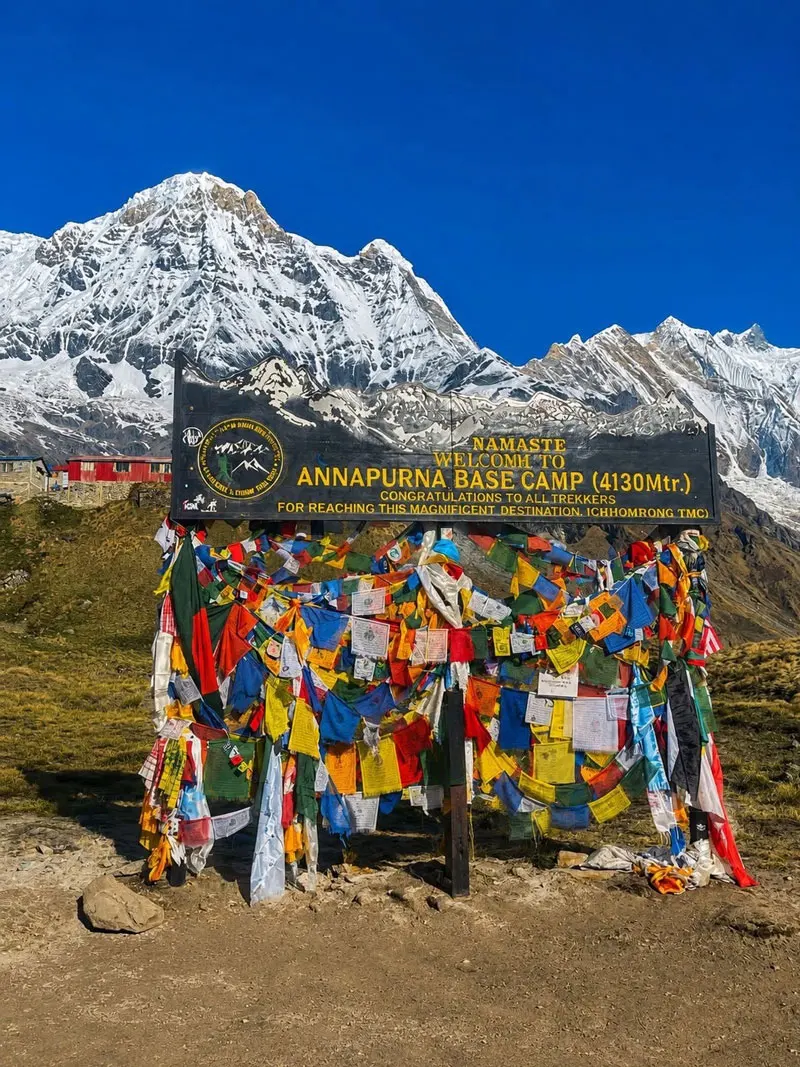
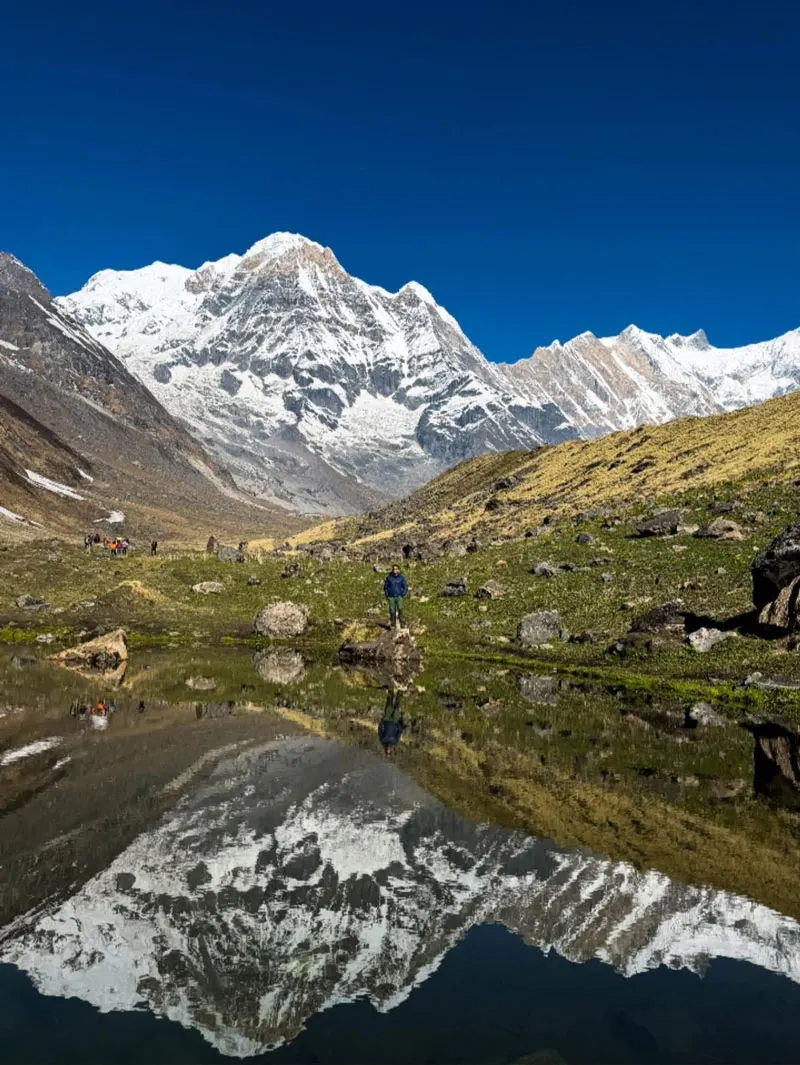
ABC at 4,130 meters is the highlight of the entire trek. It sits in the center of the Annapurna Sanctuary, a glacial basin surrounded by ten peaks above 6,000 meters. The 360-degree panorama is among the most dramatic in the entire Himalayan range. Annapurna I (8,091m), the world’s tenth highest mountain, looms directly above. Spending a night here, watching sunrise and sunset paint the peaks, is an experience of rare beauty and personal achievement.
| Detail | Information |
|---|---|
| Starting Point | Pokhara (820m) |
| Drive Destination | Jhinu Danda (~1,760m) |
| Trek End Point | Sinuwa (2,360m) |
| Drive Duration | Approx. 1.5–2 hours |
| Trekking Duration | 4–5 hours |
| Altitude Gain | ~600m |
| Difficulty | Moderate |
| Accommodation | Tea House, Sinuwa |
| Meals | Not Included |
Your first day begins early in Pokhara. After your guide briefing, you board a private vehicle to Jhinu Danda, a small riverside village at the base of the trail. The drive follows a winding mountain road along the Modi Khola valley. Once in Jhinu Danda, you start ascending toward Chhomrong.
Chhomrong is the main gateway village to the Annapurna Sanctuary. It sits on a steep hillside and offers sweeping views of Machhapuchhre and Annapurna South. After a short rest and lunch stop (at your own expense), you descend slightly and then climb steadily to Sinuwa. The trail passes stone-paved steps, pine forests, and traditional Gurung settlements. Sinuwa is a quiet, small settlement with a handful of teahouses offering warm shelter for the night.
| Detail | Information |
|---|---|
| Starting Point | Sinuwa (2,360m) |
| End Point | Deurali (3,230m) |
| Trekking Duration | 6–7 hours |
| Altitude Gain | ~870m |
| Difficulty | Moderate to Challenging |
| Accommodation | Tea House, Deurali |
| Meals | Not Included |
Day two is one of the longer walking days on this route. You descend into a dense bamboo forest — hence the name “Bamboo” — before crossing the Modi Khola River on a suspension bridge. The trail then climbs steadily through rhododendron and oak forests to Dovan, a small clearing with basic teahouses.
After Dovan, the terrain becomes noticeably steeper. The forest gradually thins and altitude becomes more apparent. Deurali sits at 3,230 meters and marks the final forested section before you enter the open glacial moraine of the Annapurna Sanctuary. Evenings at Deurali are cold and clear. On a good night, you’ll see more stars than you’ve ever seen before.
| Detail | Information |
|---|---|
| Starting Point | Deurali (3,230m) |
| Intermediate Point | MBC (3,700m) |
| End Point | ABC (4,130m) |
| Trekking Duration | 4–5 hours |
| Altitude Gain | ~900m |
| Difficulty | Challenging |
| Accommodation | Tea House, ABC |
| Meals | Not Included |
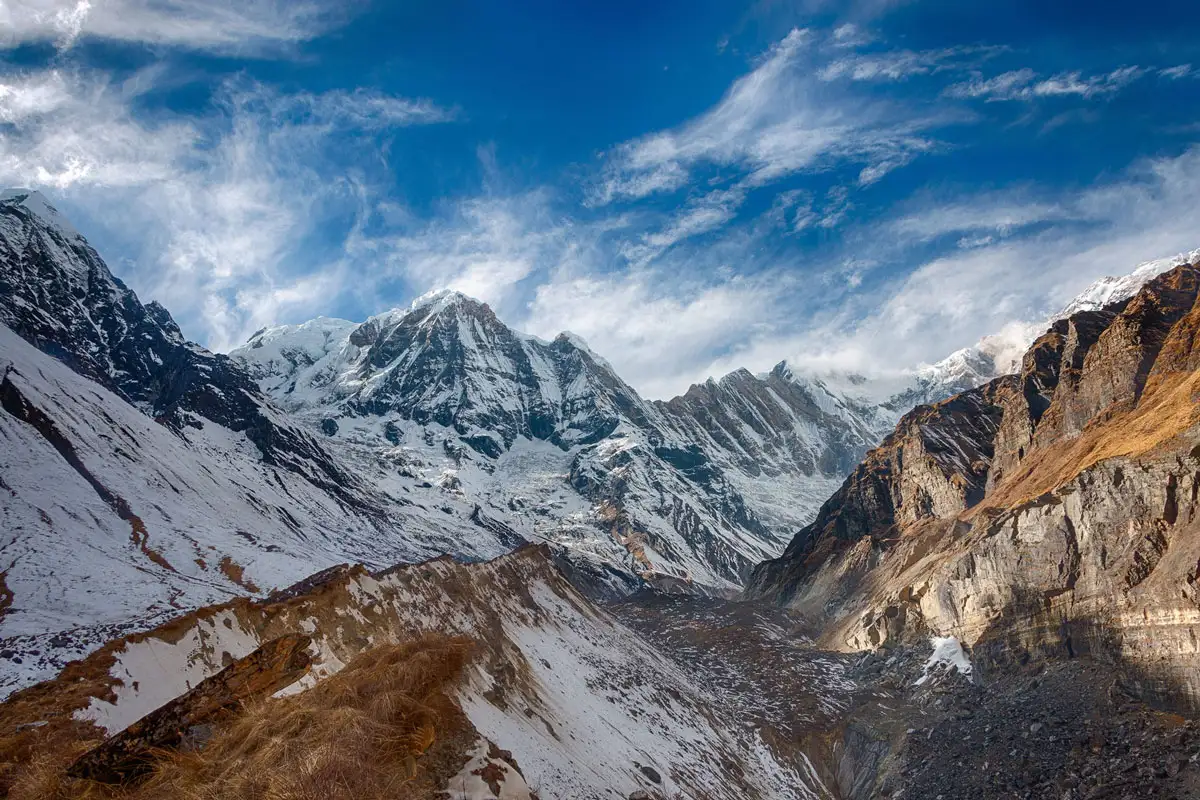
This is the most anticipated day of the trek. Leaving Deurali, you enter the Annapurna Sanctuary proper — a glacially carved bowl surrounded by peaks exceeding 7,000 meters. The landscape becomes stark and powerful. Snow-capped ridgelines tower on all sides. Wind picks up noticeably as you gain altitude.
Machhapuchhre Base Camp serves as a natural rest stop. From here, the trail is relatively flat but the altitude makes breathing harder. Most trekkers feel the effects of altitude here — a mild headache or breathlessness is normal. However, with a steady pace, most fit trekkers manage without serious issues.
Arriving at Annapurna Base Camp is one of the most moving moments in Himalayan trekking. You are surrounded by a 360-degree panorama of Annapurna I, Annapurna South, Hiunchuli, Gangapurna, Annapurna III, and the unmistakable fishtail peak of Machhapuchhre. Sunset at ABC, when the mountains turn gold and then deep orange, is a sight that stays with you permanently.
| Detail | Information |
|---|---|
| Starting Point | ABC (4,130m) |
| End Point | Sinuwa (2,360m) |
| Trekking Duration | 6–7 hours |
| Altitude Loss | ~1,770m |
| Difficulty | Moderate |
| Accommodation | Tea House, Sinuwa |
| Meals | Not Included |
Waking up at Annapurna Base Camp before sunrise is worth setting an alarm for. The alpenglow on the surrounding peaks is breathtaking and a favorite moment for photographers. After breakfast, you begin your long descent back toward the lower valley.
The descent passes MBC, Deurali, and continues down through the forested sections to Bamboo. Going down is faster but harder on the knees — trekking poles are strongly recommended. By afternoon, you reach Sinuwa for your second night. The familiar teahouse feel, hot soup, and lower altitude make for a comfortable and well-earned rest.
| Detail | Information |
|---|---|
| Starting Point | Sinuwa (2,360m) |
| Trek End Point | Jhinu Danda (1,760m) |
| Drive End Point | Pokhara (820m) |
| Trekking Duration | 2–3 hours |
| Drive Duration | 1.5–2 hours |
| Difficulty | Easy |
| Accommodation | Hotel, Pokhara |
| Meals | Not Included |
The final day begins with an easy descent from Sinuwa back to Jhinu Danda. This trail is gentle and enjoyable, especially knowing that a warm natural hot spring awaits at the bottom. Jhinu Danda’s hot springs are fed by geothermal water and sit right beside the Modi Khola river. After 4 days of hard trekking, soaking in the warm mineral-rich pools is pure bliss.
After the hot springs, your private vehicle transfers you back to Pokhara. You arrive in time to clean up, explore Lakeside, and celebrate completing one of Nepal’s most iconic treks. The evening is free for a lakeside dinner, shopping for souvenirs, or simply relaxing with the view of Phewa Lake and the mountains beyond.
The final leg brings you back to civilization. Travel from Jomsom to Pokhara either by jeep along the scenic Kali Gandaki valley road or, if available and preferred, by a short mountain flight.
Pokhara lies beside the stunning Phewa Lake with direct Annapurna and Machhapuchhre views. Use the afternoon to rest, enjoy lakeside dining, or reflect on the extraordinary journey you have completed. The trek concludes here, with onward connections available to Kathmandu.
| Season | Months | Weather | Suitability | Trek Experience |
|---|---|---|---|---|
| Spring | March – May | Warm days, some rain at lower elevation | ⭐⭐⭐⭐⭐ Excellent | Rhododendrons in bloom, clear mountain views, ideal temperatures |
| Summer / Monsoon | June – August | Heavy rainfall, leeches, reduced visibility | ⭐⭐ Limited | Challenging trail conditions; not recommended for most trekkers |
| Autumn | September – November | Dry, clear skies, crisp air | ⭐⭐⭐⭐⭐ Best Season | Best visibility, stable weather, peak trekking season |
| Winter | December – February | Cold, snow possible above 3,000m | ⭐⭐⭐ Moderate | Quieter trails, stunning snow scenery; requires cold-weather gear |
Best overall months: October, November, March, and April. These months offer the clearest mountain views, most stable trail conditions, and comfortable trekking temperatures at all altitudes.
The drive from Pokhara to Jhinu Danda covers approximately 42 kilometers. It takes around 1.5 to 2 hours by private vehicle. The road winds through the Modi Khola valley and passes several small villages. Road conditions are generally good in dry seasons but can be rough during and after monsoon. A private jeep or SUV is the standard transfer vehicle used on this route.
The trail from Jhinu Danda to ABC is a well-worn mountain path used for decades. It is clearly marked throughout. The lower sections (Jhinu Danda to Chhomrong) involve stone-paved steps. The mid-section (Chhomrong to Deurali) transitions into forest paths and suspension bridge crossings. The upper section (Deurali to ABC) follows an open moraine path with some icy sections in winter. No technical climbing gear is required at any point.
In case of altitude sickness or medical emergency, helicopter evacuation is available and can be arranged through your guide. This is why comprehensive travel insurance covering high-altitude trekking and helicopter rescue is strongly recommended and in some cases required.
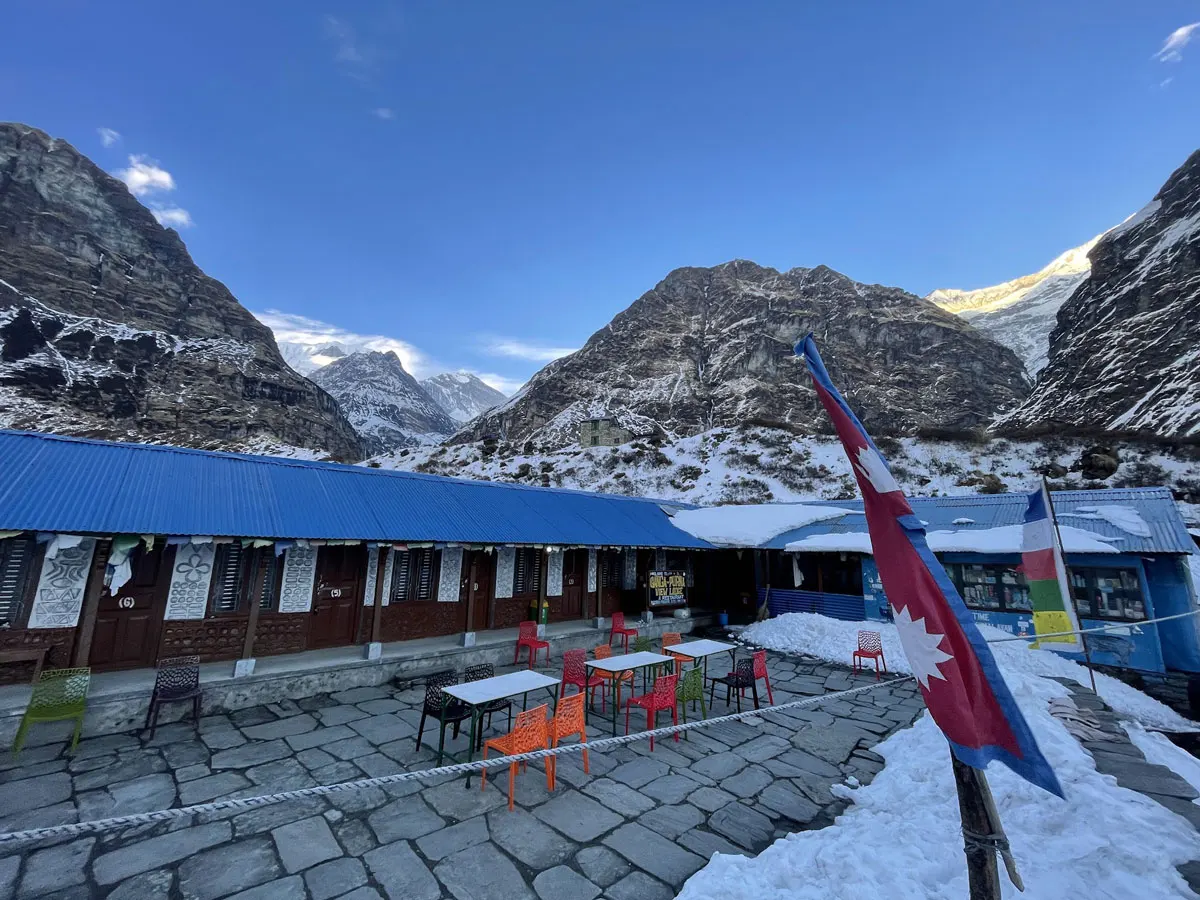
All accommodations on this trek are traditional Nepali teahouses — also called guesthouses or lodges. They are locally owned and operated, providing basic but adequate rooms with two single beds, a mattress, pillow, and blankets.
Teahouses on this route are clean and functional. However, trekkers expecting hotel-level comfort should adjust expectations. Bring a quality sleeping bag rated to at least -10°C for warmth above Deurali. Mattresses and pillows are provided but thin.
Meals on this trek are not included in the package cost, giving you full flexibility to eat according to your appetite and budget. Teahouse menus are remarkably similar throughout the trail and offer both Nepali and international options.
Vegetarian food is well-supported on this route. Most teahouse menus are naturally vegetarian-friendly. Vegan options are limited but manageable with communication. Gluten-free travelers should check each dish individually. Avoid raw salads and unbottled water throughout the trek.
Meal prices increase with altitude. In Pokhara, a meal costs NPR 400–700. At ABC, the same meal may cost NPR 900–1,500. Budget NPR 2,000–3,500 per day for three meals and snacks on the trail.
The Short ABC Trek is rated Moderate to Challenging. It is not a technical climb and requires no previous mountaineering experience. However, it demands a reasonable level of physical fitness and mental endurance.
If you’ve always dreamed of standing at a Himalayan base camp but feel unsure about longer treks, the Short ABC Trek is the perfect entry point. The 5-day format is manageable. Moreover, the trail is well-supported with teahouses and local guides every step of the way.
Seasoned trekkers visiting Nepal for a quick trip will appreciate the efficiency of this itinerary. It covers the absolute highlights of the Annapurna region — Chhomrong, the sanctuary, MBC, and ABC — without padding the schedule unnecessarily.
The combination of dramatic mountain scenery, intimate teahouse culture, and the shared sense of achievement makes this trek deeply memorable for couples. Sunrises at ABC and evenings around teahouse stoves create lasting bonds.
Solo trekkers will find this route safe, social, and well-guided. Teahouses are natural meeting points. Furthermore, guided group departures allow solo travelers to join small groups and share costs.
The Short ABC Trek passes through some of Nepal’s most photogenic landscapes. Rhododendron forests, suspension bridges, traditional stone villages, and the glacier-framed panorama at ABC offer extraordinary shooting opportunities across every genre of travel photography.
Families with children aged 12 and above can complete this trek safely with proper preparation. The trail difficulty is real, so younger or less fit children may struggle on Days 2 and 3. Families should discuss realistic fitness expectations before booking.
The Gurung and Magar communities along this trail have a rich cultural identity rooted in Himalayan Buddhism and traditional animist practices. Mani walls, prayer flags, and small shrines are common sights. For spiritually inclined travelers, this trek offers genuine cultural depth beyond the scenic highlights.
Two permits are mandatory for all trekkers on the Annapurna Circuit:
1. Annapurna Conservation Area Permit (ACAP) Cost: NPR 3,000 per person (~USD 22) This permit funds conservation and infrastructure within the Annapurna Conservation Area. It is issued by the National Trust for Nature Conservation (NTNC).
2. Trekkers’ Information Management System Card (TIMS) Cost: NPR 2,000 per person (~USD 15) for organized trekkers The TIMS card registers your trekking details for safety purposes and is managed by the Trekking Agencies’ Association of Nepal (TAAN).
Both permits are arranged by Nepal Tour Package before the trek begins. Always carry original permits — checkpoints verify them at multiple points along the route.
There may be occasions when you find yourself needing to cancel your trip due to an emergency or other unforeseen circumstances. In such cases,

1-3 Person

4-6 Person

3-5 Person

7-12 Person

13-18 Person

19-30 Person

Reaching Annapurna Base Camp in just 5 days felt like a dream. The trail through Chhomrong and the sanctuary was stunning. Our guide was knowledgeable, patient, and incredibly supportive. Sleeping at ABC with those towering peaks all around us was truly unforgettable. The Jhinu hot springs on the last day were the perfect finish. Highly recommend Nepal Tour Package!