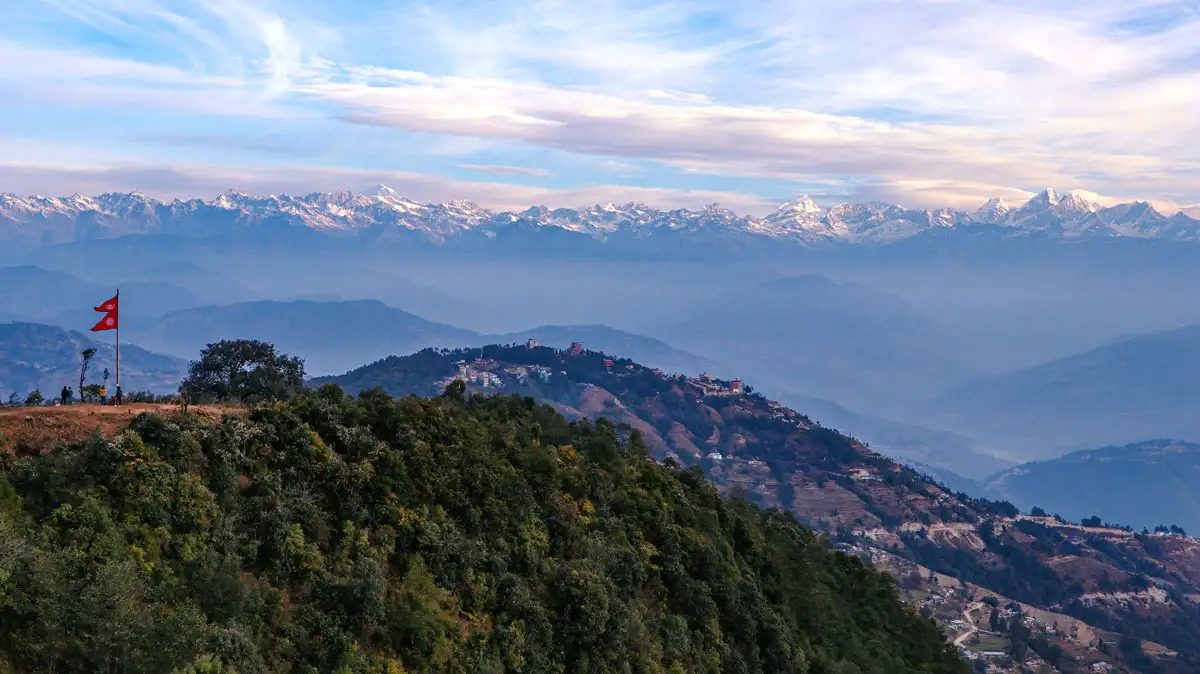
Towering at 8,163 meters (26,781 feet) above sea level, Manaslu Mountain is Nepal’s eighth-highest peak and one of the most breathtaking Himalayan giants on Earth. Known as the “Mountain of the Spirit” — derived from the Sanskrit word Manasa meaning intellect or soul — Manaslu is far more than just an altitude record. It is a living landscape of ancient monasteries, rare wildlife, dramatic glaciers, and warm Tibetan-influenced communities that make every step of the journey deeply rewarding.
Unlike the heavily trafficked trails of Everest or Annapurna, Manaslu offers a rare combination of wilderness authenticity and accessibility. Whether you are an experienced mountaineer eyeing a serious summit bid or an adventurous trekker looking for an off-the-beaten-path Himalayan experience, Manaslu delivers on every level. This complete guide covers everything you need to know — from Manaslu trekking routes and climbing costs to permits, packing lists, and the best time to visit — to help you plan a safe, memorable, and meaningful journey into one of Nepal’s most spectacular mountain regions.
| Detail | Information |
|---|---|
| Official Name | Manaslu (मनास्लु) |
| Elevation | 8,163 m / 26,781 ft |
| Ranking | 8th highest mountain in the world |
| Location | Gorkha District, Gandaki Province, Nepal |
| Mountain Range | Mansiri Himal (part of Himalayas) |
| First Ascent | May 9, 1956 — Toshio Imanishi & Gyalzen Norbu (Japanese expedition) |
| Difficulty Level | Technical — Grade D (Difficult) |
| Climbing Status | Open (Permit Required) |
| Conservation Area | Manaslu Conservation Area (MCA) |
| Coordinates | 28°33′N 84°33′E |
| Trekking Season | March–May (Spring) & September–November (Autumn) |
Manaslu was first surveyed by British geographers during the Great Trigonometrical Survey of India in the 19th century, though it was not formally documented as a major peak until 1950. The mountain’s name is rooted in the Sanskrit word Manasa, meaning “intellect” or “soul,” reflecting the deep spiritual reverence the local communities hold for this towering giant. It stands as the centerpiece of the Mansiri Himal sub-range in the Gorkha District of Nepal.
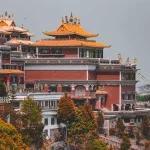
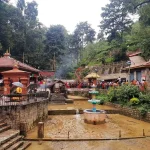
For the Nubri and Tsum Valley communities — predominantly Buddhist peoples of Tibetan heritage — Manaslu is not merely a mountain but a sacred sentinel. The valleys surrounding Manaslu are dotted with ancient Tibetan Buddhist monasteries, prayer wheels, mani walls, and chortens. The Lho village monastery, Pungen Monastery, and the remarkable Tsum Valley are spiritual landmarks that have preserved centuries-old traditions largely untouched by modern commercialization. Trekking through these communities offers a living window into Himalayan Buddhist culture.
The first successful ascent of Manaslu was achieved by a Japanese expedition on May 9, 1956 — a landmark moment in Himalayan mountaineering history. Japan had an exclusive climbing permit for Manaslu throughout the 1950s, making multiple failed attempts before the historic summit. Since then, Manaslu has attracted hundreds of expeditions and has become the fifth most climbed 8,000-meter peak in the world. It has also seen tragedy: the 1972 avalanche that killed 15 climbers and porters remains one of the deadliest single mountaineering disasters in Himalayan history. These expeditions have shaped global understanding of high-altitude climbing, snow conditions, and avalanche science.
Over the past two decades, Manaslu has grown from a remote mountaineering objective into a significant trekking destination. The Manaslu Circuit Trek, formally opened to foreign trekkers in 1991, has steadily gained popularity as an alternative to the iconic Annapurna Circuit Trek. Its restricted area status, which limits tourist numbers and preserves cultural and ecological integrity, makes it especially appealing to travelers seeking solitude and authenticity in an increasingly crowded trekking world.
Manaslu is located in the Gorkha District of Gandaki Province, in north-central Nepal. It sits approximately 64 kilometers (40 miles) east of Annapurna and is separated from the Tibetan plateau to the north by a series of high ridges and deep river valleys. The mountain lies at coordinates 28°33′N latitude and 84°33′E longitude, placing it well within the heart of the Himalayas.
The Manaslu massif encompasses several satellite peaks, including Ngadi Chuli (Peak 29, 7,871 m) and Himalchuli (7,893 m), forming a dramatic cluster of high-altitude terrain. The region is drained by the Budhi Gandaki River, which carves a deep gorge through the massif and forms the primary natural corridor for the Manaslu Circuit Trek. To the east lies the remote Tsum Valley, a hidden Himalayan valley known for its extraordinary cultural preservation. To the west, the Annapurna Conservation Area provides a natural boundary and biodiversity corridor.
The Manaslu region features several significant glaciers, including the Manaslu Glacier and the Ponkar Glacier, which feed into the Budhi Gandaki river system. The terrain varies dramatically — from subtropical lowland forests below 1,500 meters, through temperate rhododendron and oak forests, to high alpine meadows and permanent snow and ice fields above 5,000 meters. The Larkya La Pass (5,160 m), the high point of the Manaslu Circuit Trek, offers jaw-dropping panoramic views across multiple 7,000-meter and 8,000-meter peaks.
The Manaslu Circuit Trek is the primary trekking route in the region and is widely regarded as one of Nepal’s most spectacular multi-day treks. The trail circumnavigates the entire Manaslu massif, following the Budhi Gandaki River gorge before crossing the high Larkya La Pass and descending toward the Annapurna region. The circuit begins in Soti Khola (or Arughat) and ends in Besisahar — or vice versa — and can be connected to the Annapurna Circuit Trek for an extended Himalayan adventure.
Key Highlights Along the Route:
The standard climbing route on Manaslu follows the Northeast Face via the Manaslu Glacier. Climbers establish a series of camps (Camp 1 at ~5,700 m, Camp 2 at ~6,400 m, Camp 3 at ~7,100 m, and Camp 4 at ~7,400 m) before pushing for the summit at 8,163 m. The route involves navigating complex icefalls, steep snow and ice slopes, and high-altitude ridges. Experience with technical ice and mixed climbing is essential.
| Day | Route | Altitude |
|---|---|---|
| Day 1 | Kathmandu – Arughat (drive) | 563 m |
| Day 2 | Arughat – Soti Khola | 710 m |
| Day 3 | Soti Khola – Machhakhola | 869 m |
| Day 4 | Machhakhola – Jagat | 1,410 m |
| Day 5 | Jagat – Deng | 1,804 m |
| Day 6 | Deng – Namrung | 2,630 m |
| Day 7 | Namrung – Lho | 3,180 m |
| Day 8 | Lho – Samagaon (acclimatization) | 3,530 m |
| Day 9 | Samagaon – Acclimatization Hike (Birendra Lake) | 3,530 m |
| Day 10 | Samagaon – Samdo | 3,860 m |
| Day 11 | Samdo – Dharamsala (Larkya Base Camp) | 4,460 m |
| Day 12 | Dharamsala – Larkya La Pass – Bhimthang | 5,160 m / 3,590 m |
| Day 13 | Bhimthang – Tilche | 2,300 m |
| Day 14 | Tilche – Tal | 1,700 m |
| Day 15 | Tal – Besisahar | 760 m |
| Day 16 | Besisahar – Kathmandu (drive) | 1,400 m |
Note: Itinerary can be adjusted based on trekking pace, acclimatization needs, and optional side trips to Tsum Valley.
| Permit | Fee (Approx.) |
|---|---|
| Manaslu Restricted Area Permit | USD 100/person (Sep–Nov), USD 75/person (Dec–Aug) — per week |
| Manaslu Conservation Area Permit (MCAP) | NPR 3,000 (~USD 23) per person |
| Annapurna Conservation Area Permit (ACAP) | NPR 3,000 (~USD 23) per person |
| TIMS Card | NPR 2,000 (~USD 15) per person |
Important: The Manaslu Restricted Area Permit requires trekkers to hire a licensed guide and travel in a group of at least two people. Solo trekking is not permitted.
| Expense Category | Estimated Cost (USD) |
|---|---|
| Permits (all combined) | USD 200–250 per person |
| Licensed Trekking Guide | USD 30–40 per day |
| Porter | USD 20–25 per day |
| Teahouse Accommodation | USD 5–15 per night |
| Meals (per day) | USD 15–25 per day |
| Transportation (Ktm–Arughat–Besisahar–Ktm) | USD 40–80 per person |
| Total Estimated Budget | USD 1,200–2,000 per person (16 days) |
Costs vary based on season, group size, agency, and individual spending habits.
| Season | Permit Fee Per Person |
|---|---|
| Spring (Mar–May) | USD 22,000 per team (up to 7 climbers) |
| Autumn (Sep–Nov) | USD 16,500 per team (up to 7 climbers) |
Additional climbing costs include expedition agency fees, base camp staff, logistics, insurance, and equipment, bringing total Manaslu climbing costs to approximately USD 30,000–60,000 per person depending on the agency and services.
The most common way to reach the Manaslu trekking trailhead is by private jeep or public bus from Kathmandu to Arughat or Soti Khola, the traditional starting points for the Manaslu Circuit. The drive from Kathmandu to Arughat takes approximately 7–9 hours (around 163 km) via Prithvi Highway and then mountain roads through Gorkha District. Road conditions can vary significantly depending on the season — the route is best traveled in dry conditions, as monsoon rains can cause landslides and delays. Many trekkers opt for a private jeep hire through their trekking agency, which offers greater comfort, flexibility, and reliability compared to local public buses.
Many trekkers choose to combine the Manaslu Circuit with the Annapurna Circuit Trek, making Besisahar a key junction. Besisahar is well connected to Pokhara (roughly 75 km, 2–3 hours by road) and to Kathmandu (roughly 175 km, 5–6 hours). This connection allows adventurous trekkers to complete a spectacular double-circuit route, descending through the Marshyangdi Valley after crossing the Larkya La Pass and continuing toward Thorong La Pass on the Annapurna Circuit, creating one of the great Himalayan multi-range adventures.
There is no airport directly serving the Manaslu region. The nearest airports are Pokhara International Airport (approximately 90 km from Besisahar) and Tribhuvan International Airport in Kathmandu. Domestic flights connect Kathmandu to Pokhara in about 25 minutes, after which trekkers can proceed by road to Besisahar or Arughat. For those short on time, helicopter charters are available to specific points along the route, including Samagaon, though this is far more expensive and weather-dependent.
The Manaslu Conservation Area (MCA), established in 1998 and covering approximately 1,663 sq km, is one of Nepal’s most ecologically diverse protected areas. The region shelters an extraordinary range of wildlife, including the elusive snow leopard, Himalayan tahr, red panda, Himalayan blue sheep (bharal), musk deer, and over 110 species of birds. As trekkers ascend through altitude zones, the vegetation transitions dramatically — from subtropical forests of sal and bamboo, through temperate rhododendron, oak, and maple forests (spectacular in spring bloom), to sub-alpine juniper and birch scrub, and finally to high-altitude tundra and permanent snowfields. This ecological gradient makes the Manaslu region exceptional for naturalists and wildlife enthusiasts.
The villages along the Manaslu Circuit are home to the Nubri and Tsum peoples — Tibetan Buddhist communities who have maintained their distinct language, customs, and traditions for centuries in relative isolation. Villages like Lho, Samagaon, and Samdo are rich with Tibetan cultural heritage: ancient gompas (monasteries) adorned with thangka paintings, prayer flag-strewn ridgelines, intricately carved mani walls, and yak-powered agriculture. The Tsum Valley, accessible via a popular side trip from the main circuit, is a particularly sacred Beyul (hidden Buddhist valley) mentioned in ancient texts and home to extraordinary monasteries including Mu Gompa and Rachen Gompa. Engaging respectfully with these communities — participating in local festivals when possible, sampling traditional cuisine like tsampa (roasted barley flour) and butter tea — adds profound cultural depth to the trekking experience.
The Manaslu Conservation Area (MCA) is managed by the National Trust for Nature Conservation (NTNC) in partnership with local communities. It borders the Annapurna Conservation Area to the west and shares ecological corridors with Tibetan protected areas to the north. The region’s restricted access policy — requiring permits and licensed guides — has helped maintain its pristine ecological and cultural character far better than many other Himalayan trekking destinations. The nearby Tsum Valley was added as a restricted trekking area only in 2008, and its cultural and natural integrity remains exceptionally well-preserved as a result.
Altitude sickness (Acute Mountain Sickness, or AMS) is a serious concern on the Manaslu Circuit, particularly around the Larkya La Pass at 5,160 meters. The golden rule is to ascend gradually — never gain more than 300–500 meters of sleeping altitude per day above 3,000 meters. Schedule at least one full acclimatization rest day in Samagaon (3,530 m) before pushing higher, and consider an additional rest day in Samdo (3,860 m) if needed. Stay well-hydrated (3–4 liters of water daily), avoid alcohol in the first few days at altitude, and be familiar with the symptoms of AMS (headache, nausea, dizziness, loss of appetite), High Altitude Pulmonary Edema (HAPE), and High Altitude Cerebral Edema (HACE). Carry Diamox (acetazolamide) after consulting your doctor, and never ascend if you are experiencing worsening symptoms. Your guide should be trained in altitude sickness recognition and emergency response protocols.
Proper gear preparation is critical for a safe Manaslu trek, especially given the high-altitude crossing at Larkya La. Key items to pack include:
Never underestimate the Manaslu Circuit — despite being a trekking route rather than a technical climb, the high altitude, remote location, and unpredictable Himalayan weather demand thorough preparation. Hire only a licensed, certified guide registered with the Nepal Tourism Board (NTB) and your selected agency — this is both a legal requirement and a genuine safety measure, as experienced local guides know the trail, the weather patterns, and how to handle emergencies. Purchase comprehensive travel insurance that explicitly covers high-altitude trekking (above 5,000 m) and helicopter evacuation — this is non-negotiable. Before your trek, invest at least 2–3 months in cardiovascular training (running, cycling, swimming, hiking with a loaded pack) to build the aerobic base and leg strength the Manaslu Circuit demands.
Spring is the most popular and arguably the best time to visit Manaslu. Temperatures are mild to warm at lower elevations, and the famous rhododendron forests burst into vivid red, pink, and white blooms, creating stunning visual contrast against the snow-capped peaks. Skies are generally clear, offering superb mountain views, and trail conditions are stable. This is also the primary climbing season for Manaslu expeditions.
Autumn is equally popular and considered by many trekkers to be the very best season for the Manaslu Circuit. The post-monsoon skies are crystal clear, delivering the sharpest and most dramatic mountain panoramas of the year. Temperatures are cool and comfortable, trail conditions are excellent after the monsoon rains have rejuvenated the landscape, and the cultural festivals of Dasain and Tihar add vibrant energy to village life along the route.
Winter trekking on the Manaslu Circuit is possible but challenging. Temperatures drop dramatically at altitude — well below -20°C near the Larkya La — and snowfall can make the high pass crossing dangerous or impossible. The trails are quiet and serene, and those who are well-equipped and experienced may find a deeply peaceful, solitary experience. However, many teahouses at higher elevations close during deep winter months.
The monsoon season brings heavy rainfall to the Manaslu region from June through August, creating significant risks including trail washouts, landslides, leeches, and poor mountain visibility. Most trekkers avoid this season. However, the northern rain-shadow areas (Samdo, the Tsum Valley) receive far less precipitation and can be trekked during monsoon for experienced adventurers seeking solitude.
Manaslu Mountain is far more than a Himalayan summit — it is a complete journey through some of Nepal’s most pristine landscapes, most authentic cultures, and most dramatic high-altitude terrain. From the subtropical river gorges of the lower Budhi Gandaki to the windswept snow-fields of Larkya La, and from the ancient monasteries of Samagaon to the wildlife-rich forests of the Manaslu Conservation Area, every element of this journey rewards those willing to venture off the beaten Himalayan path.
At Nepal Tour Package (nepaltourpackage.com), our expert team of licensed guides and experienced trek leaders is ready to help you plan a fully customized, safe, and unforgettable Manaslu trekking or climbing experience. Whether you are planning your first Himalayan adventure or adding Manaslu to an impressive list of summits and circuits, we are here to handle every detail — from permits and logistics to guide assignment and emergency support.
Explore More Nepal Adventures:
Contact us today to begin planning your Manaslu journey — the Mountain of the Spirit is waiting.