
Most travelers arrive in Kathmandu with the same list — Pashupatinath, Boudhanath, Swayambhunath, and a quick stroll through Thamel. These are magnificent places. They deserve every visitor they get. But Kathmandu is far deeper than its famous landmarks, and most international tourists leave without ever scratching the surface of what makes this city truly extraordinary.
Kathmandu is one of the oldest continuously inhabited cities in Asia, layered with more than 2,000 years of civilization, religion, trade, and living culture. Every narrow alley holds a story. Every courtyard hides a shrine. Every neighborhood has its own rhythms, its own festivals, its own food, and its own way of life that has barely changed across centuries.
The local things to do in Kathmandu that most tourists miss are not hidden because they are difficult to find. They are missed because most visitors follow the same tourist trail without slowing down long enough to look sideways. This guide is your invitation to look sideways — to step off the main path and spend time with the city that locals actually live in, eat in, pray in, and love.
Whether you are planning a short city break before a trek, spending time in Nepal’s capital on a cultural tour, or simply looking to make your Nepal trip genuinely memorable, these ten experiences will change how you understand Kathmandu.
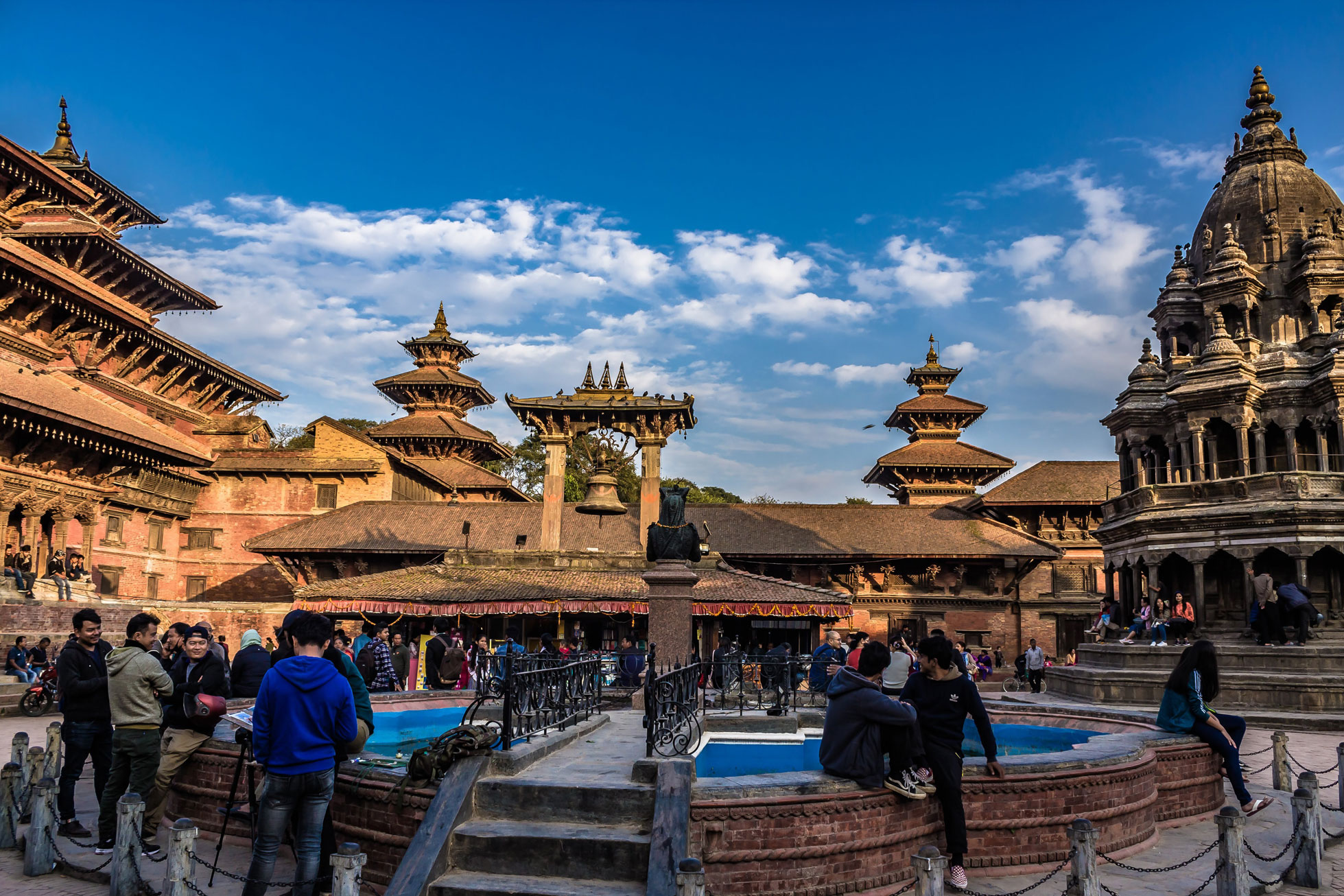
Patan Durbar Square is rightly celebrated as one of the finest medieval squares in Asia. Yet the real magic of Patan — officially called Lalitpur, meaning City of Beauty — lies in the hundreds of courtyards, called chowks, that spread out behind the main square in every direction.
These courtyards are not museums. They are living neighborhoods where families cook, children play, elders pray, and craftsmen work. Each chowk typically contains a central courtyard shrine, often dedicated to a local deity, surrounded by traditional Newari bahals — the double-storied brick and wood buildings with intricately carved windows and doors that are synonymous with Kathmandu Valley architecture.
Walk south from Patan Durbar Square toward Mangal Bazaar and begin turning into the lanes at random. You will find yourself moving through Uma Maheshwar, Kumbheshwar, and eventually into the neighborhood of Hakha, where traditional potters still shape clay on hand-spun wheels. The community courtyards here have not been renovated for tourists. Shrines are draped with fresh marigolds placed by local devotees that morning.
Do not be shy about walking into open courtyards — most are semi-public spaces where visitors are welcomed, provided you show appropriate respect by removing shoes near shrines and avoiding pointing feet toward sacred objects. Locals appreciate genuine curiosity and will often offer explanations through gesture or broken English.
If you are planning a broader cultural trip through the valley, consider combining this with a Kathmandu Valley cultural tour that connects Patan, Bhaktapur, and the hilltop temples in a single journey.
What to look for: Carved wooden peacock windows, stone water spouts called hitis that date back to medieval water engineering systems, and the small oil lamp niches set into walls at eye level where residents leave offerings each morning.
Ason Bazaar is one of Kathmandu’s oldest market streets, radiating from the Ason Chowk intersection where a brass goddess sits in an open shrine at the center of the crossing. Every morning, before the tourist crowd arrives in Thamel, Ason comes alive with local vendors, commuters, and families conducting their daily rituals.
The local breakfast culture in this part of old Kathmandu is something few foreign visitors experience. Traditional Newari morning food includes wo — a thick savory lentil crepe cooked on a flat iron griddle — along with chiura (beaten rice), boiled eggs, and achar (spicy pickled vegetables). Small tea houses tucked along the lane walls serve milky spiced tea for a few rupees a cup, poured into small glasses and sipped standing at the counter.
Look for the stalls that have no English signs. The best breakfast spots in Ason are identified by the queue of local office workers, schoolchildren, and elderly residents ordering quickly in Nepali and eating standing up. Prices are a fraction of anything in Thamel, and the experience of eating shoulder-to-shoulder with locals going about their morning is irreplaceable.
Arrive between 7:00 AM and 9:00 AM for the most authentic atmosphere. By 10:00 AM, the bazaar shifts into its daytime rhythm as a spice, textile, and household goods market, which is equally worth exploring for its own sensory richness — sacks of dried herbs, stalls selling vermilion powder, and traders negotiating grain prices in the lane.
Practical note: The streets are narrow and can be crowded. Leave the large backpack at the hotel and travel light. Cash is essential as virtually no stalls accept cards.
Most visitors arrive at Boudhanath Stupa mid-morning, walk a single circumambulation, take photographs, and then settle into one of the rooftop cafes overlooking the stupa. This is a perfectly enjoyable way to spend time at one of the world’s great Buddhist monuments. It is also nothing like how the local Tibetan and Nepali Buddhist community actually engages with the stupa.
The ritual circumambulation of Boudhanath, called kora, is at its most profound between 5:30 AM and 7:30 AM. At this hour, local Tibetan refugees, Nepali Buddhists, monks, nuns, and elderly residents from the surrounding neighborhood gather to walk the stupa in the pre-dawn and early morning light. Many carry prayer beads. Some prostrate themselves fully at intervals around the circuit. Others spin the massive prayer wheels mounted along the stupa wall continuously as they walk, each spin sending thousands of prayers into the world.
The atmosphere is one of extraordinary calm, purpose, and communal devotion. This is not a performance for visitors. It is the daily spiritual practice of a living community, and being present within it — walking quietly and respectfully in the same direction as the crowd — is one of the most deeply moving experiences available in Kathmandu.
After the morning kora, many locals stop at small butter tea stalls along the inner lane around the stupa. Butter tea, or po cha, made from Tibetan brick tea churned with yak butter and salt, is an acquired taste but an authentic one. Try it.
Boudhanath is a UNESCO World Heritage Site and the spiritual heart of Nepal’s Tibetan community. Pairing a visit here with exploration of the broader Buddhist heritage of the Kathmandu Valley adds significant depth to any Nepal cultural itinerary.
Between Ason Bazaar and Durbar Square lies one of old Kathmandu’s most densely layered religious neighborhoods — the interconnected market areas of Indra Chowk, Kel Tole, and Seto Machhendranath. Most visitors pass through Indra Chowk on the way from Thamel to Durbar Square and see a busy fabric market. They miss almost everything that makes this area extraordinary.
Indra Chowk is named for Indra, the Vedic god of rain, and hosts one of Kathmandu’s most spectacular annual festivals — Indra Jatra — each September. The chowk contains the Temple of Akash Bhairav, whose fearsome blue mask is displayed publicly only during this festival. Even outside festival season, the temple interior, draped in silk and silver, is remarkable.
Immediately north of Indra Chowk, the lane narrows and leads into Kel Tole, where the Seto (White) Machhendranath Temple sits in a crowded courtyard. Seto Machhendranath is the patron deity of Kathmandu city — distinct from the Red Machhendranath worshipped in Patan — and is revered by both Hindus and Buddhists, an example of the religious syncretism that characterizes Newari spiritual life. The courtyard is active throughout the day with devotees. The temple’s carved metalwork and peacock-window facade are exceptionally fine.
Further east along this corridor, look for the small doorways leading into bahals — monastery courtyards — where Buddhist and Hindu elements sit side by side in the same complex. Several of these courtyards are over 600 years old and contain medieval stone sculptures that would anchor any museum collection in the world, yet stand here unguarded, tended only by the community.
This entire area rewards slow walking and frequent pausing. Allow at least two hours and resist the impulse to rush toward Durbar Square.
Kirtipur is a hilltop Newari town southwest of Kathmandu city center, separated from the capital by a valley ridge that once made it militarily significant enough to hold out against Prithvi Narayan Shah’s unification campaign for years. Today, it receives a tiny fraction of the tourist traffic that flows through Kathmandu, Patan, and Bhaktapur — which makes it one of the most authentic urban Newari experiences available in the valley.
The town’s traditional tea houses — not the Westernized cafes of Thamel but genuine local bhattis and tea stalls — are gathering places for local men and women who stop in between work, prayer, and market errands. The tea served is typically a strong, sweet milky tea made Newari-style with spices, served in small clay cups that are discarded after use — an ancient tradition of single-use ceramics that is both practical and ecologically sound.
Sitting in one of these tea houses and simply observing the flow of neighborhood life is an education in itself. Conversations happen in Newari — a Tibeto-Burman language entirely distinct from Nepali — and the social dynamics of the community reveal themselves gradually. Elders are greeted with specific gestures. The tea house owner often doubles as a neighborhood information hub. Local gossip, religious festival planning, and business negotiations all happen across the same wooden table.
Kirtipur is also home to Chilanchu Vihar, a hilltop stupa offering panoramic views across Kathmandu Valley, and the Uma Maheshwar temple with its distinctive roof struts carved with erotic motifs in the style of Bhaktapur’s Erotic Elephants — a common feature of Newari temple architecture that carries philosophical rather than prurient meaning.
Getting to Kirtipur takes about twenty minutes by taxi from central Kathmandu. The town is an excellent half-day addition to any Kathmandu cultural tour.
One of the least understood aspects of Kathmandu’s religious life for outside visitors is the existence of Agam Chens — literally “secret houses” — which are neighborhood tantric shrines found throughout old Kathmandu. These are not open to the general public in the way that Pashupatinath or Swayambhunath are. Access is controlled by the guthi — the traditional Newari community organization that manages neighborhood social, religious, and funerary functions.
However, on certain festival days and during specific neighborhood pujas, the outer courtyard ceremonies of these shrines are semi-public events where respectful visitors may observe, provided they do so from a distance and follow the behavior of local devotees. The ritual music performed at these events — using traditional panche baja instruments including the dhimay barrel drum, cymbals, and wind instruments — is unlike anything performed for tourist audiences. It is devotional music in its original context, sometimes lasting for hours.
The best way to encounter these events is to stay in the old city neighborhoods of Kathmandu — particularly around Bangemudha, Ason, or Nhyokha — and simply pay attention to the sound of drums and the smell of incense in the evening. When a neighborhood puja is happening, its presence announces itself. Following the sound respectfully will often lead to a courtyard ceremony.
Alternatively, engaging a local cultural guide who maintains connections with neighborhood guthis can provide access to these events in a way that is respectful of community boundaries. This kind of experience is increasingly offered as part of premium Nepal cultural tour packages for travelers seeking genuine immersion.
Bhaktapur, the City of Devotees, is the best-preserved of Kathmandu Valley’s three medieval cities and attracts significant tourist attention centered on Durbar Square, Taumadhi Square, and the pottery district. Like Patan, however, the deeper rewards of Bhaktapur lie in the areas most visitors never reach.
The old trade route that once linked Bhaktapur to Tibet ran through the city’s eastern neighborhoods — an area that still retains much of its medieval street plan and architectural character. Walking east from Taumadhi Square through Tachapal Tole, Dattatreya Square, and then into the residential lanes beyond brings you into a Bhaktapur that functions as a working Newari city rather than a heritage museum.
Women here still dry sukuti (smoked meat) and gundruk (fermented leafy greens) on the rooftops during autumn. Farmers bring produce in on bicycles from the surrounding valley fields. The neighborhood bahals contain some of Bhaktapur’s finest medieval woodcarving, entirely without the interpretive signage and ticket queues of the main squares.
The Wakupati Narayan Temple in Tachapal Tole is particularly worth seeking out. Its wooden struts and facade represent some of the finest Newari woodcarving in the valley. Nearby, the Salan Ganesh Temple sits in a courtyard that barely sees a foreign visitor from one week to the next.
Bhaktapur is easily paired with a full Kathmandu Valley day tour from the capital. The entry fee charged at the city gate includes access to all areas. Budget three to four hours for a thorough exploration that goes beyond the main squares.
Newari cuisine is one of South Asia’s most distinctive and least-known food traditions. Developed over centuries by the Newar people of Kathmandu Valley, it is simultaneously elaborate and hyperlocal — built from ingredients that come almost entirely from the valley itself, prepared using techniques that vary street by street and community by community.
A proper Newari meal, called Newa Bhoj, includes a spread of fifteen to thirty small dishes served on a large metal plate. Dishes include chatamari (rice crepe with toppings), bara (black lentil patty), yomari (sweet rice dumpling filled with molasses and sesame), kwati (sprouted bean soup), aalu tama (potato and bamboo shoot curry), paun kwa (pumpkin soup), and numerous fermented, dried, and pickled accompaniments. The meal is paired with aila, a fiery homemade grain spirit distilled in Newari households for generations.
Several local families and community kitchens in Patan and Bhaktapur now offer cooking experiences where visitors can join in preparing these dishes over a morning or afternoon session. These are not staged demonstrations. They happen in real home kitchens, using real family recipes, and the instruction is practical — you grind spices by hand, shape dumplings, and manage a traditional wood-burning clay stove.
The experience typically ends with eating what you have cooked together with the family, which often extends into conversation about Newari culture, festivals, and daily life. This kind of direct cultural exchange is impossible to replicate from a restaurant table. It is one of the most memorable local things to do in Kathmandu for travelers interested in food, culture, or both.
Look for these experiences through local cultural organizations in Patan or ask your Nepal tour operator to arrange a family cooking session as part of a Kathmandu cultural experience package.
Patan has been the center of Nepal’s traditional metal casting industry for over a thousand years. The Shakya caste communities of Patan specialize in the lost wax casting method — called cire perdue in Western art history — to produce bronze, brass, and copper statues of Buddhist and Hindu deities that are considered among the finest religious metalwork anywhere in Asia. Museums in New York, London, and Paris hold Patan metalwork in their permanent collections as masterpieces of world art.
The craft workshops where this work is produced are concentrated in the neighborhoods around Patan Durbar Square, particularly in the Uku Bahal and Hiranya Varna Mahavihar areas. Most are family operations occupying the ground floors of traditional Newari houses, open to the lane through wide wooden doors. Visitors who step in and express genuine interest are almost always welcomed to observe the process.
Watching a craftsman carefully cut the wax model for a new statue, or seeing the final polishing of a freshly cast Tara — the golden-green bodhisattva of compassion — gives an entirely different perspective on the statues sold in the tourist shops of Thamel. These are not mass-produced items. They are living craft objects created by communities who have passed the same skills across forty generations.
The best workshops to visit are those without prominent English signage. The ones with large shops at the front catering primarily to export buyers produce fine work but prioritize volume. The deeper family workshops producing one or two pieces per week for temple commissions and serious collectors are where the most extraordinary work happens.
Ask a local guide or your hotel to recommend specific family workshops rather than the large commercial studios. Some workshops welcome visitors to sit and watch without any obligation to purchase, making this one of the most intellectually rich free experiences in Kathmandu Valley.
Kathmandu is the only city in the world where a living goddess — a young prepubescent girl chosen through an elaborate selection process and installed in a palace — is still an active part of civic and religious life. The Kumari of Kathmandu, the Royal Kumari, resides in the Kumari Ghar (Kumari Palace) at the southern end of Kathmandu Durbar Square and represents the living manifestation of the goddess Taleju.
Most visitors photograph the Kumari Ghar’s ornate carved facade and move on. Fewer know that it is possible — though not guaranteed — to witness the Kumari’s appearance at her window, which typically happens for brief periods when she chooses to show herself to devotees below. The best times to be present are late morning and around sunset, and the appearance is most likely on auspicious festival days in the Nepali calendar.
The protocol for witnessing this is simple but important: stand respectfully in the courtyard, do not point cameras aggressively at the window, and follow the behavior of local devotees who may bow or press palms together in a namaste gesture if the Kumari appears. She will look down, and for a moment you are in the presence of something genuinely extraordinary — a tradition of divine embodiment that stretches back to the Licchavi period of Nepali history.
Beyond the Royal Kumari, Kathmandu Valley has several other living Kumaris in Patan and Bhaktapur, each representing local manifestations of the same deity. The Patan Kumari’s palace is located near Patan Durbar Square and is somewhat less visited, meaning the atmosphere there is often more intimate.
Understanding the Kumari tradition adds profound depth to any Kathmandu itinerary. The tradition is connected to Nepal’s broader festival calendar, particularly the festival of Indra Jatra in September, when the Kumari makes her most prominent public appearance riding through the streets of old Kathmandu on a chariot.
The best seasons for experiencing local life in Kathmandu are October–November (post-monsoon, clear skies, major Hindu and Buddhist festivals) and February–April (spring festival season, Holi, Shivaratri, Losar). Avoid visiting purely in June–August if possible, as heavy monsoon rains can disrupt outdoor exploration, though the city remains vibrant and green.
The narrow lanes of old Kathmandu — Ason, Indra Chowk, the areas around Durbar Square — are not accessible by vehicle and must be explored on foot. Good walking shoes are essential. Distances between areas are manageable: a full circuit from Ason through Indra Chowk to Durbar Square to the Kumari Ghar covers roughly two kilometers of walking.
Patan and Bhaktapur require either a local bus or taxi from central Kathmandu. Taxis are metered but negotiate the fare in advance, or use ride-hailing apps that now operate in the capital. Electric three-wheelers (safa tempos) operate fixed routes through some old city corridors.
Most local experiences described in this guide — eating in local tea houses and markets, walking neighborhoods, observing craft workshops — cost very little or nothing. Nepal uses the Nepalese Rupee (NPR). ATMs are available throughout Kathmandu but carry cash for market areas. Cooking classes and guided cultural workshops range from USD 30–80 per person depending on the provider and duration.
Kathmandu has been welcoming travelers for centuries, first as a node on the ancient trade route between India and Tibet, later as the gateway to the Himalayas, and today as the cultural heart of one of the world’s most extraordinary travel destinations. Its famous landmarks deserve their fame. But the city reveals its deepest character in the spaces between the landmarks — in the morning rhythm of its markets, the devotional intensity of its neighborhood rituals, the living precision of its ancient craft traditions, and the quiet hospitality of its people.
The local things to do in Kathmandu described in this guide require no special access, no expensive equipment, and no prior expertise. They require only time, curiosity, and the willingness to slow down and pay attention. Taken together, they offer a portrait of a city that is simultaneously ancient and alive — one of the most complex, layered, and rewarding urban environments anywhere in Asia.
Nepal is far more than Everest base camp and mountain panoramas, though those experiences are extraordinary in their own right. The country’s cultural depth — centered above all in Kathmandu Valley — is a destination unto itself, one that rewards return visits across years and even decades.
If you are planning a trip to Nepal and want to experience both the natural grandeur of the Himalayas and the cultural richness of Kathmandu’s living heritage, explore our range of Nepal tour packages designed to connect you with both dimensions of this remarkable country. Our experienced team can build a custom Nepal itinerary that weaves local cultural immersion in Kathmandu with the trekking and mountain experiences that bring most travelers to Nepal in the first place. Because the best Nepal trip is one that gives you both.
Published by Nepal Tour Package | Expert-guided Nepal tours, trekking, and cultural experiences
Contact: +977 9841620757 (WhatsApp/Viber) | nepaltourpackage@outlook.com