The 4 Night 5 Days Kathmandu Tour Package is one of Nepal’s most popular and rewarding short trips. Designed for first-time visitors and repeat travelers alike, this itinerary takes you deep into the spiritual and historical heart of the Kathmandu Valley. Over five full days, you will explore UNESCO World Heritage Sites, ancient Hindu and Buddhist temples, hilltop viewpoints, and the medieval cities of Bhaktapur and Patan. Starting with a warm airport welcome and ending with a comfortable farewell transfer, this package suits families, solo travelers, couples, and cultural enthusiasts. It combines heritage, spirituality, Himalayan scenery, and authentic Nepali experiences — all in a perfectly paced schedule.
Choosing the right Nepal tour matters enormously, especially for first-time visitors. This 4 Night 5 Days Kathmandu Tour Package stands out for several compelling reasons.
The schedule is neither rushed nor overly relaxed. Each day has a clear purpose — one day for Kathmandu’s iconic temples, another for the medieval squares of Bhaktapur, and a rewarding hike followed by a Himalayan sunrise at Nagarkot. Travelers rarely feel overwhelmed, yet they never feel underserved.
Nepal has seven UNESCO World Heritage Sites, and this single package visits five of them. Pashupatinath Temple, Boudhanath Stupa, Swayambhunath (Monkey Temple), Changu Narayan, and Bhaktapur Durbar Square are all included. That is extraordinary value within five days.
Whether you are a solo backpacker staying in budget guesthouses or a family traveling in comfort, this package adapts. Accommodation upgrades, private vehicle transfers, and customizable add-ons make it easy to tailor the trip.
Navigating Kathmandu’s narrow lanes, negotiating temple timings, and understanding the cultural significance of what you see requires local knowledge. A knowledgeable English-speaking guide transforms sightseeing into genuine learning.
Many travelers use this itinerary as the first stage of a longer Nepal journey. It pairs perfectly with Pokhara tours, Everest Base Camp treks, or Chitwan jungle safaris.
Kathmandu, Nepal’s capital, sits at 1,350 meters in a broad mountain valley. It is one of South Asia’s most historically rich cities, with a documented urban history stretching back over 2,000 years. The valley contains seven UNESCO World Heritage Sites within a 20-kilometer radius — a density found almost nowhere else on Earth.
Beyond temples and palaces, Kathmandu is a city of extraordinary street life. The Thamel neighborhood serves as the backpacker hub, while areas like Asan Bazaar and Indra Chowk reveal the authentic commercial pulse of old Newari trading culture. The city’s population is predominantly Newar — the indigenous inhabitants whose artisan traditions, architecture, and festivals define Kathmandu’s identity.
Boudhanath is one of the largest Buddhist stupas in the world, recognized as a UNESCO World Heritage Site. The stupa served as a major resting point on the ancient Tibet-Nepal trade route, which explains the strong Tibetan Buddhist influence in the surrounding neighborhoods. Today, Boudhanath remains one of the most important pilgrimage sites for Tibetan Buddhists worldwide. The full-moon evenings here are especially atmospheric, with hundreds of butter lamps flickering around the dome.
Pashupatinath is not merely a temple — it is an entire sacred complex of courtyards, smaller shrines, bathing ghats, and ashrams spread along the Bagmati River. It is the most sacred Shaivite temple in the world outside India. The cremation ghats (Arya Ghat) are visible from across the river and provide a profound, sobering meditation on life and death. Visiting during the Maha Shivaratri festival draws hundreds of thousands of pilgrims.
Swayambhunath predates Kathmandu itself. Legend holds that the lotus flower from which the stupa emerged once sat in the middle of a vast lake before the valley drained. The complex blends Buddhist stupas with Hindu shrines, reflecting Nepal’s religious syncretism. The hilltop setting provides the best aerial perspective of Kathmandu’s urban sprawl and the surrounding green hills.
Patan is often overshadowed by Kathmandu but arguably surpasses it in architectural refinement. The city’s Durbar Square contains more than 50 major monuments within a compact area. The Patan Museum inside the old Royal Palace is one of the finest museums in South Asia, explaining Nepali Hindu and Buddhist art in exceptional detail. Patan’s metalworking tradition dates back centuries, and local craftsmen still produce bronzes using the lost-wax casting method.
Standing on a forested hilltop above the Bhaktapur Valley, Changu Narayan is dedicated to Vishnu and contains some of the finest stone sculpture in all of Nepal. The complex dates to the 4th century CE, making it one of the oldest documented religious sites in the country. The hilltop setting, forest trails, and panoramic valley views make it as rewarding for nature lovers as for history enthusiasts.
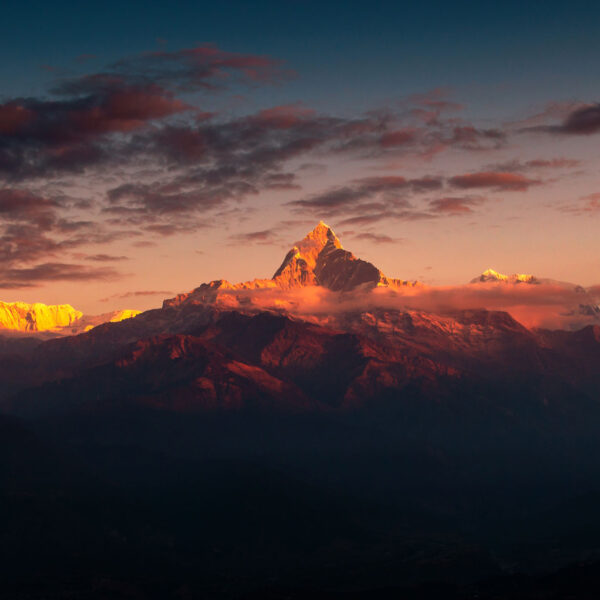
At 2,175 meters, Nagarkot is Kathmandu Valley’s most celebrated Himalayan viewpoint. On clear days — most common in October–November and March–April — you can see an extraordinary arc of peaks including Langtang Lirung (7,227 m), Dorje Lakpa (6,966 m), Choba Bhamare, Ganesh Himal, and, on exceptional days, the distant summit pyramid of Everest (8,848.86 m). The village itself is small and peaceful, a welcome contrast to Kathmandu’s energy.
Bhaktapur Durbar Square is arguably Nepal’s finest medieval cityscape. Declared a UNESCO World Heritage Site, it was severely damaged in the 2015 earthquake but has been meticulously restored. The city’s Newari residents still practice centuries-old traditions — festivals, pottery, weaving, and mask-making are part of daily life, not tourist performances. Bhaktapur also produces Nepal’s finest juju dhau (king curd), a thick, sweet buffalo milk yogurt served in clay pots. Do not leave without tasting it.
Your Nepal journey begins the moment you land at Tribhuvan International Airport (TIA). A friendly representative greets you at the arrivals hall, holding a sign with your name. From there, a private vehicle transfers you comfortably to your hotel in Thamel — Kathmandu’s most vibrant and traveler-friendly neighborhood.
After checking in and freshening up, the afternoon is completely yours. Thamel itself is worth exploring. Narrow streets are lined with bookshops, trekking gear stores, restaurants, and traditional craft shops. Pashmina shawls, Thangka paintings, singing bowls, and handmade paper goods make excellent first-day browsing.
In the evening, consider strolling to the nearby Garden of Dreams (Swapna Bagaicha), a beautifully restored Neoclassical garden that offers peaceful calm away from the busy street energy. Dinner options in Thamel are excellent — from traditional dal bhat to Italian, Japanese, Mexican, and everything in between.
Overnight: Hotel in Thamel, Kathmandu Altitude: 1,350 m Activity Level: Light / Leisure
Kathmandu Tour Package — a full day of temple hopping across the city. Your guide meets you after breakfast, and the day begins.
Located on the banks of the sacred Bagmati River, Pashupatinath is Nepal’s most revered Hindu temple. It is dedicated to Lord Shiva and holds UNESCO World Heritage status. Non-Hindus cannot enter the main pagoda, but the surrounding complex is vast and deeply atmospheric. You will observe Hindu rituals, cremation ghats, wandering sadhus with painted faces, and ancient stone carvings. Early morning is especially powerful here, with devotees bathing in the river and offering prayers.
After Pashupatinath, head to Boudhanath — one of the largest Buddhist stupas in the world. Its watchful Buddha eyes gaze in all four directions from an enormous whitewashed dome, draped in colorful prayer flags. Circling the stupa (known as kora) alongside monks, pilgrims, and local residents is a meditative and memorable experience. The surrounding streets are filled with Tibetan monasteries, thangka galleries, and cozy cafes — perfect for a mid-morning rest.
Perched on a hilltop west of the city, Swayambhunath offers panoramic views of Kathmandu Valley. The climb up 365 stone steps rewards you with one of Nepal’s most iconic views — the stupa, the city skyline, and the distant Himalayan peaks on clear days. Playful rhesus monkeys inhabit the complex, which is how it earned its popular nickname. Both Hindus and Buddhists consider the site sacred, reflecting Nepal’s uniquely blended spiritual heritage.
Just south of Kathmandu across the Bagmati River lies Patan (Lalitpur), one of Nepal’s three ancient capital cities. Patan Durbar Square is extraordinarily well-preserved and lined with intricate Newari architecture, ornate temples, and a superb museum inside the old Royal Palace. Highlights include the Krishna Mandir (built entirely of stone), the Golden Temple (Hiranya Varna Mahavihar), and countless medieval courtyards. Patan is also Nepal’s center for traditional metal craft and bronze art — wonderful for watching artisans at work.
Overnight: Hotel in Kathmandu Altitude: 1,350–1,400 m Activity Level: Moderate (lots of walking)
Day 3 begins with a scenic drive from Kathmandu to Changu Narayan — Nepal’s oldest existing temple and another UNESCO World Heritage Site. The two-story pagoda-style temple dedicated to Lord Vishnu dates back to the 4th century CE. Its stone carvings and courtyard sculptures are among the finest examples of ancient Nepali artistry.
From Changu Narayan, you begin a rewarding hike toward Nagarkot through terraced fields, rhododendron forests, and small hill villages. The trail is well-marked and manageable for most fitness levels. Depending on pace, the hike takes approximately 3–4 hours, covering around 10–12 kilometers.
Nagarkot sits at an elevation of 2,175 meters and is famous across Nepal for its sweeping panoramic views of the Himalayan range. On clear days, you can see peaks including Langtang, Ganesh Himal, Manaslu, and even Everest in the far distance. Arriving in the late afternoon gives you time to settle into your hotel before the sunset paints the horizon in brilliant orange and pink.
Hiking Distance: ~10–12 km Hiking Duration: 3–4 hours Altitude: 1,600 m (Changu Narayan) → 2,175 m (Nagarkot) Difficulty: Easy to Moderate Overnight: Hotel in Nagarkot
Wake before dawn for the celebrated Nagarkot sunrise. As the sky transitions from deep navy to violet to blazing gold, the snow-capped Himalayan peaks emerge like floating islands above the clouds. It is one of the most unforgettable sights in all of Nepal — and it requires no trekking certification or physical preparation.
After breakfast, your vehicle winds down toward the Bhaktapur Valley.
Bhaktapur is widely considered the best-preserved medieval city in Nepal, and arriving feels like stepping back five centuries. Unlike the busier Kathmandu squares, Bhaktapur retains an authentic, unhurried character. Key highlights include:
Just a short walk from Durbar Square, Pottery Square is Bhaktapur’s working potter’s neighborhood. Artisans still shape clay on traditional foot-powered wheels using techniques unchanged for centuries. Rows of pots, bowls, and decorative items dry in the open courtyard. It is a photographer’s paradise and a genuine cultural experience.
After a leisurely lunch in Bhaktapur, your vehicle returns you to Kathmandu. The evening is free for last-minute shopping, a final Thamel dinner, or simply relaxing at your hotel.
Overnight: Hotel in Kathmandu Altitude: 1,350 m Activity Level: Light to Moderate
The final morning is unhurried. Depending on your flight time, you might take a quiet breakfast stroll around Thamel, pick up any remaining souvenirs, or simply reflect on an extraordinary five days.
At the agreed time, your private vehicle arrives at the hotel for a comfortable transfer to Tribhuvan International Airport. Your guide or driver assists with luggage and sees you off with warm Nepali hospitality.
Nepal has a way of staying with travelers long after departure — the memory of chanting monks at Boudhanath, the scent of incense at Pashupatinath, the first glimpse of the Himalayan sunrise at Nagarkot.
Activity Level: Light Transfer: Hotel to TIA Airport
| Season | Months | Weather | Suitability | Travel Experience |
|---|---|---|---|---|
| Autumn (Peak Season) | Sep – Nov | Clear skies, cool, low humidity | ★★★★★ | Best Himalayan views; Nagarkot sunrise superb; major festivals (Dashain, Tihar) |
| Spring (Peak Season) | Mar – May | Warm, rhododendrons blooming | ★★★★★ | Excellent visibility; blooming hillsides; comfortable temperatures |
| Winter | Dec – Feb | Cold mornings, crisp clear days | ★★★★☆ | Fewer crowds; excellent mountain views; budget-friendly rates |
| Monsoon | Jun – Aug | Warm, heavy rainfall | ★★★☆☆ | Lush green landscapes; significant rain; reduced visibility; cultural sites less crowded |
Pro tip: For Nagarkot mountain views, October and November are unbeatable. March and April offer rhododendron-lined trails and vivid spring colors. Even winter months (December–February) can deliver clear Himalayan views on crisp mornings.
A private vehicle — typically a comfortable tourist van or car depending on group size — handles all airport pickups and drop-offs. Tribhuvan International Airport is approximately 6 kilometers from Thamel. Travel time is 20–40 minutes depending on traffic.
All sightseeing uses a private vehicle throughout the tour. This eliminates the need for local taxis, public microbuses, or navigation confusion. Kathmandu’s traffic can be heavy, especially between 8–10 AM and 4–7 PM. Your driver plans routes accordingly.
The drive from Kathmandu to Changu Narayan takes approximately 45–60 minutes via the Ring Road and Bhaktapur highway. Roads are paved and in reasonable condition.
The trail from Changu Narayan to Nagarkot covers roughly 10–12 kilometers. The path follows ridge lines and passes through small Newari farming villages. Total elevation gain is approximately 550–600 meters. No technical hiking skills are required, though a reasonable fitness level helps. Sturdy walking shoes or light trekking boots are strongly recommended.
The downhill road from Nagarkot to Bhaktapur takes about 30–45 minutes. The route passes through the Bhaktapur municipality and arrives close to the main Durbar Square entrance.
Thamel offers accommodation at every budget level – guesthouses, mid-range three-star hotels , and boutique deluxe properties. Standard rooms at three-star hotels include attached bathrooms, hot water, Wi-Fi, air conditioning or heating, and daily housekeeping. Boutique properties often feature traditional Newari architecture, rooftop terraces, and more personalized service.
Recommended areas within Thamel: The northern Thamel zone is quieter; the central Thamel area has more restaurants and shops nearby.
Nagarkot’s accommodation primarily consists of mid-range mountain resorts and lodges with Himalayan-facing rooms. These range from simple guesthouses to comfortable eco-resorts and boutique hotels . Heating is important to note — Nagarkot gets genuinely cold in the evenings, especially October–March. Confirm your room has heating or sufficient blankets when booking.
View tip: Request a mountain-facing room specifically when booking. Not all rooms at every property face the Himalayas.
Kathmandu’s food scene is remarkably diverse for a Himalayan capital. Thamel alone has hundreds of restaurants covering Nepali, Tibetan, Indian, Chinese, Japanese, Italian, Mexican, and continental cuisines.
Vegetarian food is widely available everywhere in the Kathmandu Valley. Buddhist restaurants around Boudhanath are entirely meat-free. Most restaurants clearly indicate vegetarian options. Vegan meals are increasingly available in Thamel. Travelers with gluten intolerance will find it harder — rice-based dishes are the safest option.
The mix of romantic sunsets at Nagarkot, candlelit restaurants in Thamel, and the serene atmosphere of Boudhanath makes this tour ideal for couples. Upgrading to boutique accommodation in Thamel and a mountain resort in Nagarkot elevates the romantic experience significantly.
The itinerary is gentle enough for children aged 8 and above. Nagarkot offers open hillside spaces where children can run freely. The Monkey Temple genuinely delights younger visitors. Bhaktapur’s open squares and pottery demonstrations keep children engaged.
Kathmandu is one of Asia’s most welcoming cities for solo travelers, especially in Thamel. The guided nature of this package means solo visitors never need to navigate alone. Meeting other travelers at Boudhanath guesthouses or Thamel rooftop restaurants is effortless.
With five UNESCO World Heritage Sites across five days, this is simply one of the best heritage tours available in Asia at any price point. History enthusiasts will find layers of civilization and cultural complexity that reward sustained attention.
This tour provides the ideal orientation to Nepal. First-timers will understand the country’s spiritual geography, its Newari heritage, its Hindu-Buddhist syncretism, and the extraordinary proximity of Himalayan wilderness to ancient urban civilization.
The easy difficulty level, private transport, and flexible pace make this package very suitable for older travelers. The Day 3 hike can be substituted with a vehicle transfer to Nagarkot for those who prefer not to hike.
Pashupatinath at dawn, Boudhanath at dusk, Bhaktapur’s stone architecture in afternoon light, and the Himalayan panorama from Nagarkot at sunrise — this tour is a photographer’s dream itinerary. Bring your widest lens for Nagarkot and your longest for detail work at the temples.
There may be occasions when you find yourself needing to cancel your trip due to an emergency or other unforeseen circumstances. In such cases,

1-3 Person

4-6 Person

3-5 Person

7-12 Person

13-18 Person

19-30 Person

My five-day adventure with this Nepal tour package was absolutely incredible. From the moment I arrived at the airport on Day 1, I was met with warm hospitality and seamless logistics. Day 2’s exploration of the Kathmandu Valley and Nagarkot provided breathtaking views of the Himalayas, and witnessing the sunrise on Day 3 was a truly magical experience. Bhaktapur’s rich heritage on the same day left me in awe. Day 4’s tour of Kathmandu’s highlights was informative and engaging, deepening my understanding of the region’s history and culture. The itinerary was well-organized, and the departure on Day 5 was as smooth as the rest of the trip. This tour offered a perfect blend of cultural immersion and natural beauty, and I couldn’t have asked for a better introduction to Nepal. Highly recommended!